











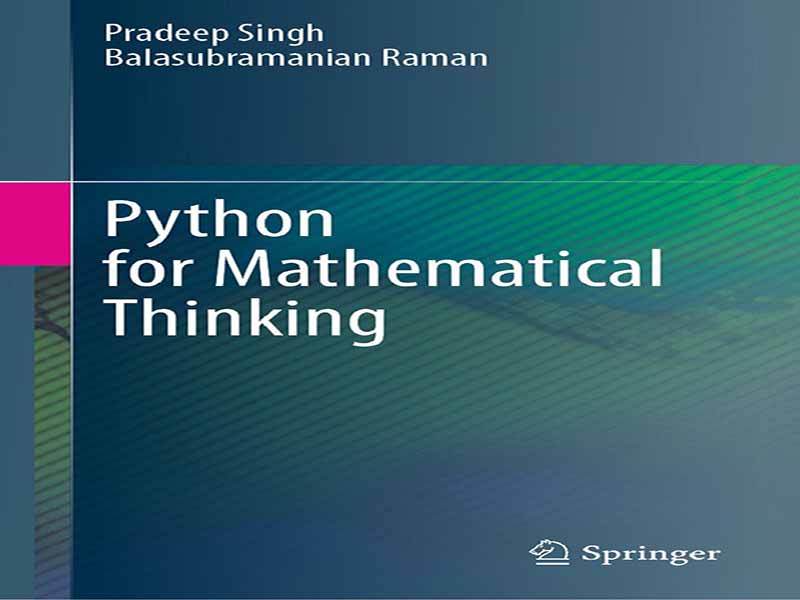
- عنوان کتاب: Python for Mathematical Thinking
- نویسنده: Pradeep Singh Balasubramanian Raman
- حوزه: برنامهنویسی پایتون
- سال انتشار: 2026
- تعداد صفحه: 441
- زبان اصلی: انگلیسی
- نوع فایل: pdf
- حجم فایل: 26.1 مگابایت
ریاضیات زبانی است که در آن قوانین کیهان به طور خلاصه بیان می شود، در حالی که محاسبات گویش هایی را ارائه می دهد که این قوانین را برای تحقیق مدرن قابل اجرا می کند. در قرن بیست و یکم، دانشمند، مهندس یا اقتصاددانی که هم استدلال دقیق ریاضی و هم مهارت الگوریتمی را بر عهده دارد، میتواند مسائلی در مقیاس و ظرافتی را بررسی کند که فقط یک نسل پیش قابل تصور نبود. Python for Mathematical Thinking دقیقاً این تسلط دوگانه را پرورش می دهد. اعتقاد راهنمای آن این است که برهان ها و برنامه ها حالت های رقیب توضیح نیستند، بلکه لنزهای مکملی هستند که از طریق آنها می توان همان ساختار را شفاف کرد. برتری پایتون در دنیای علمی تصادفی نیست. نحو مینیمالیستی، کتابخانه استاندارد بزرگ و مجموعهای از بستههای خاص دامنه – مانند NumPy، SymPy، و SciPy – آن را به آزمایشگاهی تبدیل میکند که در آن ایدههای انتزاعی میتوانند به همان راحتی که آزمایشهای عددی انجام میشوند نمونهسازی شوند. با این حال، تسلط به زبان بدون گرامر دقیق توخالی است. بر این اساس، هر مفهوم در این جلد بهعنوان یک بیانیه دقیق ریاضی، با انگیزههای مثالهایی از تحلیل کلاسیک، جبر، هندسه، احتمال یا تئوری محاسبات معرفی میشود و تنها پس از آن به پایتون اصطلاحی ترجمه میشود. روایت در لایه هایی به طور پیوسته عمیق تر می شود. شما ابتدا ساختارهای بنیادی – اعداد صحیح، میدانهای گویا، فضاهای اقلیدسی – را قبل از صعود به حساب برداری، نظریه طیفی، و احتمالات نظری اندازهگیری دوباره بررسی خواهید کرد. از آنجا متن از طریق جبر خطی عددی، سیستمهای دینامیکی و شبیهسازی تصادفی سفر میکند و در فصلهایی به اوج میرسد که با موضوعات تحقیقاتی معاصر مانند سنجش فشرده و اطلاعات کوانتومی ارتباط برقرار میکند. در سرتاسر، توجه ویژه ای به پیچیدگی محاسباتی است که هر الگوریتم ریاضی را تحت الشعاع قرار می دهد. تجزیه و تحلیل big-O با قضایا همراه است و ساختارهای داده کارآمد مشتق می شوند، نه صرفاً نقل قول. در حالی که این کار مستلزم آشنایی با حساب دیفرانسیل و انتگرال و برنامه نویسی پایه است، آرزو دارد از مبتدی تا محقق را همراهی کند. برای دانشآموز، پلی بین اثباتهای تخته سیاه و آزمایشهای قابل اجرا ایجاد میکند. برای ریاضیدان باتجربه، یک پلت فرم قابل توسعه برای اکتشاف محاسباتی ارائه می دهد. و برای تمرینکننده، الگوریتمهای اصولی را ارائه میکند که صحت آنها توسط قضیه تأیید میشود، نه فولکلور. در نهایت، هنر ریاضیات کمتر در مورد رسیدن به یک پاسخ است تا سکونت در شیوه ای از تفکر که بی وقفه در مورد اینکه چرا یک گزاره باید درست باشد، سؤال می کند. با در هم تنیدن دقت قیاسی و بینش اجرایی، از شما دعوت میکنیم که این عادت ذهنی را پرورش دهید. باشد که صفحات بعدی غرایز تحلیلی شما را تقویت کنند، زرادخانه محاسباتی شما را گسترش دهند و هماهنگی را که نماد را به سیلیکون پیوند می دهد، دوباره آشکار کنند.
Mathematics is the language in which the laws of the cosmos are most succinctly expressed, while computation furnishes the dialects that make these laws tractable for modern inquiry. In the twenty-first century, the scientist, engineer, or economist who commands both rigorous mathematical reasoning and algorithmic craftsmanship can interrogate problems of a scale and subtlety that would have been inconceivable only a generation ago. Python for Mathematical Thinking has been conceived to cultivate precisely this dual fluency. Its guiding conviction is that proofs and programs are not competing modes of explanation but complementary lenses through which the same structure may be rendered transparent. Python’s ascendancy in the scientific world is no accident. Its minimalist syntax, large standard library, and a constellation of domain-specific packages—such as NumPy, SymPy, and SciPy—make it a laboratory in which abstract ideas can be prototyped with the same ease that numerical experiments are conducted. Yet fluency in a language is hollow without a rigorous grammar. Accordingly, each concept in this volume is introduced as a mathematically precise statement, motivated by exemplars from classical analysis, algebra, geometry, probability, or the theory of computation, and only then translated into idiomatic Python. The narrative unfolds in steadily deepening strata. You will first revisit foundational structures—integers, rational fields, Euclidean spaces—before ascending to vector calculus, spectral theory, and measure–theoretic probability. From there the text journeys through numerical linear algebra, dynamical systems, and stochastic simulation, culminating in chapters that interface with contemporary research topics such as compressed sensing and quantum information. Throughout, special attention is paid to the computational complexity that shadows every mathematical algorithm; big-O analyses accompany theorems, and efficient data structures are derived, not merely quoted. While this work presumes familiarity with undergraduate calculus and basic programming, it aspires to be a companion from novice to researcher. For the student, it provides a bridge between chalkboard proofs and executable experiments. For the seasoned mathematician, it offers an extensible platform for computational exploration. And for the practitioner, it supplies principled algorithms whose correctness is certified by theorem, not folklore. Ultimately, the craft of mathematics is less about arriving at an answer than about inhabiting a mode of thought that relentlessly interrogates why a statement should hold. By weaving together deductive rigor and executable insight, we invite you to cultivate that habit of mind. May the pages that follow sharpen your analytical instincts, broaden your computational arsenal, and reveal anew the harmony that binds symbol to silicon.
این کتاب را میتوانید از لینک زیر بصورت رایگان دانلود کنید:
Download: Python for Mathematical Thinking























نظرات کاربران