












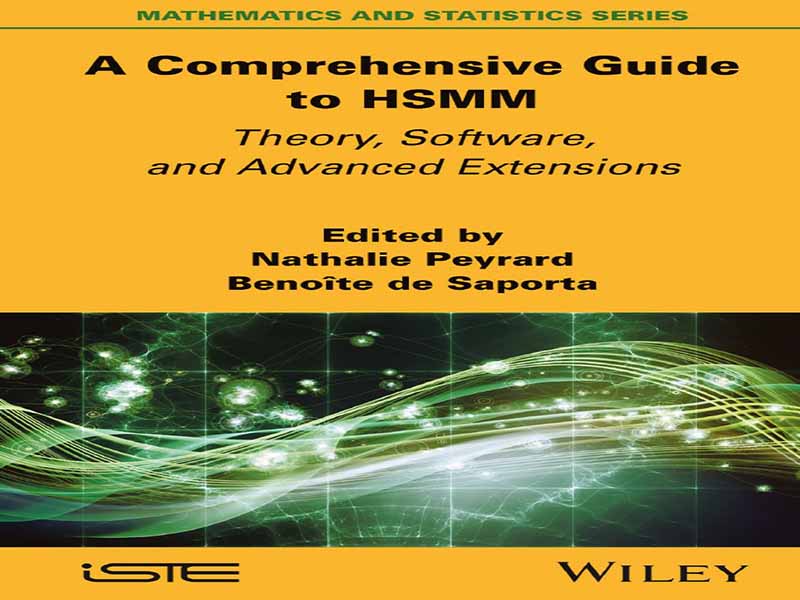
- عنوان کتاب: A Comprehensive Guide to HSMM
- نویسنده: Nathalie Peyrard Benoîte de Saporta
- حوزه: نظریه ریاضی
- سال انتشار: 2026
- تعداد صفحه: 257
- زبان اصلی: انگلیسی
- نوع فایل: pdf
- حجم فایل: 4.07 مگابایت
مدلهای پنهان مارکوف (HMM) در دهه 1960 توسط باوم و پتری (1966) معرفی شدند، ابتدا در مورد مشاهدات گسسته. آنها به ابزارهای کلاسیک برای تجزیه و تحلیل سریهای زمانی تبدیل شدهاند که پویایی آنها را میتوان با پویایی یک فرآیند پنهان توضیح داد. این مدل از دو مجموعه متغیر تصادفی تشکیل شده است که دو فرآیند تصادفی پویای مرتبط هستند: یکی پنهان و دیگری مشاهده شده. این خانواده از مدلها در ابتدا توسط کاربردهایی در تشخیص گفتار (بیکر 1975) و بعداً در حوزههای دیگر مانند ژنومیک (چرچیل 1989) رواج یافت. به موازات آن، پیشرفتهایی در آمار محاسباتی حاصل شد تا تخمین آماری امکانپذیر شود. در آغاز دهه 1980، مشاهده شد که فرض مارکوف در مورد پویایی حالت پنهان در زمینه تشخیص گفتار برآورده نمیشود. بنابراین، تعدیلهای مختلفی از این فرض پیشنهاد شد که منجر به HMM های با مدت زمان صریح (فرگوسن 1980، ED-HMM) شد که اندکی پس از آن توسط راسل و مور (1985) در شکل مدرن و مقرون به صرفهتر خود دوباره فرموله شدند. مدلهای نیمهمارکوف عمومیتر توسط مورفی (2002) به عنوان بسطی از مدلهای HMM قطعهای (segment HMMs) معرفی شدند که خود تعمیمهایی از مدلهای HMM ED-HMMs هستند. همزمان با آن تعمیمهای HMM که به تدریج به مدلهای HMM منجر شدند و بر اصلاحاتی در مورد چگونگی وابستگی مدت زمان حالت و اقامت در پرش فعلی به همان مقادیر پرش قبلی تمرکز داشتند، HMMها در مدلسازی وابستگیها بین چندین زنجیره متعامل، که موضوع فصل 3 این کتاب است، پیشرفتهایی را تجربه کردند. این پیشرفتها بار دیگر توسط کاربردها در پردازش گفتار یا ویدئو ایجاد شدند و به دو جهت گرایش داشتند: نمایش اتصال حالتهای پنهان (مشترک) از طریق مشاهدات (قهرمانی و جردن 1997) یا اتصال مستقیم از طریق حالتها، که مشاهدات را با توجه به حالت پنهان مرتبط منحصر به فردشان، از نظر شرطی مستقل نگه میداشت (برند و همکاران 1997).
Hidden Markov models (HMMs) were introduced in the 1960s by Baum and Petrie (1966), first in the case of discrete observations. They have become classical tools to analyze time series whose dynamics can be explained by those of a hidden process. The model is composed of two sets of random variables that are two linked dynamical stochastic processes: one hidden and one observed. This family of models was originally popularized by applications in speech recognition (Baker 1975) and later in other domains like genomics (Churchill 1989). In parallel, developments were achieved in computational statistics to make statistical estimation possible. At the beginning of the 1980s, it was observed that the Markovian assumption on hidden state dynamics was not satisfied in the context of speech recognition. Thus, different relaxations of this assumption were proposed, leading to explicit duration HMMs (Ferguson 1980, ED-HMMs), reformulated shortly after in their modern, more parsimonious form by Russell and Moore (1985). More general semi-Markov models were introduced by Murphy (2002), as an extension of so-called segment HMMs, which are themselves generalizations of ED-HMMs. Concomitantly with those generalizations of HMMs leading progressively to HSMMs, focusing on refinements on how state and sojourn durations at the current jump depend on the same quantities as the previous jump, HMMs underwent developments on modeling dependencies between several interacting chains, which is the subject of Chapter 3 in this book. These developments were once again motivated by applications in speech or video processing and oriented toward two directions: representing coupling of (shared) hidden states through observations (Ghahramani and Jordan 1997) or directly coupling through states, keeping observations conditionally independent given their unique associated hidden state (Brand et al. 1997).
این کتاب را میتوانید از لینک زیر بصورت رایگان دانلود کنید:
Download: A Comprehensive Guide to HSMM

























نظرات کاربران