











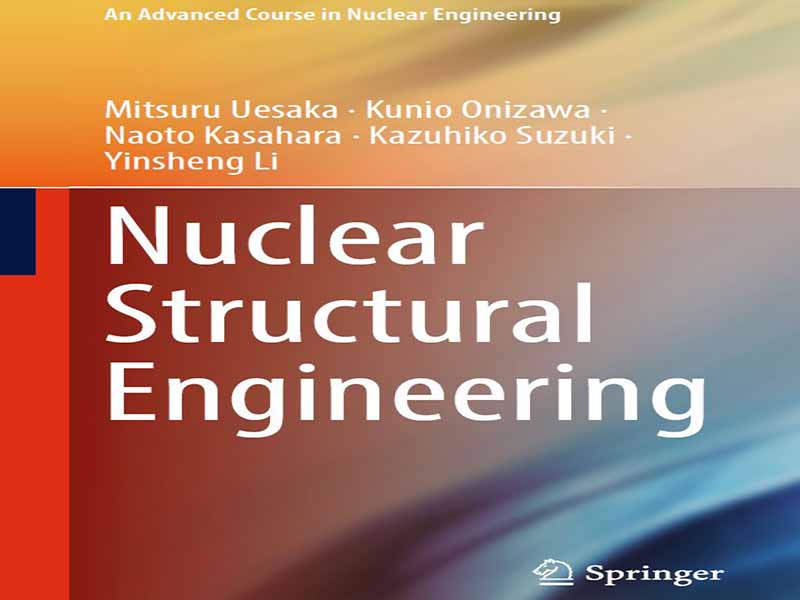
- عنوان کتاب: Nuclear Structural Engineering
- نویسنده: Agbotiname Lucky Imoize
- حوزه: زیرساخت هستهای
- سال انتشار: 2025
- تعداد صفحه: 609
- زبان اصلی: انگلیسی
- نوع فایل: pdf
- حجم فایل: 10.4 مگابایت
مهندسی سازه راکتور هستهای، یک موضوع اساسی در مهندسی هستهای، مطالعهی یکپارچگی سازهای راکتور هستهای است که هر کسی که راکتورهای هستهای را طراحی، ساخته، بهرهبرداری یا نگهداری میکند، باید آن را درک کند. این کتاب درسی برای کمک به توسعهی درک عمومی از تمام دانشهای ضروری برای تضمین یکپارچگی سازهای راکتور طراحی شده است. برای این منظور، نه تنها دانش پایه در مورد مهندسی سازه راکتور هستهای را توضیح میدهد، بلکه به خوانندگان این امکان را میدهد که یاد بگیرند چگونه این دانش را هنگام مطالعهی استانداردهای سازهای، سیستماتیک کنند. همانطور که میدانیم، در مارس ۲۰۱۱، زلزلهای در مقیاس بزرگ رخ داد و سونامی عظیمی که ناشی از این زلزله بود، سواحل شرقی جزیرهی اصلی ژاپن را درنوردید. سونامی باعث حادثهی شدیدی در واحدهای شماره ۱ تا شماره ۳ نیروگاه هستهای فوکوشیما دایچی (دایچی: به معنای واقعی کلمه، شماره ۱) شد که منجر به انتشار مقدار زیادی مواد رادیواکتیو به محیط زیست شد. (از این پس، این حادثه شدید به عنوان «حادثه هستهای فوکوشیما دایچی» و زلزله به عنوان «زلزله توهوکو اوکی ۲۰۱۱» نامیده میشود. (توهوکو: به معنای واقعی کلمه، منطقه شمال شرقی جزیره اصلی ژاپن و توهوکو اوکی: در سواحل منطقه توهوکو)). ما، به عنوان اعضای درگیر در صنعت هستهای، از شرمساری در مورد این حادثه شدید، غیرقابل تحمل هستیم. این حادثه ما را به شدت آگاه میکند که در هر زمان از خود بپرسیم «تضمین ایمنی هستهای» چیست و «چگونه یکپارچگی سازه تضمین میشود». سازمانهای نظارتی ژاپن با انعکاس درسهای آموخته شده از این حادثه، مسائل حیاتی در مورد مقررات ایمنی را مورد بحث قرار دادند و سپس مسائل فنی مانند طراحی ایمنی و اقدامات متقابل در برابر خطرات طبیعی و همچنین چارچوبهای نظارتی را به شدت تقویت کردهاند. بهبود ایمنی توسط کل صنعت هستهای به طور مداوم با مجوز راکتورهای هستهای و مقامات نظارتی به عنوان سازمانهای پیشرو دنبال شده است. به عنوان بخشی از بهبودهای ایمنی، سرویس بررسی یکپارچه مقررات (IRRS) توسط آژانس بینالمللی انرژی اتمی (IAEA) به درخواست دولت ژاپن انجام شد. در نتیجه، اصلاحات نظارتی بیشتری از جمله بهبود سیستم بازرسی برای روشن شدن مسئولیت تضمین ایمنی هستهای و ترویج اقدامات داوطلبانه برای افزایش ایمنی توسط دارندگان مجوز انجام شده است. بر این اساس، اهمیت مطالعه چگونگی ارتقاء استانداردهای سازهای با گنجاندن مداوم مقررات ایمنی در حال اصلاح و آخرین دانش و یافتهها در حال افزایش است. از این منظر، کتاب درسی شامل فصلهایی است که بر موضوعات زیر تمرکز دارند. فصل 1 بخش مقدماتی است که ساختار کتاب را شرح میدهد و به روابط بین فصلها اشاره میکند. مقاومت مصالح، مکانیک سازه، روش المان محدود و یکپارچگی سازه، دانشی را تشکیل میدهند که به ویژه برای مهندسان راکتور هستهای در مطالعه یکپارچگی سازه مهم است. در میان آنها، این فصل بر استانداردهای سازهای که برای خوانندگان نسبتاً ناآشنا تلقی میشوند، تمرکز دارد و مفهوم آنها را توضیح میدهد. این فصل همچنین به روندهای مقررات ایمنی که هر کسی که به عنوان یک مهندس راکتور هستهای با استانداردهای سازهای سروکار دارد باید بداند، و همچنین پیشرفتهای فعلی و آینده مورد انتظار در رابطه با استانداردهای سازهای اشاره میکند. به طور خاص، چگونگی و چرایی تقویت مقررات ایمنی از جنبههای مهندسی سازه راکتور هستهای، با اشاره به درسهای آموخته شده از حادثه هستهای فوکوشیما دایچی و غیره، خلاصه شده است. فصل 2، که برای کسانی که مقاومت مصالح را در دورههای مهندسی در دانشگاهها آموختهاند، در نظر گرفته شده است، اصول اولیه مقاومت مصالح را توضیح میدهد، که دانش لازم برای مهندسان ارشد راکتورها است. این روزها، اکثر محاسبات برای طراحی مقاومت سازه، به کدهای تحلیل عددی موجود در بازار که از روش اجزای محدود استفاده میکنند، بستگی دارد. با این حال، بدون دانش اولیه در مورد مقاومت مصالح، تعریف یک مسئله (تنش صفحهای، کرنش صفحهای، تیر، کمانش همراه با تغییر شکل بزرگ و غیره) و تولید دادههای ورودی مناسب (اعمال بار، شرایط مرزی، خواص مواد و غیره) غیرممکن است. این دانش همچنین برای درک نتایج محاسبات ضروری است. به عنوان وسیلهای برای تأیید نتایج، مقایسه عبارات و مقادیر نظری در موارد ایدهآل همانطور که در فصل 2 ارائه شده است، انجام میشود. در جایی که این موارد در دسترس نباشند، آزمایشی برای مقایسه و تجزیه و تحلیل نتایج انجام میشود. به این ترتیب، دانش مقاومت مصالح برای محاسبات مقاومت سازه حتی زمانی که شبیهسازیهای کامپیوتری انجام میشود، ضروری است. این دانش همچنین برای متخصصانی که در نیروگاههای هستهای کار میکنند ضروری است. برای تکنسینها، داشتن توانایی محاسبه دستی و فوری تخمینهای تقریبی تنش، کرنش و تغییر شکل ناشی از افزایش فشار داخلی، بار یا دما در یک نقطه خاص، مهم است…
Nuclear reactor structural engineering, a basic subject in nuclear engineering, is the study of the structural integrity of the nuclear reactor, which anyone who designs, constructs, operates, or maintains nuclear reactors must understand. This textbook is designed to help develop the general understanding of all the knowledge essential to ensuring the reactor’s structural integrity. For this purpose, it not only explains basic knowledge of nuclear reactor structural engineering but also allows readers to learn how to systematize this knowledge as they study structural standards. As is well known, in March 2011, a large-scale earthquake occurred and a huge tsunami triggered by this earthquake struck the eastern coast of the main island of Japan. The tsunami caused a severe accident at Units No. 1 to No. 3 of the Fukushima Daiichi nuclear power plant (Daiichi: literally, No. 1), resulting in release of a large amount of radioactive materials to the environment. (Hereinafter, this severe accident is referred to as the “Fukushima Daiichi nuclear accident,” and the earthquake as the “2011 Tohoku Oki Earthquake.” (Tohoku: literally, northeastern region of the main island of Japan, and Tohoku Oki: off the coast of Tohoku region)). We, as members engaged in nuclear industry, are unbearable to shame about the severe accident. The accident makes us keenly conscious of self-questioning at any time “what ‘ensuring nuclear safety’ is” and “how structural integrity is assured.” In reflecting lessons learned from the accident, Japanese regulatory organizations discussed critical issues on safety regulations and then have drastically strengthened technical issues such as safety design and countermeasures against natural hazards as well as regulatory frameworks. Safety improvements have been unremittingly pursued by the nuclear industry as a whole with nuclear reactor licensees and regulatory authorities as leading organizations. As part of the safety improvements, an Integrated Regulatory Review Service (IRRS) was conducted by the International Atomic Energy Agency (IAEA) at the request of the Government of Japan. As a result, further regulatory reforms including inspection system improvements have been performed for clarifying the responsibility for ensuring nuclear safety and for promoting voluntary measures for enhancing safety by the licensees. Accordingly, significance of studying how structural standards are upgraded by incorporating unremittingly reforming safety regulations and the latest knowledge and findings is growing. From this perspective, the textbook consists of chapters focusing on the following topics. Chapter 1 is an introductory part that describes the structure of the book and refers to the relations between chapters. Strength of materials, structural mechanics, the finite element method, and structural integrity constitute the knowledge particularly important to nuclear reactor engineers in studying structural integrity. Among them, this chapter focuses on structural standards, which are considered to be relatively unfamiliar to readers, and explains their concept. The chapter also mentions trends in safety regulations that everyone dealing with structural standards as a nuclear reactor engineer should know, as well as current and future developments expected in relation to structural standards. Especially, how and why the safety regulations have been strengthened are summarized from aspects of nuclear reactor structural engineering, referring to lessons learned from the Fukushima Daiichi nuclear accident and so forth. Chapter 2, which is aimed at those who have learned strength of materials in engineering courses at universities, explains the basics of strength of materials, which is the knowledge requisite for chief engineers of reactors. These days, most calculations for the design of structural strength, depend on commercially available numerical analysis codes that use the finite element method. However, without basic knowledge on strength of materials, it is impossible to define a problem (plane stress, plane strain, beam, buckling accompanied by large deformation, etc.) and generate appropriate input data (load application, boundary conditions, material properties, etc.). This knowledge is also indispensable for understanding calculation results. As a means to verify the results, comparison of theoretical expressions and values in ideal cases is performed as presented in Chap. 2. Where these are not available, an experiment is conducted to compare and analyze results. As such, knowledge of strength of materials is necessary for structural strength calculations even when computer simulations are performed. This knowledge is also essential to professionals working at nuclear power plants. For technicians, it is important to have the capability to manually and instantly calculate rough estimates of stress, strain, and deformation due to a rise in internal pressure, load, or temperature within a pressure vessel or piping. In Chap. 3, readers will learn the basics of material strength and structural strength that are prerequisite for understanding failure modes assumed in structural standards. This will help them get ready to study structural design methods from Chap. 5 onward. With respect to materials, Chap. 3 provides a general explanation of elastoplasticity, creep, and other properties that invalidate the linear relationship between stress and strain hypothesized in Chap. 2, along with failure modes related to these properties. The chapter also describes diverse failure modes of structures that depend on not only material characteristics but also the nature of shape and load. Chapter 4 focuses on the finite element method as a means to predict stress and strain generated in component structures involving complexity in shape or boundary conditions. Theoretical solutions learned through strength of materials are not enough to calculate such stress and strain. After explaining the basic theory of the finite element method, the chapter outlines the method of verifying modeling methods and solutions required for analyzing nuclear reactor structures of high reliability. Chapter 5 explains assumed failure modes and concepts for preventing each failure mode, which both constitute knowledge that should be understood about the structural design of the light water reactor (LWR) in order to ensure the structural integrity of LWR components. Because of the need to use terms unfamiliar to most readers, the explanation is provided step by step, from basic concepts to practice. We expect that readers will learn the concepts of ensuring structural integrity, or in other words, how constituent technologies are systematically organized as structural standards. The chapter also pays attention to the historical development of these concepts. In addition, trends in structural design standards are outlined, including design methods using the finite element method. As response to the Fukushima Daiichi nuclear accident, improvements in concepts of ensuring structural integrity are introduced, with focusing on those reflecting thorough implementation of the defense-in-depth approach for assuring nuclear safety and measures against a severe accident. Chapter 6 describes the structural design method for fast reactors that operate in the high-temperature range where creep deformation occurs to materials. The structural design of fast reactors must take into account creep-related failure modes, in addition to failure modes assumed in LWRs. Moreover, a wider variation in coolant temperature due to higher operating temperature creates severer thermal stress. The chapter provides an overview of the characteristics of the structural design of fast reactors based on specifications different from those of LWRs, the design procedure that takes account of these characteristics, and structural standards for fast reactors. Chapter 7 introduces, first, the so-called “Seismic Design Review Guide” formulated in 2006 and explains its background, underlying ideas, and points to keep in mind, while taking a look at the historical development of seismic design concepts. Next, the tsunami-resistant design and the relevant issues of seismic design that have been drastically changed from the above Review Guide are explained, referring to failure in assuming the huge tsunami generated by the 2011 Tohoku Oki Earthquake and insufficient tsunami countermeasures taken at the Fukushima Daiichi nuclear power station. The chapter particularly focuses on reasons for and concepts of the classification of facilities according to their seismic importance, ideas behind the assumption of earthquake ground motion according to seismic importance, the method of calculating earthquake ground motion, and the concept of allowable limits for evaluating seismic safety. Finally, the chapter mentions basic issues in practical applications. Chapter 8 summarizes how components and structures are fabricated following the structural design procedures explained in the previous chapters. The chapter describes methods to ensure high quality in nuclear reactor facilities, including materials manufacturing technologies and heat treatment. A description of welding, an essential element of component manufacturing, is also provided, including the outline of its standards and technologies. Chapter 9 describes nondestructive examination methods and pressure and leak testing that are used for verifying that the fabricated components and structures meet the design requirements and are of appropriate quality. Considering that the method chosen for nondestructive examination should be optimal in light of the form of the defect to be examined, the chapter explains what kinds of defects can occur, with attention to their relations with failure modes. Based on this concept, this chapter explains which inspection method is appropriate for which type of defect, along with the characteristics of each inspection method. Further, describe the improvements in inspection systems such as weld examinations/inspections that were regulated in 2020 on the basis of recommendations by the IAEA IRRS mentioned above. In Chap. 10, readers will learn about the latest overview on fracture mechanics, which is the knowledge needed for evaluating integrity in cases involving the application of standards assuming the existence of cracks—designed for safety-critical components in order to ensure higher structural reliability—and cases where any cracks have been detected in components during examination. This is an important concept because components are not free of the possibility of the occurrence and development of cracks that may have an impact on structural integrity even when the quality and integrity of the components are ensured by applying strict conditions for materials selection and by performing construction and in-service inspections. This possibility is caused by aging phenomena, such as fatigue and stress corrosion cracking, which occur as components are used for a long time period after the start of operation. Chapter 11 first describes technical standards concerning the maintenance of integrity as well as standards for integrity maintenance, as part of a system of standards for evaluating component structural integrity using fracture mechanics. Then, the chapter explains methods to evaluate crack development and procedures for integrity evaluation as examples of integrity evaluation techniques meeting specification standards. In closing, we hope that readers will read through this and other textbooks on nuclear energy and become competent nuclear reactor engineers who can make decisions on various issues facing nuclear energy from a comprehensive point of view and can lead the world with an advanced problem-solving capability.
این کتاب را میتوانید از لینک زیر بصورت رایگان دانلود کنید:
Download: Nuclear Structural Engineering























نظرات کاربران