










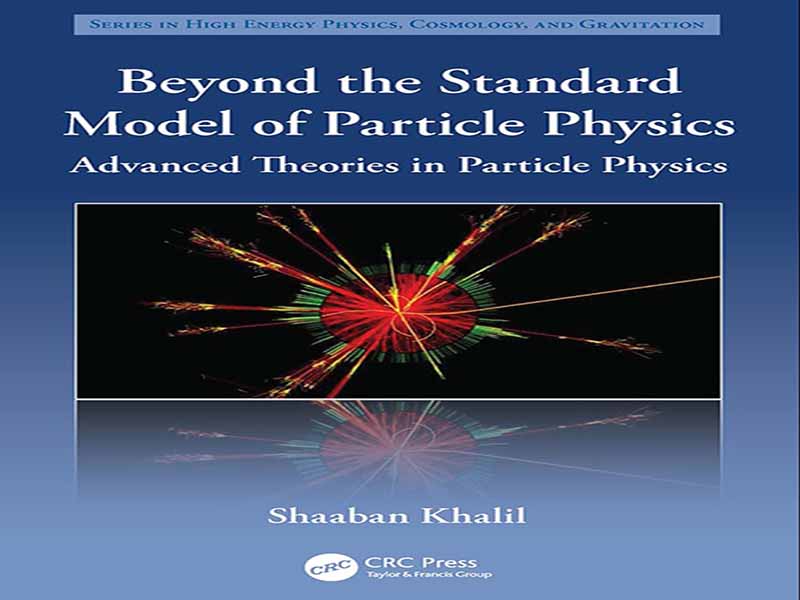
- عنوان کتاب: Beyond the Standard Model of Particle Physics
- نویسنده: Shaaban Khalil
- حوزه: فیزیک ذرات
- سال انتشار: 2026
- تعداد صفحه: 305
- زبان اصلی: انگلیسی
- نوع فایل: pdf
- حجم فایل: 9.41 مگابایت
مدل استاندارد (SM) فیزیک ذرات، یکی از موفقترین نظریههای علمی قرن بیستم است. این مدل، آزمایشهای تجربی متعددی را با دقت فوقالعادهای پشت سر گذاشته و برهمکنشهای الکترومغناطیسی، ضعیف و قوی بین ذرات بنیادی را به طور دقیق توصیف کرده است. کشف بوزون هیگز در برخورددهنده بزرگ هادرونی (LHC) در سال ۲۰۱۲، دستاورد برجسته مدل استاندارد بود که مکانیسم تولید جرم آن را تأیید کرد. با این حال، علیرغم این پیروزیها، مدل استاندارد بسیاری از سؤالات اساسی را بیپاسخ میگذارد. چرا نوترینوها جرم دارند؟ ماهیت ماده تاریک چیست؟ چگونه میتوانیم مسئله سلسله مراتب را حل کنیم؟ چه چیزی عدم تقارن باریون جهان را توضیح میدهد؟ آیا تقارن عمیقتری در پشت ساختار پیمانهای مدل استاندارد وجود دارد؟ این معماها و بسیاری دیگر، انگیزه قوی برای جستجوی فیزیک فراتر از مدل استاندارد (BSM) ایجاد میکنند. این کتاب مقدمهای جامع بر فیزیک مدل استاندارد ارائه میدهد که برای دانشجویان کارشناسی پیشرفته، دانشجویان تحصیلات تکمیلی و محققانی که به نظریه و پدیدارشناسی انرژی بالا علاقه دارند، مناسب است. مباحث مطرحشده، طیف گستردهای از بسطهای هدفمند مدل استاندارد (SM) را در بر میگیرد، از جمله: دو مدل دوگانه هیگز (2HDMs)، که بخش اسکالر غنیتر و توضیحات طبیعی برای ماده تاریک و باریونزایی ارائه میدهند؛ مدلهای U(1)B−L پیمانهای، که جرم نوترینوها و نوترینوهای راستگرد را به شیوهای از نظر نظری سازگار در نظر میگیرند؛ مدلهای متقارن چپ-راست (LRSMs)، که چارچوبی قانعکننده برای بازیابی تقارن پاریته و تولید جرم نوترینو از طریق مکانیسمهای الاکلنگی ارائه میدهند؛ نظریههای وحدت بزرگ (GUTs)، مانند SU(5)، که به دنبال توصیف واحدی از نیروهای مدل استاندارد هستند؛ ابرتقارن (SUSY)، تقارنی که فرمیونها و بوزونها را به هم پیوند میدهد و به مسئله سلسله مراتب میپردازد؛ نظریههایی با ابعاد فضایی اضافی، که هدفشان حل معماهای نظری برجسته است و ممکن است فیزیک ذرات را با گرانش کوانتومی مرتبط کنند. تأکید ویژه بر پیامدهای پدیدارشناختی این مدلها است. فصلها بررسی میکنند که چگونه فیزیک BSM در نشانههای برخورددهنده، مشاهدهپذیرهای طعم، آزمایشهای نوترینو و اندازهگیریهای کیهانشناسی تجلی مییابد. توجه ویژهای به قابلیت آزمایش این مدلها در آزمایشهای فعلی و آینده، از جمله LHC و برخورددهندههای نسل بعدی پیشنهادی، شده است. تعامل بین فیزیک ذرات و کیهانشناسی، به ویژه در پرداختن به ماهیت ماده تاریک، انرژی تاریک و عدم تقارن ماده-پادماده، همچنان یک تمرکز اصلی در فیزیک ذرات معاصر است. ساختار کتاب نشان دهنده یک پیشرفت منطقی است: از انگیزههای بنیادی برای فیزیک BSM گرفته تا ارائه دقیق چارچوبهای نظری و پیشبینیهای قابل آزمایش آنها. در سراسر کتاب، هم سازگاری نظری و هم قابلیت آزمایش تجربی در اولویت قرار گرفتهاند. این کتاب نتیجه سالها تعامل با سوالات باز در مرز فیزیک بنیادی است. این کتاب به عنوان یک ابزار یادگیری و مرجع برای کسانی که قصد دارند درک خود را عمیقتر کنند یا در توسعه BSM فیزیک ذرات مشارکت داشته باشند، در نظر گرفته شده است. چه در محیط کلاس درس، چه در طول مطالعه مستقل یا به عنوان راهنمای تحقیق استفاده شود، امیدواریم این جلد به خوانندگان وضوح مفهومی و الهامبخشی برای کاوش بیشتر قوانین اساسی طبیعت ارائه دهد.
The Standard Model (SM) of particle physics stands as one of the most successful scientific theories of the 20th century. It has passed numerous experimental tests with extraordinary precision and has accurately described the electromagnetic, weak, and strong interactions among elementary particles. The discovery of the Higgs boson at the Large Hadron Collider (LHC) in 2012 marked the crowning achievement of the SM, confirming its mechanism of mass generation. Yet, despite these triumphs, the SM leaves many fundamental questions unanswered. Why do neutrinos have mass? What is the nature of dark matter? How can we resolve the hierarchy problem? What explains the baryon asymmetry of the universe? Is there a deeper symmetry behind the SM gauge structure? These puzzles, and many others, provide strong motivation for the search for physics beyond the SM (BSM). This book offers a comprehensive introduction to BSM physics, aimed at advanced undergraduate students, graduate students, and researchers with an interest in high-energy theory and phenomenology. The topics covered span a wide range of well-motivated extensions of the SM, including: Two Higgs Doublet Models (2HDMs), which provide a richer scalar sector and natural explanations for dark matter and baryogenesis; Gauged U(1)B−L models, which accommodate neutrino masses and right-handed neutrinos in a theoretically consistent manner; Left-Right Symmetric Models (LRSMs), offering a compelling framework for restoring parity symmetry and generating neutrino masses through seesaw mechanisms; Grand Unified Theories (GUTs), such as SU(5), which seek a unified description of the SM forces; Supersymmetry (SUSY), a symmetry that links fermions and bosons and addresses the hierarchy problem; Theories with extra spatial dimensions, which aim to resolve outstanding theoretical puzzles and may connect particle physics with quantum gravity. Special emphasis is placed on the phenomenological implications of these models. Chapters examine how BSM physics manifests in collider signatures, flavor observables, neutrino experiments, and cosmological measurements. Particular attention is given to the testability of these models at current and future experiments, including the LHC and proposed nextgeneration colliders. The interplay between particle physics and cosmology, especially in addressing the nature of dark matter, dark energy, and the matter-antimatter asymmetry, remains a central focus in contemporary particle physics. The structure of the book reflects a logical progression: from foundational motivations for BSM physics, to detailed presentations of theoretical frameworks, to their testable predictions. Throughout, both theoretical consistency and experimental viability are prioritized. This book is the result of years of engagement with the open questions at the frontier of fundamental physics. It is intended as both a learning tool and a reference for those aiming to deepen their understanding or contribute to the development of particle physics BSM. Whether used in a classroom setting, during independent study, or as a guide to research, we hope this volume provides readers with both conceptual clarity and inspiration for further exploration of the fundamental laws of nature.
این کتاب را میتوانید از لینک زیر بصورت رایگان دانلود کنید:






















نظرات کاربران