













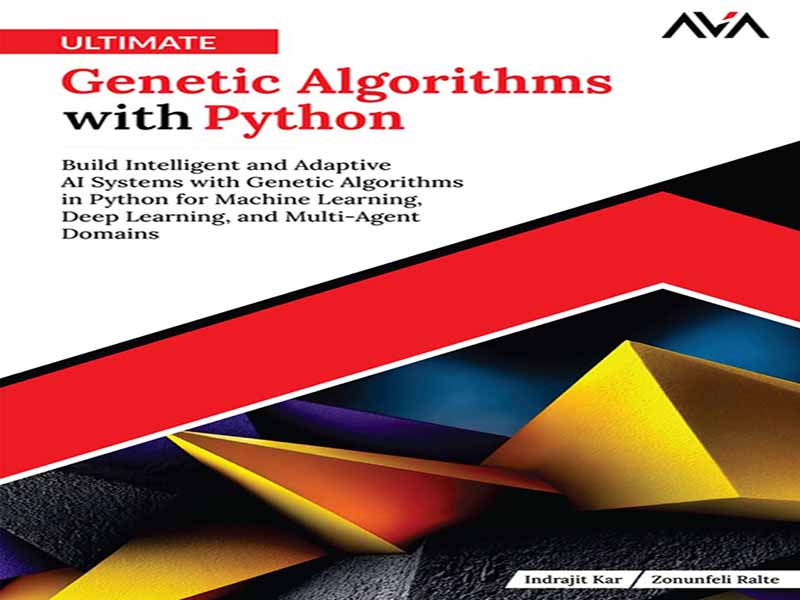
- عنوان کتاب: Ultimate Genetic Algorithms with Python
- نویسنده: Indrajit Kar, Zonunfeli Ralte
- حوزه: برنامهنویسی پایتون
- سال انتشار: 2025
- تعداد صفحه: 607
- زبان اصلی: انگلیسی
- نوع فایل: pdf
- حجم فایل: 16.0 مگابایت
در عصر پیشرفت نمایی فناوری، تقاضا برای سیستمهای بهینهسازی هوشمند، تطبیقی و مقاوم هرگز به این اندازه زیاد نبوده است. الگوریتمهای ژنتیک (GA) و خویشاوندان تکاملی آنها، از حل مسائل مهندسی کلاسیک گرفته تا تقویت نوآوریهای پیشرفته در هوش مصنوعی، به عنوان ابزارهای تحولآفرین ظهور کردهاند. این الگوریتمها با الهام از اصول انتخاب طبیعی و تکامل داروینی، مسیری الهام گرفته از زیستشناسی را برای حل برخی از پیچیدهترین و پرابعادترین مسائل بهینهسازی در علم و صنعت ارائه میدهند. این کتاب به گونهای طراحی شده است که به عنوان یک راهنمای جامع و قابل دسترس برای الگوریتمهای ژنتیک، مخاطبان متنوعی از جمله دانشجویان، محققان، دانشمندان داده، مهندسان هوش مصنوعی و متخصصان کسبوکار را پوشش دهد. فصلها به صورت منطقی پیش میروند – از مفاهیم بنیادی و بلوکهای سازنده الگوریتمی گرفته تا کتابخانههای تخصصی مانند DEAP و PyGAD، قبل از اینکه به سراغ کاربردهای متنوعی بروند که تطبیقپذیری و اثربخشی الگوریتمهای ژنتیک را در سناریوهای دنیای واقعی نشان میدهند. آنچه این اثر را متمایز میکند، دیدگاه یکپارچه آن است. این محتوا نه تنها مکانیک الگوریتمهای ژنتیک – مانند مقداردهی اولیه جمعیت، استراتژیهای انتخاب، تقاطع، جهش و همگرایی – را توضیح میدهد، بلکه به همافزایی آنها با زمینههای نوظهور مانند یادگیری عمیق، بینایی کامپیوتر، پردازش زبان طبیعی (NLP)، یادگیری تقویتی و هوش مصنوعی مولد عامل نیز میپردازد. هر فصل کاربردی با مثالهای کدنویسی عملی، آزمایشهای شبیهسازی و تحلیلهای مقایسهای پشتیبانی میشود تا شکاف بین تئوری و عمل را پر کند. فصلهای پایانی خوانندگان را دعوت میکنند تا آینده الگوریتمهای ژنتیک را در سیستمهای هوش مصنوعی خود-تکاملی، چارچوبهای همکاری چندعاملی و خطوط لوله بهینهسازی تطبیقی تصور کنند. این ایدهها، الگوریتمهای ژنتیک را نه تنها به عنوان ابزارهای بهینهسازی، بلکه به عنوان بلوکهای سازنده بنیادی در تکامل سیستمهای هوشمند قرار میدهند. بنابراین، چه تازه کاوش خود را آغاز کرده باشید و چه به دنبال تعمیق تخصص خود باشید، این کتاب هم وضوح مفهومی و هم تسلط عملی لازم برای مهار قدرت الگوریتمهای ژنتیک در تغییر شکل دنیای دیجیتال ما را فراهم میکند. اکنون بیایید با هم در این سفر تکاملی شروع کنیم. فصل 1. مقدمهای بر الگوریتمهای ژنتیک: این فصل با ردیابی ریشههای الگوریتمهای ژنتیک و اجزای بنیادی آنها – انتخاب، تقاطع و جهش – زمینهسازی میکند. این فصل، الگوریتمهای ژنتیک را با تکامل داروینی و الگوهای مدرن هوش مصنوعی مانند یادگیری عمیق مقایسه میکند. مفاهیمی مانند اکسترممها و جریان اجرا برای زمینهسازی عملیات الگوریتم ژنتیک معرفی میشوند. فصل 2. مبانی الگوریتمهای ژنتیک: با تکیه بر اصول اولیه، این فصل به مباحث فراابتکاری، تکنیکهای نیچینگ، استراتژیهای نمونهگیری جمعیت و تجزیه و تحلیل دقیق مکانیسمهای تناسب اندام، انتخاب و خاتمه میپردازد. این فصل درک دقیقی از نحوه سازگاری و همگرایی الگوریتمهای ژنتیک در طول نسلها ارائه میدهد. فصل 3. مروری بر کتابخانههای الگوریتم ژنتیک: مقایسه عملی کتابخانههای محبوب الگوریتم ژنتیک – PyGAD و DEAP – با مثالهای ساده ارائه شده است. بررسیهای کد، تفاوتهای عملکرد، تنظیم هایپرپارامتر و مدلسازی الگوریتم ژنتیک را از طریق چارچوبهای شبیهسازی ریاضی برجسته میکند. فصل ۴. الگوریتمهای ژنتیک و کاربردهای آنها: این فصل دو حوزه کاربردی کلاسیک – مسئله فروشنده دورهگرد (TSP) و تجزیه و تحلیل تقلب – را بررسی میکند. خوانندگان از طریق ساختارهای راهحل، منابع مجموعه دادهها (به عنوان مثال، TSPLib) و ادغام شبکههای عصبی با استفاده از نمایشهای ژنتیکی هدایت میشوند. فصل ۵. مبانی الگوریتمهای تکاملی: این فصل دامنه را از الگوریتمهای ژنتیک به طبقه وسیعتری از الگوریتمهای تکاملی (EAها)، از جمله انواع تکاملی کلاسیک، پیشرفته و عمیق، گسترش میدهد. این فصل همچنین بهینهسازی ازدحام ذرات (PSO) را معرفی میکند و ارتباط و شبیهسازی آن را برای مسائل بهینهسازی قیمت نشان میدهد. فصل ۶. الگوریتمهای تکاملی پیشرفته: این فصل بر کاربرد الگوریتمهای تکاملی پیشرفته در چالشهای دنیای واقعی، به ویژه در بهینهسازی زنجیره تأمین، تمرکز دارد. از طریق نمونههای کد DEAP و PyGAD (شامل شتابدهی GPU)، هوش ازدحامی، روشهای همپوشانی، PSO و بهینهسازی کلونی مورچهها را بررسی میکند. فصل 7. الگوریتمهای بهینهسازی فراابتکاری: نگاهی عمیق به فراابتکاریهای مختلف – ACO، تکامل تفاضلی و MOEAها. این فصل مبانی نظری، جریان الگوریتمی و چشمانداز بهینهسازی گستردهتری که GAها در آن عمل میکنند را برجسته میکند. فصل 8. کاربرد الگوریتمهای تکاملی (GAها) و هوش مصنوعی عاملدار مولد: این فصل نوآورانه، بهینهسازی کندوی زنبور عسل را با مفاهیم هوش مصنوعی مولد ترکیب میکند. این فصل پیادهسازیهای PyGMO، سیستمهای ازدحام چندعاملی و همافزایی بین هوش مصنوعی عاملدار و الگوریتمهای الهامگرفته از طبیعت مانند کلونی زنبور مصنوعی و GAها را پوشش میدهد. فصل 9. کاربرد الگوریتم ژنتیک در یادگیری ماشین: این فصل با تمرکز بر موارد استفاده ML، توضیح میدهد که چگونه میتوان از GAها برای انتخاب ویژگی و تنظیم ابرپارامتر استفاده کرد. کاربردهای دنیای واقعی و عملی
In the age of exponential technological advancement, the demand for intelligent, adaptive, and robust optimization systems has never been greater. From solving classical engineering problems to fueling cutting-edge innovations in artificial intelligence, Genetic Algorithms (GAs) and their evolutionary relatives have risen as transformative tools. Inspired by the principles of natural selection and Darwinian evolution, these algorithms offer a biologically inspired pathway to solving some of the most complex and highdimensional optimization problems across science and industry. This book is designed to serve as a comprehensive and accessible guide to Genetic Algorithms, catering to a diverse audience that includes students, researchers, data scientists, AI engineers, and business practitioners. The chapters progress logically—from foundational concepts and algorithmic building blocks to specialized libraries such as DEAP and PyGAD, before moving on to a variety of applications that illustrate the versatility and effectiveness of GAs in real-world scenarios. What sets this work apart is its integrative perspective. The content not only explains the mechanics of Genetic Algorithms—such as population initialization, selection strategies, crossover, mutation, and convergence—but also dives into their synergy with emerging fields such as Deep Learning, Computer Vision, Natural Language Processing (NLP), Reinforcement Learning, and Generative Agentic AI. Each application chapter is supported by hands-on coding examples, simulation experiments, and comparative analyses to bridge the gap between theory and practice. The concluding chapters invite readers to imagine the future of GAs in self-evolving AI systems, multi-agent collaboration frameworks, and adaptive optimization pipelines. These ideas position Genetic Algorithms not just as optimization tools, but as foundational building blocks in the evolution of intelligent systems. So, whether you are just beginning your exploration or seeking to deepen your expertise, this book provides both the conceptual clarity and practical fluency needed to harness the power of Genetic Algorithms in reshaping our digital world. Let us now embark on this evolutionary journey together. Chapter 1. Introduction to Genetic Algorithms: This chapter lays the groundwork by tracing the origins of Genetic Algorithms and their foundational components— selection, crossover, and mutation. It contrasts GAs with Darwinian evolution and modern AI paradigms such as Deep Learning. Concepts such as extrema and execution flow are introduced to contextualize GA operation. Chapter 2. Fundamentals of Genetic Algorithms: Building on the basics, this chapter dives into metaheuristics, niching techniques, population sampling strategies, and detailed breakdowns of fitness, selection, and termination mechanisms. It offers a rigorous understanding of how GAs adapt and converge over generations. Chapter 3. Overview of Genetic Algorithm Libraries: A practical comparison of popular GA libraries—PyGAD and DEAP—is presented with toy examples. Code walkthroughs highlight performance differences, hyperparameter tuning, and GA modeling through mathematical simulation frameworks. Chapter 4. Genetic Algorithms and Their Applications: This chapter explores two classic application domains— Traveling Salesman Problem (TSP) and Fraud Analytics. Readers are guided through solution structures, dataset references (for example, TSPLib), and neural network integrations using genetic representations. Chapter 5. Foundation of Evolutionary Algorithms: It expands the scope from GAs to the broader class of Evolutionary Algorithms (EAs), including classical, advanced, and deep evolutionary variants. The chapter also introduces Particle Swarm Optimization (PSO), showcasing its relevance and simulation for price optimization issues. Chapter 6. Advanced Evolutionary Algorithms: This chapter focuses on the application of advanced EAs to realworld challenges, particularly in supply chain optimization. Through DEAP and PyGAD code samples (including GPU acceleration), it explores Swarm Intelligence, overlapping methods, PSO, and Ant Colony Optimization. Chapter 7. Metaheuristic Optimization Algorithms: A deep dive into various metaheuristics—ACO, Differential Evolution, and MOEAs. The chapter highlights their theoretical foundations, algorithmic flow, and the broader optimization landscape in which GAs operate. Chapter 8. Application of Evolutionary Algo (GAs) and Generative Agentic AI: This innovative chapter blends Bee Hive Optimization with Generative AI concepts. It covers PyGMO implementations, multi-agent swarm systems, and the synergy between agentic AI and natureinspired algorithms such as Artificial Bee Colony and GAs. Chapter 9. Applying Genetic Algorithm to Machine Learning: Focusing on ML use cases, this chapter explains how GAs can be used for feature selection and hyperparameter tuning. Real-world applications and handson implementations demonstrate how GA-guided search can boost ML model performance. Chapter 10. Applying Deep Learning to Genetic Algorithm: This chapter explores Neural Architecture Search, NEAT, and weight optimization in neural networks. It emphasizes how GAs complement or outperform backpropagation in some deep learning tasks, particularly in neural topology evolution. Chapter 11. Applying Computer Vision Application to Genetic Algorithms: GAs are applied to optimize visual features, CNN parameters, and classification models. Through tuning learning rates and activation functions, this chapter shows how GAs can enhance vision-based tasks, and their accuracy and generalizability. Chapter 12. Applying NLP to Genetic Algorithms: It introduces GA use in NLP through RAG systems, prompt engineering, embedding optimization, and sentiment analysis. The chapter combines evolutionary strategies with language models for richer semantic understanding, and better feature engineering. Chapter 13. Applying Reinforcement Learning to Genetic Algorithms: This chapter showcases how GAs can be used to optimize reward functions, tune explorationexploitation balances, and evolve intelligent agents in games. It concludes with a comparative analysis of GAs vs traditional RL methods such as Q-learning. Chapter 14. The Future of Genetic Algorithms: The book concludes by projecting GAs into future landscapes such as adaptive multi-agent systems, Generative Agentic AI, and MCP (Model Context Protocol). It includes implementation of the best practices and pro tips to harness the full potential of GA systems in the emerging AI ecosystems.
این کتاب را میتوانید از لینک زیر بصورت رایگان دانلود کنید:
Download: Ultimate Genetic Algorithms with Python


















نظرات کاربران