












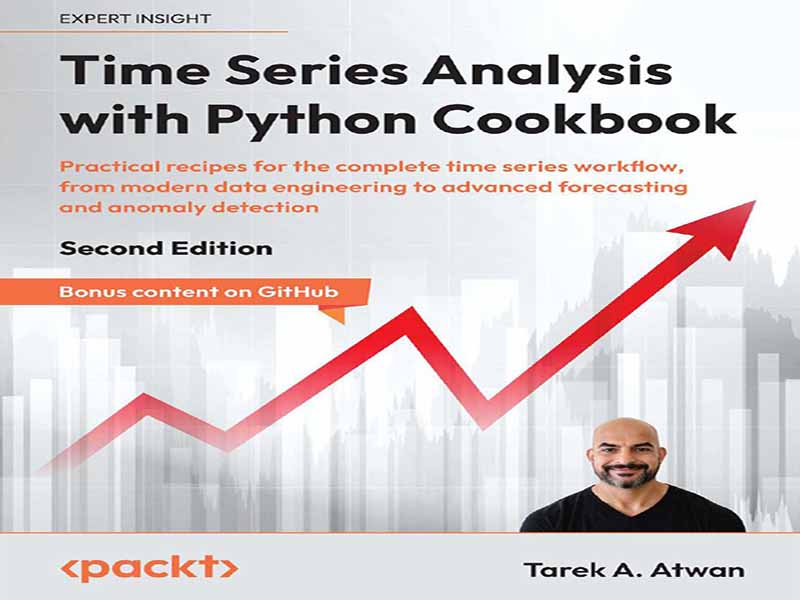
- عنوان کتاب: Time Series Analysis with Python Cookbook
- نویسنده: Tarek A. Atwan
- حوزه: تحلیل سری زمانی
- سال انتشار: 2026
- تعداد صفحه: 813
- زبان اصلی: انگلیسی
- نوع فایل: pdf
- حجم فایل: 16.4 مگابایت
ارتباط آشنایی که مردم بین پیشبینی و دادههای مالی (مانند پیشبینی قیمت سهام یا حرکات بازار) برقرار میکنند، در واقع، پیشبینی در صنایع بیشتری نسبت به امور مالی استفاده میشود و از دادههای تاریخی برای پیشبینیهای آینده استفاده میکند. به طور خاص، این کتاب در مورد تحلیل سریهای زمانی است، فرآیندی برای به دست آوردن بینش بهتر از دادههای تاریخی، ثبت روندها و الگوهای چرخهای و ساخت مدلهای پیشبینی آماده برای تولید. هنگام کار با دادههایی که شامل مشاهداتی هستند که در طول زمان تغییر میکنند و در فواصل زمانی خاص ثبت میشوند، با دادههای سری زمانی سروکار دارید. دادههای سری زمانی را در بسیاری از حوزهها خواهید یافت و رشته تحلیل سریهای زمانی موارد استفاده مختلفی را پوشش میدهد. برای مثال، تحلیل سریهای زمانی در علوم (پیشبینی آب و هوا، زلزله، کیفیت هوا یا رشد گونهها)، امور مالی (پیشبینی بازده سهام، بودجه، فروش یا نوسانات)، دولت (پیشبینی تورم، نرخ بیکاری، تولید ناخالص داخلی یا نرخ تولد جمعیت)، پزشکی (ردیابی انتقال بیماریهای عفونی، نظارت بر نوار قلب یا قند خون، یا پیشبینی هزینههای مراقبتهای بهداشتی)، مهندسی (نگهداری پیشبینانه، تحلیل کاهش تولید یا پیشبینی حجم ترافیک)، تجارت (مدیریت موجودی، برنامهریزی تقاضای محصول یا برنامهریزی منابع) و موارد دیگر استفاده میشود. دادههای سری زمانی تقریباً در اطراف ما وجود دارند و قطعاً در کار خود با آنها روبرو خواهید شد. در این کتاب، دستورالعملهای کاربردی و جامعی را خواهید یافت که میتوانید آنها را اعمال و استفاده کنید – تئوری کمتر و نتایج عملیتر. این ویرایش دوم شما را در سفر کامل تحلیل سریهای زمانی همراهی خواهد کرد. ما کل فرآیند را پوشش میدهیم، از راهاندازی محیط گرفته تا دستیابی و دریافت دادههای سری زمانی از منابع متنوع (فایلها، SQL، NoSQL، ذخیرهسازی ابری و انبارهای داده). شما یاد خواهید گرفت که چگونه دادهها را از طریق تکنیکهای تحلیل اکتشافی دادهها (EDA) مختص سریهای زمانی کاوش کنید، دادهها را تبدیل و دستکاری کنید، و طیف گستردهای از مدلها را برای پیشبینی آموزش داده و ارزیابی کنید. این کتاب و مخزن گیتهاب مربوطه، مفاهیم، تکنیکها و الگوریتمهایی را از رویکردهای رایج گرفته تا رویکردهای پیشرفتهتر و مدرنتر پوشش میدهد. برای مثال، شما یاد خواهید گرفت که چگونه مدلها را در طیف کاملی از تکنیکهایی که شامل روشهای آماری (مانند ARIMA، SARIMA، Theta، Prophet، VAR و GARCH)، الگوریتمهای یادگیری ماشین (مانند scikit-learn، sktime و روشهای گروهی مانند XGBoost)، معماریهای یادگیری عمیق (مانند RNN، LSTM، TCN و N-HiTS)، مدلسازی احتمالی (مانند رگرسیون چندکی، ترک مونت کارلو و پیشبینی همدیس) برای پیشبینی، تحلیل طیفی (یا حوزه فرکانس) (مانند تبدیل سریع فوریه (FFT)، پریودوگرامها و روش ولچ) و تشخیص جامع دادههای پرت (ناهنجاری) (با استفاده از تکنیکهای آماری، یادگیری ماشین و یادگیری عمیق) میشود، آموزش داده و اعتبارسنجی کنید. از همه مهمتر، تنوع مجموعه دادههای مورد استفاده در این کتاب، بینش بهتری در مورد نحوه عملکرد این مدلهای مختلف و نحوه انتخاب مناسبترین رویکرد برای حل مسئله خاص شما ارائه میدهد. شما با تعداد زیادی کتابخانه آشنا خواهید شد، با عمق و مقایسه کافی برای درک دلیل و زمان استفاده از آنها و نحوه کارشان. این کتاب شامل statsmodels، scikit-learn، sktime، Darts، StatsForecast، NeuralForecast، TensorFlow، PyTorch، aeon، PyOD، Prophet، NeuralProphet، XGBoost، LightGBM، Optuna، arch، pmdarima، SciPy، TSFEL، Modin، Dask، Polars، pandas، hvPlot، Seaborn و موارد دیگر است. این کتاب برای تحلیلگران داده، تحلیلگران کسب و کار، دانشمندان داده، مهندسان داده یا توسعهدهندگان پایتون است که به دنبال دستورالعملهای کاربردی پایتون برای تجزیه و تحلیل سریهای زمانی و تکنیکهای پیشبینی هستند. دانش بنیادی در مورد برنامهنویسی پایتون مورد نیاز است. اگرچه داشتن پیشینه ریاضی و آمار پایه مفید خواهد بود، اما ضروری نیست. تجربه قبلی کار با دادههای سری زمانی برای حل مشکلات تجاری نیز به شما کمک میکند تا از دستورالعملهای مختلف موجود در این کتاب بهتر استفاده و آنها را به کار ببرید.
A familiar association people make is between forecasting and financial data (such as predicting stock prices or market movements). In reality, forecasting is used in more industries than finance, leveraging historical data to make future predictions. More specifically, this book is about time-series analysis, a process to gain better insight from historical data, capture trends and cyclical patterns, and build production-ready forecasting models. When working with data that contains observations that change over time and is recorded at specific intervals, you are dealing with time-series data. You will find time-series data in many domains, and the discipline of time-series analysis covers various use cases. For example, time-series analysis is used in science (forecasting weather, earthquakes, air quality, or species growth), finance (forecasting stock return, budget, sales, or volatility), government (forecasting inflation, unemployment rates, GDP, or population birth rate), medicine (tracking infectious disease transmission, monitoring electrocardiogram or blood glucose, or forecasting healthcare costs), engineering (predictive maintenance, production decline analysis, or traffic volume forecasting), business (inventory management, product demand planning, or resource planning), and much more. Time-series data is pretty much all around us, and you will most definitely encounter it in your work. In this book, you will find practical end-to-end recipes that you can apply and use—less theory and more actionable results. This second edition will take you through the complete journey of time-series analysis. We cover the entire process, from environment setup to acquiring and ingesting time-series data from diverse sources (files, SQL, NoSQL, cloud storage, and data warehouses). You will learn how to explore the data through exploratory data analysis (EDA) techniques specific to time series, transform and manipulate the data, and train and evaluate a wide variety of models for forecasting. This book and its corresponding GitHub repository covers concepts, techniques, and algorithms ranging from commonly used to more advanced and modern approaches. For example, you will learn how to train and validate models across a full spectrum of techniques covering statistical methods (e.g., ARIMA, SARIMA, Theta, Prophet, VAR, and GARCH), machine learning algorithms (e.g., scikit-learn, sktime, and ensemble methods such as XGBoost), deep learning architectures (e.g., RNN, LSTM, TCN, and N-HiTS), probabilistic modeling (e.g., quantile regression, Monte Carlo dropout, and conformal prediction) for forecasting, spectral (or frequency-domain) analysis (e.g., Fast Fourier transform (FFT), periodograms, and Welch’s method), and comprehensive outlier (anomaly) detection (using statistical, machine learning, and deep learning techniques). Most importantly, the variety of datasets used in this book will give you a better insight into how these different models work and how you can pick the most appropriate approach to solve your specific problem. You will be introduced to a vast number of libraries, with enough depth and comparison for you to understand why and when to use them and how they work. The book covers statsmodels, scikit-learn, sktime, Darts, StatsForecast, NeuralForecast, TensorFlow, PyTorch, aeon, PyOD, Prophet, NeuralProphet, XGBoost, LightGBM, Optuna, arch, pmdarima, SciPy, TSFEL, Modin, Dask, Polars, pandas, hvPlot, Seaborn, and much more. This book is for data analysts, business analysts, data scientists, data engineers, or Python developers who want practical Python recipes for time-series analysis and forecasting techniques. Fundamental knowledge of Python programming is required. Although having a basic math and statistics background will be beneficial, it is not necessary. Prior experience working with time-series data to solve business problems will also help you to better utilize and apply the different recipes in this book.
این کتاب را میتوانید از لینک زیر بصورت رایگان دانلود کنید:




















نظرات کاربران