














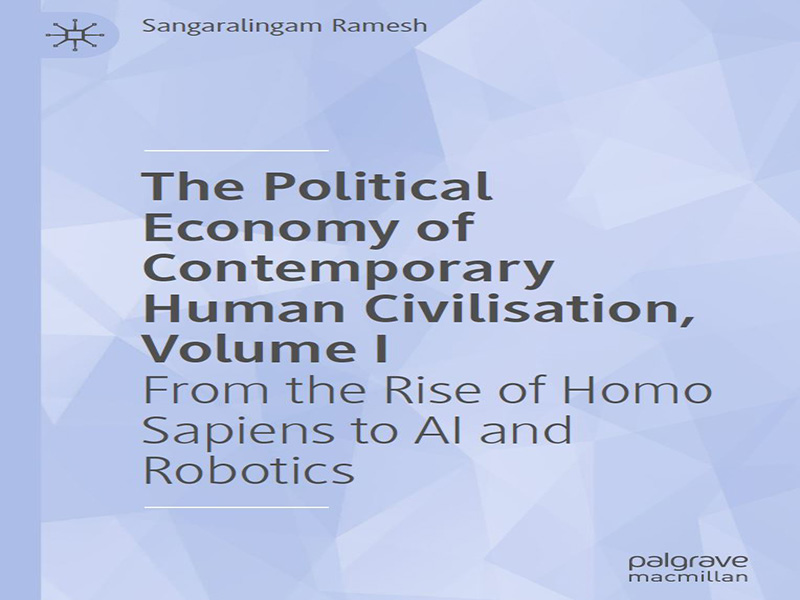
- عنوان کتاب: The Political Economy of Contemporary Human Civilisation, Volume I
- نویسنده: Sangaralingam Ramesh
- حوزه: اقتصاد سیاسی
- سال انتشار: 2025
- تعداد صفحه: 342
- زبان اصلی: انگلیسی
- نوع فایل: pdf
- حجم فایل: 3.93 مگابایت
بشریت از شناخت پیشرفته، مهارت دستی و تحرک برخوردار است که خلاقیت و نوآوری او را برای تجلی و استفاده در شکل فیزیکی تسهیل میکند. با این حال، این خلاقیت و نوآوری میتواند عواقبی داشته باشد که در زمینه حفظ تمدن بشری مخرب یا سازنده هستند. به عنوان مثال، برخی ممکن است استدلال کنند که تأثیرات معاصر تغییرات اقلیمی بر تمدن بشری، پیامدهای مستقیم فعالیت انسان در سیصد سال گذشته است. با این حال، از سوی دیگر، برخی دیگر ممکن است استدلال کنند که تغییرات اقلیمی معاصر بخشی طبیعی از چرخههای اقلیمی دورهای زمین است؛ شاید ناشی از تغییرات در فعالیت خورشیدی یا به دلیل تغییرات در میدان مغناطیسی زمین باشد. اما در هر صورت، تغییرات اقلیمی و تأثیرات آن بر جامعه بشری را میتوان با استفاده از هوش مصنوعی کاهش داد. این امر در کنار پیشرفتها در زمینههای دیگر مانند رباتیک، محاسبات کوانتومی و همجوشی هستهای، پیامدهای گسترده و عمیقی برای تمدن بشری در دهههای آینده خواهد داشت. علاوه بر این، پیشرفتها و تحولات علمی در بیوتکنولوژی ممکن است به نقطهای برسد که تا پایان دو دهه آینده، بشریت بتواند پیری را معکوس کند و زوال شناختی را ریشه کن کند. با این حال، چالش دیگری که همچنان باقی است و در کنار تغییرات اقلیمی، منابع کشورهای مستقل را تحت فشار قرار خواهد داد، افزایش نه تنها جمعیت انسانی، بلکه مهاجرت نیز خواهد بود. این مهاجرت نه تنها به دلیل تأثیر تغییرات اقلیمی، بلکه به دلیل تأثیرات توسعه اقتصادی نامتوازن نیز خواهد بود. مردم از کشورهایی که دمای هوا در آنها بسیار بالاست و منجر به خشکسالی و قحطی میشود، به مناطق سردتر نیمکره شمالی مهاجرت خواهند کرد. علاوه بر این، توسعه اقتصادی نامتوازن، مهاجرت مردم از اقتصادهای در حال توسعه به اقتصادهای توسعهیافته را به امید یافتن مشاغل با درآمد بهتر و کیفیت زندگی بهتر تسهیل خواهد کرد. علاوه بر این، توسعه اقتصادی نامتوازن ممکن است به این معنی باشد که اقتصادهای در حال توسعه ممکن است فاقد منابع مالی و اقتصادی برای حفظ گذار از سوختهای فسیلی به انرژی سبز باشند. افزایش دمای جهانی به این معنی است که در بسیاری از کشورها، خانوارها و شرکتها بیشتر به استفاده از تهویه مطبوع متکی خواهند بود. به طور شهودی، این بدان معناست که کشورهایی که توانایی مالی گذار به انرژی سبز را ندارند، همچنان به سوختهای فسیلی، سوزاندن نفت و زغال سنگ برای تأمین سوخت اقتصاد خود وابسته خواهند ماند. این امر بیشتر به انتشار گازها کمک خواهد کرد. سوزاندن سوختهای فسیلی منجر به انتشار چندین گاز میشود که به طور قابل توجهی در تغییرات اقلیمی نقش دارند. گاز اصلی منتشر شده، دی اکسید کربن (CO2) است که رایجترین گاز گلخانهای تولید شده توسط احتراق سوختهای فسیلی است. CO2 طول عمر اتمسفری طولانی دارد و در به دام انداختن گرما نقش اساسی دارد و منجر به گرمایش جهانی میشود. متان (CH4) یکی دیگر از گازهای گلخانهای قوی ناشی از تولید و حمل و نقل سوختهای فسیلی است. اگرچه متان در مقایسه با CO2 در مقادیر نسبتاً کمتری آزاد میشود، اما پتانسیل گرمایش جهانی بسیار بالاتری در مدت زمان کوتاهتری دارد و آن را به یک عامل حیاتی در تغییرات آب و هوایی تبدیل میکند. علاوه بر این، سوزاندن سوختهای فسیلی، اکسید نیتروژن (N2O) را منتشر میکند، گازی با منابع طبیعی و انسانی. N2O در طول فرآیندهای احتراق، به ویژه در دماهای بالا تولید میشود و یک گاز گلخانهای قوی با پتانسیل گرمایش جهانی تقریباً 298 برابر CO2 در یک دوره 100 ساله است. دی اکسید گوگرد (SO2) نیز از احتراق سوختهای فسیلی، به ویژه از زغال سنگ و نفت، آزاد میشود. در حالی که SO2 خود اثر گلخانهای ندارد، به تشکیل آئروسلهای سولفات کمک میکند که میتوانند نور خورشید را منعکس کرده و سطح زمین را خنک کنند. با این حال، این آئروسلها همچنین در باران اسیدی و مشکلات تنفسی در انسانها نقش دارند. مونوکسید کربن (CO) یکی دیگر از محصولات جانبی سوختن سوختهای فسیلی است. اگرچه CO یک گاز گلخانهای نیست، اما به طور غیرمستقیم با تأثیر بر غلظت متان و ازن تروپوسفری، که هر دو از گازهای گلخانهای قوی هستند، در تغییرات آب و هوایی نقش دارد. این گازها، با به دام انداختن گرما در جو زمین، نقش مهمی در گرم شدن کره زمین دارند و چالشهای جدی زیستمحیطی و بهداشتی ایجاد میکنند. با این حال، پیشرفت در اکتشافات فضایی و شاید استعمار سیارات، مانند مریخ و قمرهای سیاره مشتری، دریچهای برای آینده احتمالی بشریت در سیارهای فراهم میکند که ممکن است دیگر قادر به حفظ حیات انسان نباشد. پیشرفت در اکتشافات فضایی و استعمار احتمالی سیاراتی مانند مریخ و قمرهای مشتری، نگاهی اجمالی به آینده بالقوه بشریت فراتر از زمین ارائه میدهد. از آنجایی که منابع طبیعی زمین به طور فزایندهای محدود میشوند و سیاره با تغییرات زیستمحیطی قابل توجهی روبرو میشود، ایده ایجاد سکونتگاههای انسانی در سایر اجرام آسمانی در جامعه علمی مورد توجه قرار گرفته است. آژانسهای فضایی مانند ناسا و ESA، به همراه شرکتهای خصوصی مانند SpaceX، در خط مقدم این پیشرفتها هستند.
Humanity is endowed with advanced cognition, manual dexterity and mobility which facilitate its creativity and innovation to manifest and be used in physical form. However, this creativity and innovation can have consequences which are either destructive or constructive in the context of sustaining human civilisation. For example, some might argue that the contemporary impacts of climate change on human civilisation are the direct consequences of human activity over the last three hundred years. However, on the other hand, others might argue that contemporary climate change is a natural part of the Earth’s periodic climate cycles; perhaps driven by changes in solar activity or due to changes in the earth’s magnetic field. But either way, climate change and its impacts on human society can be mitigated using Artificial Intelligence. This in conjunction with developments in other fields such as Robotics, Quantum Computing, and Nuclear Fusion will have far and deep reaching consequences for human civilization in the decades to come. Moreover, scientific breakthroughs and developments in Biotechnology may reach a point such that by the end of the next two decades, humanity may be able to reverse aging and eradicate cognitive decline. However, another challenge that remains, which in conjunction with climate change will put pressure on the resources of sovereign nations, is the increase in not only the human population but also migration. This migration will be due to not only the impact of climate change but also the impacts of uneven economic development. People will migrate from countries in which the temperature is too hot, leading to droughts and famine, to cooler climates in the northern hemisphere. Furthermore, uneven economic development will facilitate people to migrate from developing economies to the developed economies in the hope of finding better paying jobs and a better quality of life. Furthermore, uneven economic development may mean that developing economies may lack the financial and economic resources to sustain the transition away from fossil fuels to green energy. Increased global temperatures will mean that in many countries there will be a greater reliance on the use of air conditioning by households and firms. Intuitively, this will mean that countries which cannot afford the transition to green energy will remain reliant on fossil fuels, the burning of oil and coal to fuel their economies. This will further contribute to emissions of gases. Burning fossil fuels results in the emission of several gases that significantly contribute to climate change. The primary gas emitted is carbon dioxide (CO2), which is the most prevalent greenhouse gas produced by fossil fuel combustion. CO2 has a prolonged atmospheric lifetime and is fundamental in trapping heat, leading to global warming. Methane (CH4) is another potent greenhouse gas resulting from fossil fuel production and transportation. Although methane is released in relatively smaller quantities compared to CO2, it has a much higher global warming potential over a shorter time, making it a critical factor in climate change. Additionally, burning fossil fuels emits nitrous oxide (N2O), a gas with both natural and anthropogenic sources. N2O is produced during combustion processes, especially at high temperatures, and it is a potent greenhouse gas with a global warming potential approximately 298 times that of CO2 over a 100-year period. Sulphur dioxide (SO2) is also released from fossil fuel combustion, particularly from coal and oil. While SO2 itself does not have a greenhouse effect, it contributes to the formation of sulphate aerosols which can reflect sunlight and cool the Earth’s surface. However, these aerosols also contribute to acid rain and respiratory problems in humans. Carbon monoxide (CO) is another by-product of fossil fuel burning. Though CO is not a greenhouse gas, it contributes to climate change indirectly by influencing the concentration of methane and tropospheric ozone, both potent greenhouse gases. These gases, by trapping heat in the Earth’s atmosphere, play a significant role in the warming of the planet and present serious environmental and health challenges. However, developments in space exploration and perhaps colonisation of planets, such as Mars and the moons of the planet Jupiter, allow a window for the possible future of humanity in a planet which may not any longer be able to sustain human life. Developments in space exploration and prospective colonization of planets such as Mars and the moons of Jupiter present a glimpse into humanity’s potential future beyond Earth. As Earth’s natural resources become increasingly strained and the planet faces significant environmental changes, the idea of establishing human settlements on other celestial bodies has gained traction within the scientific community. Space agencies such as NASA and ESA, along with private companies like SpaceX, are at the forefront of these efforts. Mars has long been considered the most viable candidate for human colonization within our solar system. This interest is driven by several factors, including its relative proximity to Earth, the presence of water ice, and its similarities to Earth’s geological features. Notably, NASA’s Mars missions, including the Curiosity and Perseverance rovers, have provided valuable data on the planet’s surface and potential habitability. Additionally, the success of SpaceX’s Starship program aims to facilitate crewed missions to Mars, making the concept of a human presence on the Red Planet increasingly tangible. The moons of Jupiter, particularly Europa, also hold promise for human exploration and potential colonization. Europa’s subsurface ocean is of particular interest due to its potential for harbouring life and providing a sustainable water source for future missions. The European Space Agency’s upcoming Jupiter Icy Moons Explorer (JUICE) mission aims to further investigate the habitability of these moons, with a focus on Europa, Ganymede, and Callisto. The establishment of human settlements on Mars or the moons of Jupiter would represent a monumental step for humanity, offering an alternative pathway for survival if Earth becomes untenable due to resource depletion, climate change, or other existential threats. Such efforts require significant technological advancements and international collaboration. Ensuring sustainable living conditions on these remote celestial bodies will also involve overcoming challenges related to life support systems, radiation protection, and the psychological well-being of astronauts. The exploration and potential colonization of other planets and moons extend beyond the survival of humanity; they symbolize the innate human spirit of exploration and the quest for knowledge. As technologies continue to advance, the dream of living on Mars or the moons of Jupiter may indeed become a reality in the not-too-distant future.
این کتاب را میتوانید از لینک زیر بصورت رایگان دانلود کنید:
Download: The Political Economy of Contemporary Human Civilisation, Volume I






















نظرات کاربران