












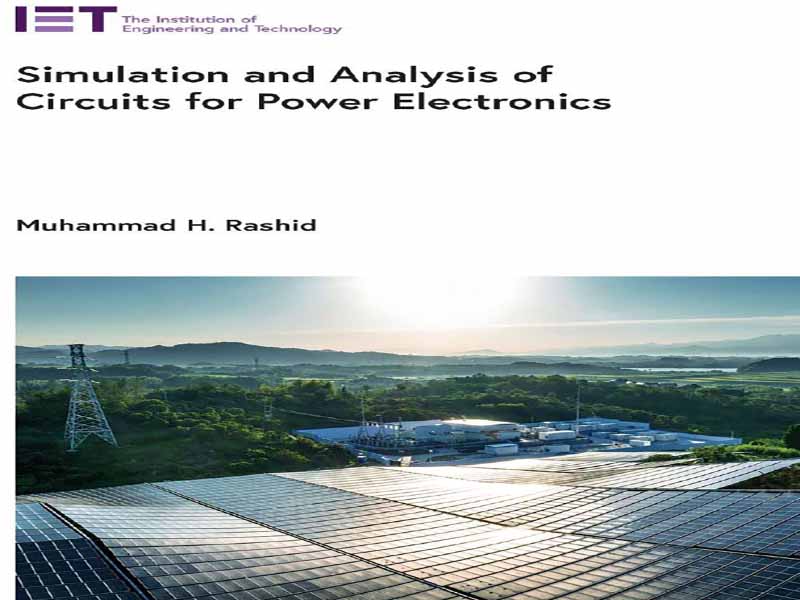
- عنوان کتاب: Simulation and Analysis of Circuits for Power Electronics
- نویسنده: Muhammad H. Rashid
- حوزه: تحلیل مدار الکتریکی
- سال انتشار: 2025
- تعداد صفحه: 308
- زبان اصلی: انگلیسی
- نوع فایل: pdf
- حجم فایل: 3.87 مگابایت
Power electronics is an application-oriented emerging area and finding applications in every day of our life in providing electric energy to sustain the usages of our modern electronic devices and equipment. The electric motors and auxiliary power of electric vehicles, solar energy, and other renewable energy sources require power electronics. With the increasing emphasis on renewable energy and energy savings in home, transportation, and industrial applications, power electronics education is becoming essential for supporting manpower needs for sustaining technological growth and development. Although power electronics is essential for powering modern devices, machines, and industrial equipment, Power electronics is normally offered in universities and colleges as a technical elective. It is an application-oriented and interdisciplinary course that requires a background in mathematics, electrical circuits, control systems, analog and digital electronics, microprocessors, electric power, and electrical machines. Power electronics deals with power processing from AC to DC, DC to AC, DC to DC, and AC to AC. Therefore, it requires a clear understanding of the performance parameters of the AC sources and loads, DC sources and loads, and the parameters of power electronic switching devices. Power electronics use power semiconductor devices as switching elements for transferring energy from the source to the load and vice versa. Due to the switching actions of the power electronic devices, the voltages and currents of the power electronic circuits are pulsing DC or DC waveforms. The understanding of the operation of a power electronics circuit requires a clear knowledge of the transient behavior of current and voltage waveforms for each circuit element at every instant of time. These features make power electronics a difficult course for students to understand and for professors to teach. However, Power electronics is playing a key role in power processing and control. This book is based on the author’s experience in teaching power electronics for many years and integrating design content and LTspice on power electronics. The book is intended for undergraduate students of engineering and engineering technology programs. It could be used by working engineers with some background in electric circuits and differential equations. The book considers power electronics consisting of piece-wise circuits. The book focuses on the LTspice circuit simulation and the performance analysis of the power electron circuits. The LTspice software, which is available free to students and professionals, is ideal for classroom use and for assignments requiring computer-aided simulation and analysis. Without any additional resources and lecture time, LTspice can also be integrated into power electronics. The objective of this book is to integrate the LTspice simulator with a power electronics course at the junior level or senior level with a minimum amount of time and effort. This book assumes no prior knowledge about the LTspice simulator. The simulation requires (a) a clear knowledge and understanding of the characteristics of the switching services, (b) the gating signal requirements of the devices to turn on and off of the devices to ensure the devices are fully turned on or off, (c) the generation of the gating signals to produce the desired waveforms of output voltages and currents, and (d) the insolation of the low-level gating signals from the high voltage and current circuits. The performance analysis requires (a) the determination of the modes of operation during a complete switching cycle or period, (b) the circuit models during the modes of operation, (c) developing mathematical models describing the voltage and current relations, (d) solving explicit equations of the circuit parameters, the boundary conditions and the switching time of the devices, the switching frequency, and the output frequency, and (d) determining the performance parameters of the converter, the input side parameters, and the output side parameters. This book can be divided into eight parts: (1) DC and AC Fundamentals – Chapter 1; (2) Switched RLC Circuits – Chapter 2; (3) Diode Rectifiers – Chapters 3; (4) DC–DC converters – Chapter 4; (5) AC–DC converters – Chapters 5; (6) Resonant Pulse Inverters – Chapters 6; (7) Controlled Rectifiers – Chapter 7; and (8) AC voltage controllers – Chapter 8.
الکترونیک قدرت یک حوزه نوظهور کاربردی است و کاربردهایی در هر روز از زندگی ما در تأمین انرژی الکتریکی برای حفظ استفاده از دستگاهها و تجهیزات الکترونیکی مدرن ما پیدا میکند. موتورهای الکتریکی و توان کمکی وسایل نقلیه الکتریکی، انرژی خورشیدی و سایر منابع انرژی تجدیدپذیر به الکترونیک قدرت نیاز دارند. با تأکید روزافزون بر انرژی تجدیدپذیر و صرفهجویی در مصرف انرژی در کاربردهای خانگی، حمل و نقل و صنعتی، آموزش الکترونیک قدرت برای پشتیبانی از نیازهای نیروی انسانی جهت حفظ رشد و توسعه فناوری ضروری میشود. اگرچه الکترونیک قدرت برای تأمین انرژی دستگاهها، ماشینها و تجهیزات صنعتی مدرن ضروری است، اما الکترونیک قدرت معمولاً در دانشگاهها و کالجها به عنوان یک درس اختیاری فنی ارائه میشود. این یک دوره کاربردی و بین رشتهای است که نیاز به پیشینهای در ریاضیات، مدارهای الکتریکی، سیستمهای کنترل، الکترونیک آنالوگ و دیجیتال، ریزپردازندهها، توان الکتریکی و ماشینهای الکتریکی دارد. الکترونیک قدرت با پردازش توان از AC به DC، DC به AC، DC به DC و AC به AC سروکار دارد. بنابراین، نیاز به درک روشنی از پارامترهای عملکرد منابع و بارهای AC، منابع و بارهای DC و پارامترهای دستگاههای سوئیچینگ الکترونیک قدرت دارد. الکترونیک قدرت از دستگاههای نیمههادی قدرت به عنوان عناصر سوئیچینگ برای انتقال انرژی از منبع به بار و برعکس استفاده میکند. به دلیل عملکرد سوئیچینگ دستگاههای الکترونیک قدرت، ولتاژها و جریانهای مدارهای الکترونیک قدرت، شکل موجهای DC یا DC پالسی هستند. درک عملکرد یک مدار الکترونیک قدرت نیازمند دانش روشنی از رفتار گذرای شکل موجهای جریان و ولتاژ برای هر عنصر مدار در هر لحظه از زمان است. این ویژگیها، الکترونیک قدرت را به درسی دشوار برای دانشجویان و تدریس آن را برای اساتید تبدیل میکند. با این حال، الکترونیک قدرت نقش کلیدی در پردازش و کنترل قدرت ایفا میکند. این کتاب بر اساس تجربه نویسنده در تدریس الکترونیک قدرت برای سالهای متمادی و ادغام محتوای طراحی و LTspice در الکترونیک قدرت نوشته شده است. این کتاب برای دانشجویان کارشناسی مهندسی و برنامههای فناوری مهندسی در نظر گرفته شده است. این کتاب میتواند توسط مهندسان شاغل با پیشینهای در مدارهای الکتریکی و معادلات دیفرانسیل مورد استفاده قرار گیرد. این کتاب الکترونیک قدرت متشکل از مدارهای قطعهای را در نظر میگیرد. این کتاب بر شبیهسازی مدار LTspice و تحلیل عملکرد مدارهای الکترون قدرت تمرکز دارد. نرمافزار LTspice که به صورت رایگان در دسترس دانشجویان و متخصصان است، برای استفاده در کلاس درس و برای تکالیفی که نیاز به شبیهسازی و تحلیل به کمک کامپیوتر دارند، ایدهآل است. بدون هیچ منبع اضافی و زمان سخنرانی، LTspice میتواند در الکترونیک قدرت نیز ادغام شود. هدف این کتاب ادغام شبیهساز LTspice با یک دوره الکترونیک قدرت در سطح مبتدی یا ارشد با حداقل زمان و تلاش است. این کتاب هیچ دانش قبلی در مورد شبیهساز LTspice را فرض نمیکند. این شبیهسازی نیاز به (الف) دانش و درک روشنی از ویژگیهای سرویسهای سوئیچینگ، (ب) الزامات سیگنال گیت دستگاهها برای روشن و خاموش کردن دستگاهها برای اطمینان از روشن یا خاموش بودن کامل دستگاهها، (ج) تولید سیگنالهای گیت برای تولید شکل موجهای مطلوب ولتاژها و جریانهای خروجی، و (د) جداسازی سیگنالهای گیت سطح پایین از مدارهای ولتاژ و جریان بالا دارد. تحلیل عملکرد مستلزم (الف) تعیین حالتهای عملیاتی در طول یک چرخه یا دوره کامل سوئیچینگ، (ب) مدلهای مدار در طول حالتهای عملیاتی، (ج) توسعه مدلهای ریاضی که روابط ولتاژ و جریان را توصیف میکنند، (د) حل معادلات صریح پارامترهای مدار، شرایط مرزی و زمان سوئیچینگ دستگاهها، فرکانس سوئیچینگ و فرکانس خروجی، و (د) تعیین پارامترهای عملکردی مبدل، پارامترهای سمت ورودی و پارامترهای سمت خروجی است. این کتاب را میتوان به هشت بخش تقسیم کرد: (1) مبانی DC و AC – فصل 1؛ (2) مدارهای RLC سوئیچینگ – فصل 2؛ (3) یکسوکنندههای دیودی – فصل 3؛ (4) مبدلهای DC-DC – فصل 4؛ (5) مبدلهای AC-DC – فصل 5؛ (6) اینورترهای پالس رزونانسی – فصل 6؛ (7) یکسوکنندههای کنترلشده – فصل 7؛ و (8) کنترلکنندههای ولتاژ AC – فصل 8.
این کتاب را میتوانید از لینک زیر بصورت رایگان دانلود کنید:
Download: Simulation and Analysis of Circuits for Power Electronics





















نظرات کاربران