













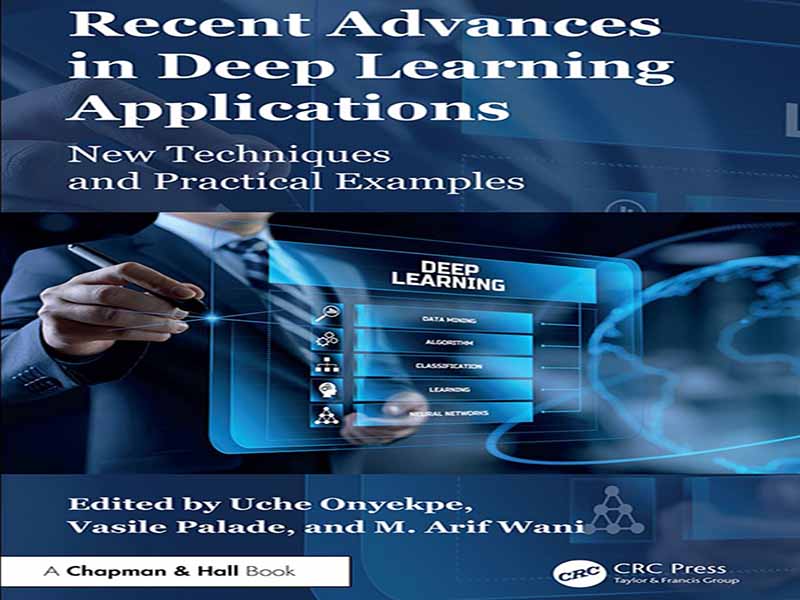
- عنوان کتاب: Recent Advances in Deep Learning Applications, New Techniques and Practical Examples
- نویسنده: Onyekpe, Uche Palade, Vasile Wani, M. Arif
- حوزه: یادگیری عمیق
- سال انتشار: 2026
- تعداد صفحه: 603
- زبان اصلی: انگلیسی
- نوع فایل: pdf
- حجم فایل: 35.9 مگابایت
در حوزه هوش مصنوعی که پیوسته در حال تکامل است، یادگیری عمیق به عنوان چراغ راه نوآوری مدرن، آنچه را که زمانی علمی تخیلی تصور میشد، به واقعیت تبدیل میکند. معماریهای یادگیری عمیق از شبکههایی با لایههای متعدد تشکیل شدهاند که توانایی شناسایی مستقل الگوهای سلسله مراتبی مهم در دادههای مختلف ساختاریافته و بدون ساختار را دارند. پیشرفت در یادگیری عمیق، تولید بازنماییهای جدید و استخراج بینشها و همچنین ظرفیت استنتاج از منابع داده خام مانند تصاویر، ویدیوها، متن، گفتار، سریهای زمانی و سایر انواع دادههای پیچیده را تسهیل کرده است. این روشهای یادگیری عمیق در حال حاضر برای پرداختن به انواع مسائل جذاب دنیای واقعی به کار گرفته میشوند و حوزههایی مانند پایش وضعیت، تشخیص خطا، تشخیص پزشکی، خودروهای خودران و بسیاری از زمینههای دیگر را پوشش میدهند. این کتاب در 16 فصل، پیشرفتهای اخیر، تکنیکهای جدید و معماریها را در کاربرد یادگیری عمیق در حوزههای مختلف زندگی واقعی بررسی میکند. این کتاب به چهار بخش تقسیم شده است که پیامدهای عمیق و واقعی یادگیری عمیق را در موارد زیر بررسی میکند: – بینایی کامپیوتر، – پردازش زبان طبیعی (NLP)، – مدلسازی پیشبینی، و همچنین، – رویکردهای روششناختی برای یادگیری تقویتی، کاهش داده و غیره. 16 فصل کتاب، بسط مقالات منتخب از بیست و سومین کنفرانس بینالمللی IEEE در مورد کاربردهای یادگیری ماشین (IEEE ICMLA)، جکسونویل – ایالات متحده آمریکا، 14 تا 17 دسامبر 2023 است. خلاصه فصلها در زیر آمده است: فصل 1، تقسیمبندی خودکار تصویر YOLOv8 (YOLOv8AIS) را ارائه میدهد، الگوریتمی برای تقسیمبندی خودکار تصویر که از YOLOv8 و یادگیری فعال برای کاهش حاشیهنویسی دستی و بهبود تشخیص اشیا استفاده میکند. اثربخشی الگوریتم پیشنهادی در شرایط و مجموعه دادههای مختلف ارزیابی شد. فصل 2، رویکردهای یادگیری عمیق با بهرهوری انرژی بالا در تشخیص گلوکوم را به منظور رفع کمبود چشمپزشکان واجد شرایط در مناطق روستایی مورد بحث قرار میدهد. این مطالعه موفقیت رویکردهای یادگیری عمیق را برای تشخیص دقیق گلوکوم برجسته میکند. فصل ۳ به بررسی استفاده از الگوریتمهای یادگیری عمیق مقرونبهصرفه و کارآمد برای حل مشکل حذف مصنوعات فشردهسازی JPEG (CAR) در حوزه پیکسل با نگاشت یک تصویر فشردهشده با کیفیت پایین به تصویر با کیفیت بالای مربوطه میپردازد. فصل ۴ مدلسازی ادراک احساسات چهره را با استفاده از تکنیکهای یادگیری عمیق مورد بحث قرار میدهد. یافتههای تحقیق، درک ما از رابطه بین حرکات چشم و الگوهای نگاه و ادراک احساسات را بهبود میبخشد. فصل ۵ پتانسیل مدلهای زبانی بزرگ (LLM) را در ارزیابی آموزشی با بهرهبرداری از استدلال معنایی، درک زمینهای و قابلیتهای یادگیری انتقالی LLMها برای نمرهدهی خودکار پاسخ کوتاه و تشخیص تصور غلط نشان میدهد. این مطالعه پایه و اساس تحقیقات آینده در مورد استفاده از LLMها برای درک پاسخهای ظریف دانشآموزان و تشخیص دقیق تصورات غلط را بنا مینهد. فصل ۶ به بررسی چگونگی یادگیری زبانها توسط انسانها، بهویژه اینکه آیا کلاسهای کلمات ذاتی هستند یا اکتسابی، میپردازد. یک شبکه عصبی بازگشتی عمیق برای پیشبینی کلمه (کلمات) بعدی در یک توالی آموزش داده میشود. یافتههای این تحقیق نشان میدهد که بازنماییهای داخلی توالیهای ورودی با توجه به کلاس کلمات پیشبینیها، خوشهبندی میشوند. این نشان میدهد که قوانین نحوی و سایر بازنماییهای انتزاعی ممکن است به طور طبیعی در نتیجه کدگذاری و پردازش پیشبینیکننده در طول اکتساب زبان ظاهر شوند. نتیجه این مطالعه نقطه شروعی برای تحقیقات بیشتر در مورد مکانیسمهای عصبی زیربنایی اکتساب و پردازش زبان فراهم میکند و ممکن است در کاربردهای NLP مفید باشد، جایی که درک سازماندهی بازنماییهای عصبی ورودی زبان میتواند به بهبود مدلسازی زبان، ترجمه ماشینی و غیره کمک کند. فصل 7 به استفاده از یادگیری عمیق برای پیشبرد قابلیتهای تشخیص تهدید در حوزه امنیت سایبری میپردازد. این فصل همچنین تکنیکهای انتخاب داده استراتژیک، مانند استراتژی پرسوجو مبتنی بر تنوع K-means، را در بهینهسازی عملکرد مدل بررسی میکند. فصل 8 توسعه تکنیکهای جدید و یک خط لوله جامع برای تشخیص خودکار تناقض، ادغام یکپارچه یک سیستم بازیابی اطلاعات، طبقهبندیکنندههای یادگیری ماشین و هوش مصنوعی قابل توضیح را ارائه میدهد. سیستم بازیابی اطلاعات به سمت دادههای زیستپزشکی هدایت میشود و شامل یک مخزن داده قوی در کنار اجزای شباهت نحوی و معنایی است. فصل 9 به تأثیر پردازش زبان طبیعی در تحول آموزش از طریق توسعه پلتفرمهای دیجیتال که تجربیات یادگیری دانشآموزان را افزایش میدهند، میپردازد. این فصل، ادغام تولید، ارزیابی و بازخورد شبه انسانی را در پلتفرم دیجیتال پیشنهاد میدهد. این پیشنهاد قابلیت افزایش یادگیری شخصیسازیشده را دارد و نشان میدهد که معیارهای خودکار میتوانند با ارزیابیهای انسانی همسو باشند و در نتیجه، …
In the continuously evolving field of artificial intelligence, deep learning stands as a beacon of modern innovation, bringing to reality what was once thought to be science fiction. Deep learning architectures are made up of networks with multiple layers, which possess the ability to independently identify important hierarchical patterns in various structured and unstructured data. Progress in deep learning has facilitated the generation of new representations and the extraction of insights, as well as the capacity to infer from raw data sources like images, videos, text, speech, time series, and other complex data types. These deep learning methods are currently being applied to address a variety of fascinating real-world problems, covering areas such as condition monitoring, fault diagnostics, medical diagnostics, self-driving cars, and numerous other fields. This book puts forward 16 chapters, exploring recent advances, novel techniques, and architectures in the application of deep learning to diverse real-life domains. This book is broken into four parts, exploring the profound and real-world implications of deep learning in: -computer vision, -natural language processing (NLP), -predicting modeling, as well as, -methodological approaches for reinforcement learning, data reduction, etc. The 16 chapters of the book are extensions of selected papers from the 23rd IEEE International Conference on Machine Learning Applications (IEEE ICMLA), Jacksonville – USA, 14–17th December 2023. The chapters are summarized below: Chapter 1 presents YOLOv8 automated image segmentation (YOLOv8AIS), an algorithm for automated image segmentation which uses YOLOv8 and active learning to reduce manual annotation and improve object detection. The effectiveness of the proposed algorithm was evaluated across various conditions and datasets. Chapter 2 discusses energy-efficient deep learning approaches in detecting glaucoma in order to address the shortage of qualified opthamologists in rural regions. The study highlights the success of the deep learning approaches for accurately detecting glaucoma. Chapter 3 explores the use of cost-effective and -efficient deep learning algorithms to solve the JPEG compression artifact removal (CAR) problem in pixel domain by mapping a low-quality compressed image to the corresponding high-quality image. Chapter 4 discusses the modeling of face emotion perception using deep learning techniques. The research findings improve our understanding of the relationship between movements of the eye and gaze patterns, and emotion perception. Chapter 5 demonstrates the potential of large language models (LLMs) in educational assessment by exploiting the semantic reasoning, contextual comprehension, and transfer learning capabilities of LLMs for automated short-answer grading and misconception detection. The study lays the foundation for future research on the use of LLMs to understand nuanced responses from students and to precisely detect misconceptions. Chapter 6 explores how languages are learned by humans, specifically whether word classes are innate or learned. A deep recurrent neural network is trained to predict the next word(s) within a sequence. The findings from this research show that internal representations of the input sequences are clustered with respect to the word class of the predictions. This suggests that syntax rules and other abstract representations may naturally emerge as a consequence of predictive coding and processing during language acquisition. The outcome of this study provides a starting point for further investigations into the neural mechanisms underlying language acquisition and processing, and may be useful in NLP applications where an understanding of the organization of neural representations of language input can help improve language modeling, machine translation, etc. Chapter 7 discusses the use of deep learning to advance threat detection capabilities within the realm of cybersecurity. The chapter also explores strategic data selection techniques, such as the K-means diversity-based query strategy, in optimizing model performance. Chapter 8 presents the development of novel techniques and a comprehensive pipeline for automated contradiction detection, seamlessly integrating an information retrieval system, machine learning classifiers, and explainable AI. The information retrieval system is geared toward biomedical data and encompasses a robust datastore alongside syntactic and semantic similarity components. Chapter 9 discusses the impact of natural language processing in the transformation of education through the development of digital platforms that enhance student’s learning experiences. The chapter proposes the integration of human-like generation, evaluation, and feedback into the digital platform. The proposition has the capability to enhance personalized learning and demonstrates that automated metrics can align closely with human evaluations, thus enhancing the effectiveness of ed-tech tools. Chapter 10 explores the use of transformer graph neural network (TGNN) in real estate pricing to address challenges around sparse data availability, temporal, and geographical changes. The T-GNN substantially outperforms the nongraph neural network approaches, providing a robust solution due to its ability to handle missing input features, and its remarkable understanding of space and time. Chapter 11 discusses the challenges with utilities as a result of the evolving energy mix and electricity market. The chapter proposes an approach for the detection and clustering of errors from model predictive controllers for fleets of residential devices. Chapter 12 presents a hybrid technique that combines recurrent neural network and physics informed neural network to model and forecast healthcare demand and the dynamics of COVID-19. The proposed approach effectively estimates key parameters, unobserved states, and forecasts ICU demand, providing insights into the dynamics of the pandemic. Chapter 13 addresses the issue of fraud within the Medicare program, which results in losses amounting to billions of dollars annually. The study proposes a novel data reduction technique, one class Gaussian mixture models, and demonstrates that fraud detection models trained on 20% of that original data can retain a high performance. The research offers a scalable and efficient technique for the detection of fraud in the presence of large-scale health datasets. Chapter 14 proposes a unique deep learning–based hybrid approach made of convolutional and recurrent layers to locate harmful, flammable, or polluting gas leaks using information on molecular movement, obstacles, and wind direction. The proposed technique outperforms existing approaches significantly in locating the source of the gas leak. Chapter 15 presents “oracle” conditioning and iterative neural networks, an approach inspired by dynamical systems and recurrent neural networks, to enhance the accuracy of predictive models in sparse data domains. The study addresses the challenge associated with the training of deep neural networks with a small dataset, which is a very common issue with machine learning problems in the physical science field. The effectiveness of the proposition is demonstrated on a lander pattern analysis and electromagnetic source localization problem. Chapter 16 discusses the challenges associated with the use of a hierarchical multiagent reinforcement learning framework to analyze simulated air defense scenarios. A two-level decisionmaking process is proposed to address the challenge (i.e., low-level policies control individual units, while a high-level commander policy issues macro commands in view of the overall mission targets). The approach, which is validated empirically, demonstrates a safe-to-fail and cost-effective method for exploring real-world defense scenarios and strategy planning.
این کتاب را میتوانید از لینک زیر بصورت رایگان دانلود کنید:





















نظرات کاربران