









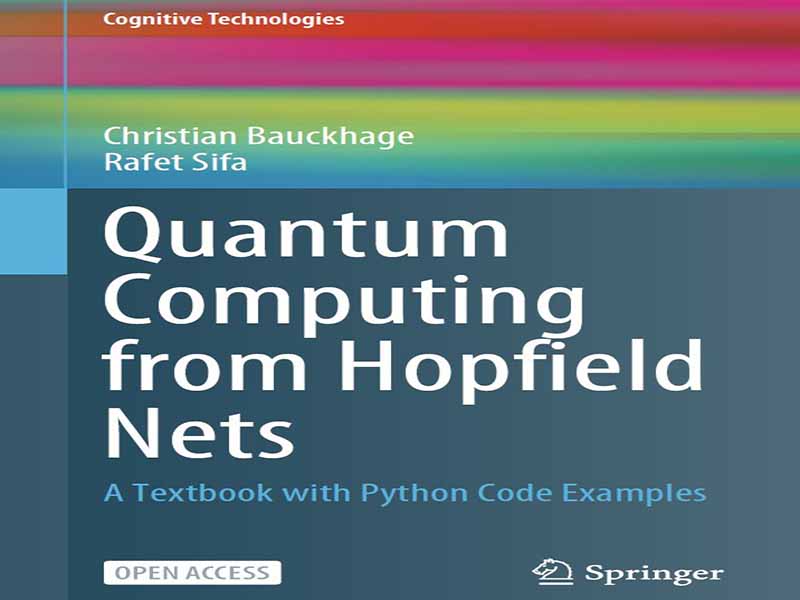
- عنوان کتاب: Quantum Computing from Hopfield Nets -A Textbook with Python Code Examples
- نویسنده: Christian Bauckhage, Rafet Sifa
- حوزه: محاسبات کوانتومی
- سال انتشار: 2025
- تعداد صفحه: 306
- زبان اصلی: انگلیسی
- نوع فایل: pdf
- حجم فایل: 9.29 مگابایت
این کتاب برای دانشجویان علوم کامپیوتر که به دنبال آشنایی مختصر با دنیای محاسبات کوانتومی هستند، در نظر گرفته شده است. به طور خاص، این کتاب برای خوانندگانی نوشته شده است که دانش پایهای در مورد هوش مصنوعی (AI) و یادگیری ماشین (ML) دارند و به طور گذرا با الگوریتمهای جستجو، تکنیکهای بهینهسازی و شبکههای عصبی آشنا هستند. این به این دلیل نیست که ما به هوش مصنوعی کوانتومی یا یادگیری ماشین کوانتومی علاقهمند هستیم، بلکه به این دلیل است که فرض اساسی ما این است که یک پل مفهومی بین مدلهای خاص هوش مصنوعی/یادگیری ماشین و مدلهای خاص محاسبات کوانتومی وجود دارد. بنابراین هدف ما در این کتاب (1) بررسی مجدد این مدلهای هوش مصنوعی/یادگیری ماشین و کاربردهای آنها و (2) ایجاد این پایه آشنا برای ورود به مطالعه محاسبات کوانتومی و موارد استفاده احتمالی آن است. ارائه ما فنی اما عملی و عملمحور است. ما تا حد لازم تئوری را پوشش میدهیم، اما تا حد زیادی به شیوهای مثالمحور پیش میرویم. اکثر مثالهای ما مربوط به بهینهسازی ترکیبی هستند و مسائلی را در نظر میگیرند که میتوانند به عنوان مسائل بهینهسازی دودویی درجه دوم بدون محدودیت در نظر گرفته شوند. کدهای متعدد Python/NumPy/SciPy از بحث ریاضی ما پشتیبانی میکنند و نشان میدهند که چگونه میتوان تئوری را در عمل به کار برد. کامپیوترهای کوانتومی از اثرات مکانیک کوانتومی مانند برهمنهی، درهمتنیدگی یا تونلزنی کوانتومی برای پردازش اطلاعات استفاده میکنند. وقتی هوشمندانه استفاده شوند، سطوحی از کارایی محاسباتی را فراهم میکنند که با کامپیوترهای دیجیتال قابل دستیابی نیستند. در واقع، میتوان انتظار داشت که الگوریتمهای محاسبات کوانتومی حداقل به صورت درجه دوم سریعتر از همتایان کلاسیک خود باشند. برای برخی از مسائل، حتی میتوان سرعت را تا حد نمایی افزایش داد. این موضوع البته در جهانی که تقاضای روزافزونی برای پردازش کارآمد اعداد وجود دارد، مورد توجه است. مبانی نظری محاسبات کوانتومی برای اولین بار در دهه 1980 پایهگذاری شد و پیشرفت نظری قابل توجهی در دهه 1990 رخ داد. از سوی دیگر، پیشرفت فنی مدت زمان بیشتری طول کشید و تنها در دهه 2010 قابل توجه شد. اما اکنون ما در جهانی زندگی میکنیم که کامپیوترهای کوانتومی فعال وجود دارند. درست است که در زمان نوشتن این کتاب، این کامپیوترها هنوز قابلیتهای محدودی دارند، اما نشان میدهند که محاسبات کوانتومی امکانپذیر است و پیشرفت مشهود است. بنابراین جای تعجب نیست که محققان و بازیگران صنعتی بیشتری در مورد الگوریتمهای کوانتومی و کاربردهای بالقوه آنها هیجانزده هستند. موارد فوق این سؤال را مطرح میکند که چرا محاسبات کوانتومی هنوز توجه گستردهای را در علوم کامپیوتر جریان اصلی به خود جلب نکرده است و چرا هنوز به طور گسترده در دانشکدههای علوم کامپیوتر تدریس نمیشود. خب، در حالی که محاسبات کوانتومی قدرت محاسباتی بالایی را ارائه میدهد، به نوع تفکر متفاوتی نسبت به محاسبات دیجیتال نیز نیاز دارد. در واقع، تجربه نشان میدهد که حداقل سه مانع اصلی برای تعامل گستردهتر با این موضوع وجود دارد: ۱. پدیدههای مکانیک کوانتومی عجیب، انتزاعی و دشوار به نظر میرسند زیرا عمدتاً در مقیاسهای زیر اتمی ظاهر میشوند و در محیطهای روزمره ما قابل مشاهده نیستند. ۲. ابزارهای ریاضی مورد استفاده برای مدلسازی این پدیدهها پیچیده (بدون جناس) و باز هم انتزاعی هستند. ۳. برای افراد ناآشنا، نمادگذاری ریاضی مورد استفاده در ادبیات محاسبات کوانتومی حتی انتزاعیتر به نظر میرسد و نیاز به عادت کردن دارد. با این کتاب، ما سعی میکنیم با این چالش روبرو شویم و سفری طولانی به سمت درک مفاهیم اصلی محاسبات کوانتومی داشته باشیم. سفر ما در قلمرویی بسیار دور از مکانیک کوانتومی آغاز میشود، اما ابتدا (دوباره) به مناطقی که برای دانشمندان کامپیوتر آشناتر هستند، قبل از اینکه در قلمرو فیزیک کوانتومی کاربردی به پایان برسد، میپردازد. در طول مسیر، با ایدهها و مدلهای آشنا و همچنین مفاهیم ریاضی نسبتاً انتزاعی و اصول فیزیکی روبرو خواهیم شد. مورد دوم به ندرت در علوم کامپیوتر رایج مورد توجه قرار میگیرند، اما به عنوان اصول اساسی در نظریه و عمل محاسبات کوانتومی عمل خواهند کرد. به بیان سادهتر، مطالب این کتاب را به سه بخش اصلی تقسیم میکنیم: مقدمات، شبکههای هاپفیلد و محاسبات کوانتومی. شبکههای هاپفیلد خانوادهای محترم از شبکههای عصبی بازگشتی نسبتاً ساده هستند که امکان حل مسائل ترکیبی را فراهم میکنند. اصول اساسی آنها ارتباط نزدیکی با مدلها و مفاهیم مورد استفاده در فیزیک دارند، اما در کل درک آنها نسبتاً آسان است. این ایده اصلی ما را برای این کتاب برمیانگیزد: با مطالعه شبکههای هاپفیلد از زوایای غیرمعمول مختلف، میتوانیم با ابزارها و تکنیکهای ریاضی که نقش محوری در مکانیک کوانتومی و در نتیجه در محاسبات کوانتومی دارند، آشنا شویم. برای اینکه بتوانیم این زوایای غیرمعمول را در نظر بگیریم، به چند مقدمه نیاز داریم. پس از مطالعه آنها و ارتباط آنها با شبکههای هاپفیلد، باید برای ورود به دنیای انتزاعی و در نگاه اول غیرشهودی مکانیک کوانتومی و محاسبات کوانتومی آماده باشیم.
This book is intended for students of computer science who are looking for a gentle introduction to the world of quantum computing. More specifically, it is written for readers who have basic knowledge of Artificial Intelligence (AI) and Machine Learning (ML) and are passingly familiar with search algorithms, optimization techniques, and neural networks. This is not because we are interested in quantum AI or quantum ML but because our basic premise is that there exists a conceptual bridge between certain AI/ML models and certain quantum computing models. Our purpose in this book is therefore (1) to revisit these AI/ML models and their applications and (2) to build on this familiar foundation to segue into the study of quantum computing and its possible use cases. Our presentation is technical but pragmatic and practice oriented. We cover theory to the necessary extent but largely proceed in an example-driven manner. Most of our examples are concerned with combinatorial optimization and consider prob-lems that can be cast as quadratic unconstrained binary optimization problems. Numerous Python/NumPy/SciPy codes will support our mathematical discussion and demonstrate how to put theory into practice. Quantum computers harness quantum mechanical effects such as superposition, entanglement, or quantum tunneling for information processing. When used cleverly, this allows for levels of computational efficiency which are unreachable with digital computers. Indeed, quantum computing algorithms can generally be expected to be at least quadratically faster than their classical counterparts. For certain problems, there can be even up to exponential speedup. This is of course of interest in a world with ever growing demand for efficient number crunching. The theoretical foundations of quantum computing were first established in the 1980s and substantial theoretical progress happened in the 1990s. Technical progress, on the other hand, was a longer time coming and only became noteworthy in the 2010s. But by now we are living in a world where there exist working quantum computers. Granted, at the time of writing this book, these are of still limited capabil-ities but they demonstrate that quantum computing is feasible and progress is evident. It therefore comes as little surprise that more and more researchers and industrial players are excited about quantum algorithms and their potential applications. The above then begs the questions of why quantum computing has not yet received widespread attention in mainstream computer science and why it is not yet widely taught at computer science departments. Well, while quantum computing offers great computational power, it also requires a different kind of thinking than digital computing. Indeed, experience shows that there are at least three major obstacles for a broader engagement with the topic: 1. Quantum mechanical phenomena appear to be weird, abstract, and hard to accept for they mainly manifest on sub-atomic scales and cannot be observed in our daily environments. 2. The mathematical tools used for modeling these phenomena are complex (no pun intended) and again rather abstract. 3. To the uninitiated, the mathematical notation used in the quantum computing literature appears even more abstract and needs getting used to. With this book, we try to rise to the challenge and go on an extended journey towards understating core concepts of quantum computing. Our journey starts in territory far away from quantum mechanics but first (re)visits areas more familiar to computer scientists before it ends in the realm of applied quantum physics. Along the way, we are going to encounter familiar ideas and models as well as rather abstract mathematical concepts and physical principles. The latter are only rarely considered in mainstream computer science but will turn out to be fundamental to theory and practice of quantum computing. Put less prosaically, we structure the material in this book into three major parts: Preliminaries, Hopfield Nets, and Quantum Computing. Hopfield nets are a venerable family of rather simple recurrent neural networks which allow for combinatorial problem solving. Their underlying principles have close ties to models and concepts used in physics but are all in all fairly easy to understand. This motivates our basic idea for this book: By studying Hopfield nets from a variety of uncommon angles, we can familiarize ourselves with mathematical tools and techniques which play a central role in quantum mechanics and thus in quantum computing. To be able to consider these uncommon angles, we need a few preliminaries. Once we have studied those and their connections to Hopfield nets, we should be well prepared to venture into the abstract and at first sight unintuitive worlds of quantum mechanics and quantum computing.
این کتاب را میتوانید از لینک زیر بصورت رایگان دانلود کنید:
Download: Quantum Computing from Hopfield Nets




















نظرات کاربران