











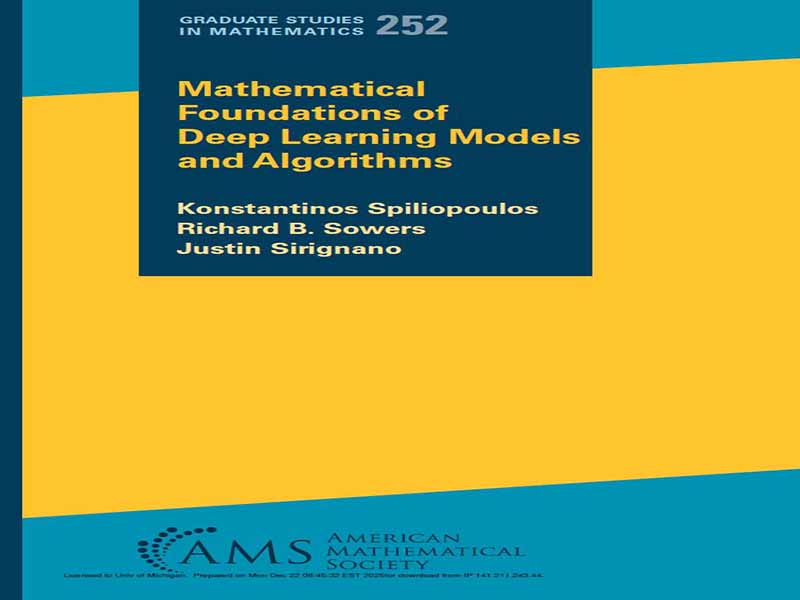
- عنوان کتاب: Mathematical Foundations of Deep Learning Models and Algorithms
- نویسنده: Konstantinos Spiliopoulos, Richard B. Sowers
- حوزه: یادگیری عمیق
- سال انتشار: 2025
- تعداد صفحه: 527
- زبان اصلی: انگلیسی
- نوع فایل: pdf
- حجم فایل: 4.36 مگابایت
این کتاب حاصل این باور است که ریاضیات و به طور کلی جامعه علمی میتواند با مقدمهای بر یادگیری عمیق و شبکههای عصبی به زبان ریاضیات به خوبی خدمت کند. با الهام از چرچیل، شاو و وایلد، ریاضیات و علوم کامپیوتر دو رشتهای هستند که با نمادگذاری مشترک از هم جدا شدهاند. ما معتقدیم که این کتاب میتواند به دانشجویان، محققان و متخصصان کمک کند تا راحتتر ارتباطات بین این مجموعه ابزارها و ایدههای محاسباتی که به طور فزایندهای مهم هستند را ببینند و بررسی کنند. طی چندین سال تحقیق و تدریس در شبکههای عصبی، نویسندگان به این نتیجه رسیدهاند که • سوالات تحقیقاتی ریاضی جالب و باز زیادی در زمینه یادگیری عمیق وجود دارد. • بلوغ ریاضی به دانشجویان و محققان در تفکر در مورد یادگیری ماشین مزیت میدهد. تفکر ریاضی ذاتاً نقاط قوت منحصر به فردی در تعمیم و انتزاع ایدهها و همچنین ارائه مرزهای دقیق برای پدیدههای پیچیده دارد. ما معتقدیم که حضور بیشتر ریاضی در زمینه یادگیری عمیق و شبکههای عصبی میتواند به نوبه خود به جامعه علمی بزرگتر کمک کند. این کتاب برای دانشجویان کارشناسی ارشد و دانشجویان تحصیلات تکمیلی و همچنین محققان و متخصصانی که میخواهند ریاضیات پشت الگوریتمهای مختلف یادگیری عمیق را درک کنند، در نظر گرفته شده است. این کتاب از دو بخش تشکیل شده است. بخش ۱ شامل مقدمهای ریاضی است، در حالی که بخش ۲ مباحث پیشرفتهتر ریاضی و محاسباتی را مورد بحث قرار میدهد و به مسیرهای تحقیقاتی بیشتر اشاره میکند. این نشان دهنده نوعی «جدایی مقیاسها» در تلاش ما است: اصول اولیه یادگیری عمیق «میکروسکوپی» هستند، در حالی که تحلیل ساختاری در مقیاس بزرگ «ماکروسکوپی» است. امید ما این است که ترکیب هر دو دیدگاه، درک بهتری از موضوع ارائه دهد. بخش اول کتاب (بخش ۱) دانش جبر خطی پایه، حساب دیفرانسیل و انتگرال چند متغیره و برخی از آمار و احتمالات مبتنی بر حساب دیفرانسیل و انتگرال را فرض میکند. این بخش از کتاب باید برای یک دانشجوی کارشناسی پیشرفته ریاضیات، آمار، علوم کامپیوتر، علوم داده یا مهندسی قابل فهم باشد. بخش اول با برخی مباحث کلاسیک در نظریه یادگیری آماری (مانند رگرسیون خطی، رگرسیون لجستیک و هستهها) شروع میشود، سپس به تدریج به مباحث مرتبط با یادگیری عمیق (مانند شبکههای عصبی پیشخور، پسگسترش، نزول گرادیان تصادفی، رهاسازی، نرمالسازی دستهای) میپردازد و با طیف گستردهای از معماریها و مدلهای یادگیری عمیق (مانند شبکههای عصبی بازگشتی، ترانسفورماتورها، شبکههای عصبی کانولوشن، استنتاج متغیر و مدلهای مولد) به پایان میرسد. ما همچنین بخشها و فصلهایی را در مورد مباحث آماری کلاسیک مانند منظمسازی، آموزش، اعتبارسنجی و آزمایش و اهمیت ویژگیها گنجاندهایم. هدف از فصلهای اولیه بخش اول، معرفی تدریجی خواننده به موضوع یادگیری عمیق از طریق مباحث کلاسیک در آمار و یادگیری ماشین است. این فصلهای اولیه به ما این امکان را میدهند که مسائل شناختهشدهای را که در معماریهای یادگیری عمیق مطرح میشوند، از طریق تنظیمات ملموستر و آسانتر که اغلب امکان محاسبات صریح را فراهم میکنند، نشان دهیم، که مورد دوم به ندرت برای معماریهای عمومی یادگیری عمیق صدق میکند. بخش دوم کتاب (بخش دوم) شامل مطالبی است که از بخش اول، چه از نظر ریاضی، چه از نظر مفهومی و چه از نظر محاسباتی، پیشرفتهتر هستند. این بخش از کتاب باید برای دانشجویان کارشناسی پیشرفته و دانشجویان تحصیلات تکمیلی که قصد دارند در مباحث خاصی از یادگیری عمیقتر شوند، قابل فهم باشد. جنبههای خاصی از بخش دوم کتاب (به عنوان مثال، قضایای تقریب یکنواخت، نظریه همگرایی برای گرادیان و گرادیان نزولی تصادفی، رژیم خطی و هسته مماس عصبی، رژیم یادگیری ویژگی و مقیاسبندی میدان میانگین، معادلات دیفرانسیل عصبی) با درک اولیه از آنالیز حقیقی و فرآیند تصادفی، آسانتر قابل خواندن خواهند بود. یک پیوست مستقل با مطالب پیشزمینه پیشرفتهتر مورد نیاز برای کمک به خواننده گنجانده شده است. سایر جنبههای بخش دوم کتاب، به عنوان مثال، آموزش توزیعشده و مشتقگیری خودکار، به پیشزمینه ریاضی کمتری نیاز دارند اما از نظر مفهومی یا محاسباتی پیشرفتهتر هستند. بخش ۱، به طور بالقوه همراه با مباحث منتخب از بخش ۲، میتواند به عنوان یک منبع مستقل برای یک دوره کارشناسی پیشرفته یا برای مقدمهای بر ریاضیات یادگیری عمیق برای دانشجویان سال اول تحصیلات تکمیلی باشد (ما این کار را در دورههای مرتبط در دانشگاههای مربوطه خود انجام دادهایم). موضوع یادگیری عمیق در حال حاضر بسیار گسترده است و به طور مداوم در حال رشد است. اگرچه تلاش کردهایم تا یک مرور کلی نسبتاً گسترده ارائه دهیم، اما ادعا نمیکنیم که تمام زوایای ممکن را پوشش دادهایم. هدف ما پوشش موضوعاتی بوده است که در زمان نگارش، آنها را مهم، اساسی و نسبتاً توسعهیافته میدانستیم. ما سعی کردهایم یک زبان ریاضی یکپارچه و منسجم ایجاد کنیم و این موضوعات را به شیوهای جامع به هم مرتبط کنیم و در نظر داشته باشیم که یادگیری عمیق
This book is an outgrowth of a belief that the mathematics and, in general, the scientific community might be well served by an introduction to deep learning and neural networks in the language of mathematics. To borrow from Churchill, Shaw, and Wilde, mathematics and computer science are two disciplines separated by common notation. We believe that this book might help students, researchers, and practitioners more easily see and explore connections to this increasingly important collection of computational tools and ideas. Over several years of research and teaching in neural networks, the authors have come to the conclusion that • There are many interesting and open mathematical research questions in the field of deep learning. • Mathematical maturity gives students and researchers an advantage in thinking about machine learning. Mathematical thinking innately has unique strengths in generalizing and abstracting ideas and also providing rigorous bounds on complex phenomena. We believe that a greater mathematical presence in the field of deep learning and neural networks can in turn contribute to the larger scientific community. This book is aimed at advanced undergraduate students and graduate students as well as researchers and practitioners who want to understand the mathematics behind the different deep learning algorithms. The book is composed of two parts. Part 1 contains a mathematical introduction, while Part 2 discusses more advanced mathematical and computational topics, hinting at further research directions. This represents something of a “separation of scales” in our effort: the basics of deep learning are “microscopic”, while largescale structural analysis is more “macroscopic”. Our hope is that the combination of both points of view will offer a better comprehension of the topic. The first part of the book (Part 1) assumes knowledge of basic linear algebra, multivariate calculus, and some statistics and calculus-based probability. This part of the book should be accessible to an advanced mathematics, statistics, computer science, data science, or engineering undergraduate student. Part 1 starts with some classical topics in statistical learning theory (such as linear regression, logistic regression, and kernels), then gradually progresses to deep learning related topics (such as feed forward neural networks, backprogagation, stochastic gradient descent, dropout, batch normalization), and concludes with a broad spectrum of deep learning architectures and models (such as recurrent neural networks, transformers, convolution neural networks, variational inference, and generative models). We have also included sections and chapters on classical statistical topics as regularization, training, validation and testing, and feature importance. The purpose of the earlier chapters in Part 1 is to introduce the reader to the subject of deep learning in a gradual way through classical topics in statistics and machine learning. These early chapters allow us to illustrate known issues that come up in deep learning architectures through easier-to-present concrete settings that often allow explicit computations, the latter being rarely the case for general deep learning architectures. The second part of the book (Part 2) contains material that is more advanced than Part 1, either mathematically, conceptually, or computationally. This part of the book should be accessible to advanced undergraduate students and graduate students aiming to go deeper in certain topics of deep learning. Certain aspects of the second part of the book (e.g., uniform approximation theorems, convergence theory for gradient and stochastic gradient descent, linear regime and the neural tangent kernel, feature learning regime and mean field field scaling, neural differential equations) would be easier to read given a basic understanding of real analysis and stochastic process. A self-contained appendix with more advanced required background material has been included to aid the reader. Other aspects of the second part of the book, e.g., distributed training and automatic differentiation, require less mathematical background but are more advanced either conceptually or computationally. Part 1, potentially together with selected topics from Part 2, could serve as standalone material for an advanced undergraduate course or for a first year graduate introduction to the mathematics of deep learning (we have done so in related course offerings in our respective universities). The topic of deep learning is already huge and is constantly growing. While we have attempted to provide a fairly broad overview, we do not claim to have covered all possible angles. Our aim has been to cover topics that we viewed as important, foundational, and reasonably well-developed at the time of writing. We have tried to establish a unified and consistent mathematical language, connecting those topics in a comprehensive way and keeping in mind that deep learning is both mathematically interesting and a tool in applied data analysis. Our efforts have concentrated around the idea of presenting essential ideas as clearly as possible. As such, we may not have always presented the sharpest possible versions of the results, but we have pointed to research articles and other monographs where the interested reader can find more refined results. No attempt has been made to provide comprehensive historical attribution of ideas. We do however give appropriate references which will hopefully provide entry points into the literature.
این کتاب را میتوانید از لینک زیر بصورت رایگان دانلود کنید:
Download: Mathematical Foundations of Deep Learning Models and Algorithms





















نظرات کاربران