



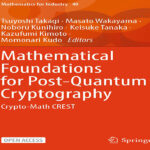



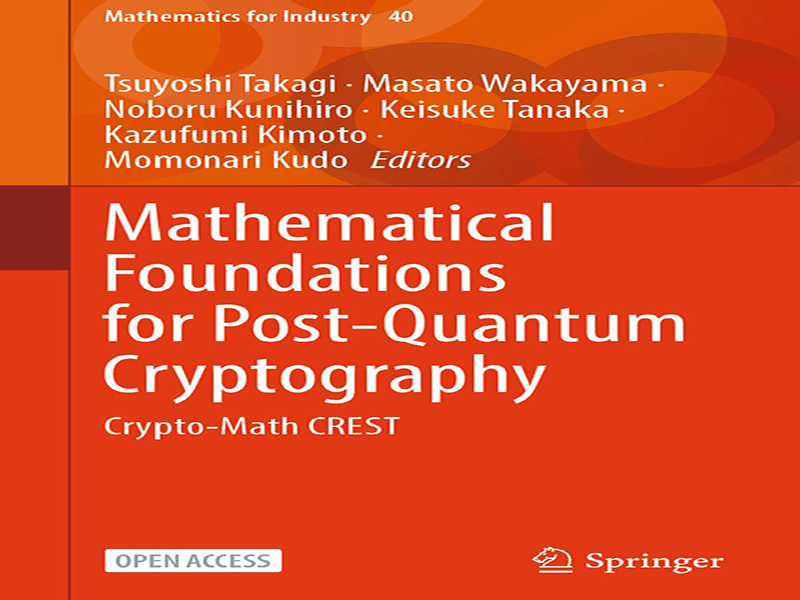
- عنوان کتاب: Mathematical Foundations for Post-Quantum Cryptography
- نویسنده: Tsuyoshi Takagi, Masato Wakayama
- حوزه: رمزنگاری پساکوانتومی
- سال انتشار: 2026
- تعداد صفحه: 642
- زبان اصلی: انگلیسی
- نوع فایل: pdf
- حجم فایل: 11.2 مگابایت
پروژه CREST Crypto-Math: «ایجاد و توسعه مبانی ریاضی برای رمزنگاری مورد نیاز جامعه پساکوانتومی» که توسط آژانس علوم و فناوری ژاپن (JST) پشتیبانی میشود، با هدف تحقق فناوری رمزنگاری مقاوم در برابر حملات مختلف مهاجمان احتمالی مانند حملات با استفاده از رایانههای کوانتومی و حملات کانال جانبی با استفاده از تحلیل توان انجام میشود. در این مطالعه، ما تلاش میکنیم تا برنامههای رمزنگاری را با یک تابع امنیتی غیرمتمرکز با استفاده از بلاکچین برای سیستمهای توزیعشده در مقیاس بزرگ توسعه دهیم. این کتاب مبانی ریاضی برای رمزنگاری ایمن مورد استفاده در عصر رایانههای کوانتومی را ارائه میدهد. به طور خاص، هدف ما تعمیق ریاضیات پایه رمزنگاری پساکوانتومی، مدلسازی قویترین حملات ممکن مانند حملات کانال جانبی و ساخت پروتکلهای رمزنگاری است که امنیت در برابر چنین حملاتی را تضمین میکنند. علاوه بر این، ما نظریههای ریاضی اساسی، مانند تعامل بین نظریه اعداد، هندسه حسابی و محاسبات کوانتومی را از منظر بلندمدت برای طراحی رمزنگاری امن در آینده بررسی میکنیم. این کتاب مجموعهای از سخنرانیهای هشت کارگاه آموزشی است که برای پروژه CREST Crypto-Math از اکتبر 2021 برگزار شده است. این پروژه شامل 4 گروه است: تحلیل رمز، حملات کوانتومی، حملات فیزیکی و پروتکلهای رمزنگاری، با مشارکت 36 محقق و بیش از 30 دانشجو. صفحه اصلی پروژه CREST Crypto-Math آدرس http://crypto.mist.i.u-tokyo.ac.jp/crest-cryptomath/ است. این کتاب شامل 24 مقاله است که در چهار بخش طبقهبندی شدهاند. بخش اول به مبانی ریاضی و نظریه کوانتومی اختصاص دارد که به حدس نابرابریهای ABC، توابع زتای ریمان، پیادهرویهای کوانتومی، اثبات کوانتومی، نوسانگرهای هارمونیک غیرجابجایی و مدلهای کوانتومی Rabi میپردازد. بخش دوم موضوعاتی مانند حملات کوانتومی به ECDLP، حملات شبکهای به سیستمهای رمزنگاری RSA و تحلیل رمز برخی از سیستمهای رمزنگاری مقاوم در برابر کوانتومی را پوشش میدهد. بخش سوم به توسعه رمزنگاری پساکوانتومی مانند رمزنگاری مبتنی بر شبکه، رمزنگاری کلید عمومی چند متغیره، رمزنگاری مبتنی بر کد و رمزنگاری مبتنی بر ایزوژنی میپردازد. در نهایت، بخش چهارم به توابع هش و امضاهای دیجیتال مبتنی بر گرافهای بسطدهنده، از جمله گرافهای رامانوجان و گرافهای جفت گروه-زیرگروه، میپردازد و برخی از کاربردهای ارزیابی ریسک، ارزهای دیجیتال مبتنی بر بلاکچین و بازیابی اطلاعات خصوصی را توضیح میدهد. این کتاب برای دانشجویان تحصیلات تکمیلی و محققان علاقهمند به رمزنگاری ریاضی مناسب است. امیدواریم این کتاب برای ارتقای تحقیقات در مورد نظریه کوانتومی و رمزنگاری پساکوانتومی مفید باشد. در نهایت، مایلیم از دکتر ناناری اوئدا، سرپرست تحقیقات در پلتفرم اطلاعات ریاضی CREST که توسط JPMJCR2113 پشتیبانی میشود، برای انتشار این کتاب تشکر کنیم.
The CREST Crypto-Math Project: “Creation and Development of Mathematical Foundations for Cryptography Required by the Post- Quantum Society” supported by the Japan Science and Technology Agency (JST) aims at realizing of cryptographic technology that is resistant to the compromise of various possible attackers such as attacks using quantum computers and side-channel attacks by power analysis. In this study, we attempt to develop cryptographic applications with a decentralized security function using blockchains for large-scale distributed systems. This book presents the mathematical foundations for cryptography securely used in the era of quantum computers. In particular, we aim to deepen the basic mathematics of post-quantum cryptography, model the strongest possible attacks such as side-channel attacks, and constructing cryptographic protocols that guarantee security against such attacks. Furthermore, we explore fundamental mathematical theories, such as the interaction between number theory, arithmetic geometry, and quantum computation, from a long-term perspective to design secure cryptography in the future. This book is a collection of lectures from eight workshops held for the CREST Crypto-Math project starting from October 2021, which consists of 4 groups: cryptanalysis, quantum attacks, physical attacks, and cryptographic protocols, with 36 researchers and over 30 students participating. The homepage of the CREST Crypto-Math project is http:// crypto. mist. i. u-tokyo. ac. jp/ crest-cryptomath/ . This book comprises 24 papers categorized into four parts. Part I is devoted to the mathematical foundation and quantum theory, which address the ABC inequalities conjecture, Riemann zeta functions, quantum walks, quantum proof, non-commutative harmonic oscillators, and quantum Rabi models. Part II covers topics such as quantum attacks on ECDLP, lattice attacks on RSA cryptosystems, and the cryptanalysis of some quantum-resistant cryptosystems. Part III discusses the development of post-quantum cryptography such as lattice-based cryptography, multivariate public-key cryptography, codebased cryptography, and isogeny-based cryptography. Finally, Part IV discusses hash functions and digital signatures based on expander graphs, including Ramanujan graphs and group—subgroup pair graphs, and explains some applications of risk assessments, cryptocurrencies based on blockchains, and private information retrieval. This book is suitable for graduate students and researchers interested in mathematical cryptography. We hope this book will be useful for promoting research on quantum theory and post-quantum cryptography. Finally, we would like to thank Dr. Naonari Ueda, the Research Supervisor at the CREST Mathematical Information Platform supported by JPMJCR2113, for publishing this book.
این کتاب را میتوانید از لینک زیر بصورت رایگان دانلود کنید:
Download: Mathematical Foundations for Post-Quantum Cryptography



















نظرات کاربران