












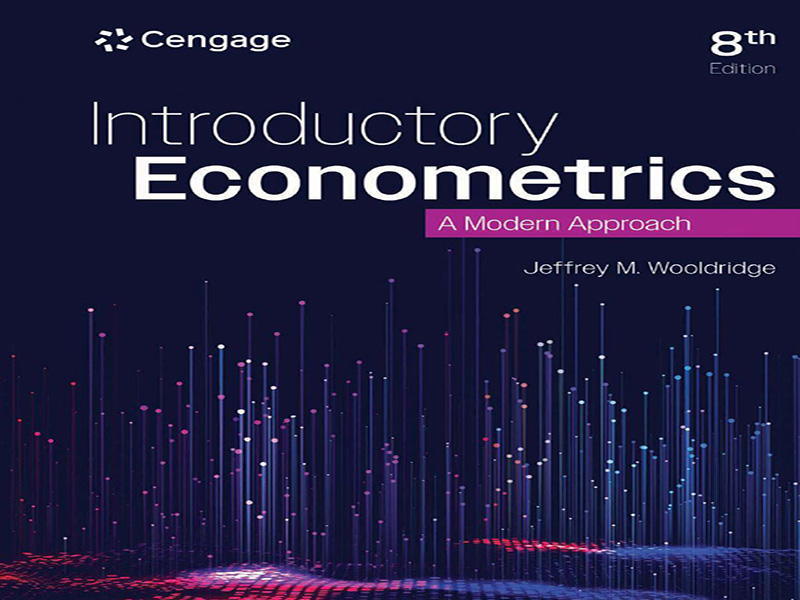
- عنوان کتاب: Introductory Econometrics -A Modern Approach
- نویسنده: Jeffrey Wooldridge
- حوزه: اقتصادسنجی
- سال انتشار: 2025
- تعداد صفحه: 946
- زبان اصلی: انگلیسی
- نوع فایل: pdf
- حجم فایل: 10.1 مگابایت
ویرایش هشتم، سازماندهی کلی ویرایش هفتم را حفظ کرده و شامل یک فصل اضافی – که اکنون فصل ۱۹ است – در مورد روشهای مدرن استنتاج علی است. قابل توجهترین ویژگی که این متن را از اکثر متون دیگر متمایز میکند، تفکیک موضوعات بر اساس نوع دادههای مورد تجزیه و تحلیل است. این یک انحراف آشکار از رویکرد سنتی است که یک مدل خطی ارائه میدهد، تمام فرضیاتی را که ممکن است در مقطعی از تحلیل مورد نیاز باشند فهرست میکند و سپس نتایج را بدون ارتباط واضح آنها با فرضیات، اثبات یا تأیید میکند. رویکرد من ابتدا در بخش ۱، تحلیل رگرسیون چندگانه با دادههای مقطعی، تحت فرض نمونهگیری تصادفی است. این محیط برای دانشجویان طبیعی است زیرا آنها در دورههای مقدماتی آمار خود با نمونهگیری تصادفی از یک جمعیت آشنا هستند. نکته مهم این است که به ما این امکان را میدهد تا فرضیات مطرح شده در مورد مدل رگرسیون جمعیت – فرضیاتی که میتوانند محتوای اقتصادی یا رفتاری داشته باشند – را از فرضیات مربوط به نحوه نمونهگیری دادهها متمایز کنیم. بحث در مورد پیامدهای نمونهگیری غیرتصادفی را میتوان پس از اینکه دانشجویان درک خوبی از مدل رگرسیون چندگانه تخمین زده شده با استفاده از نمونههای تصادفی داشتند، به صورت شهودی بررسی کرد. یکی از ویژگیهای مهم رویکرد مدرن این است که متغیرهای توضیحی – همراه با متغیر وابسته – به عنوان نتایج متغیرهای تصادفی در نظر گرفته میشوند. برای علوم اجتماعی، در نظر گرفتن متغیرهای توضیحی تصادفی بسیار واقعبینانهتر از فرض سنتی متغیرهای توضیحی غیرتصادفی است. به عنوان یک مزیت غیربدیهی، رویکرد مدل جمعیتی/نمونهگیری تصادفی، تعداد فرضیاتی را که دانشجویان باید جذب و درک کنند، کاهش میدهد. از قضا، رویکرد کلاسیک به تحلیل رگرسیون، که متغیرهای توضیحی را در نمونههای مکرر ثابت در نظر میگیرد و هنوز در متون مقدماتی فراگیر است، به معنای واقعی کلمه در مورد دادههای جمعآوریشده در یک محیط آزمایشی اعمال میشود. علاوه بر این، پیچیدگیهای مورد نیاز برای بیان و توضیح فرضیات میتواند برای دانشجویان گیجکننده باشد. تمرکز من بر مدل جمعیتی تأکید میکند که فرضیات اساسی زیربنای تحلیل رگرسیون، مانند فرض میانگین صفر در عبارت خطای غیرقابل مشاهده، به درستی مشروط به متغیرهای توضیحی بیان میشوند. این امر منجر به درک روشنی از انواع مسائلی مانند ناهمسانی واریانس (واریانس غیرثابت) میشود که میتوانند رویههای استنتاج استاندارد را بیاعتبار کنند. با تمرکز بر جمعیت، من همچنین قادر هستم چندین تصور غلط را که در متون اقتصادسنجی در تمام سطوح مطرح میشود، برطرف کنم. به عنوان مثال، توضیح میدهم که چرا ضریب تعیین (R) معمول هنوز به عنوان یک معیار نیکویی برازش در حضور ناهمسانی واریانس (فصل 8) یا خطاهای همبسته سریالی (فصل 12) معتبر است؛ من یک اثبات ساده ارائه میدهم که آزمونهای فرم تابعی نباید به عنوان آزمونهای کلی متغیرهای حذف شده در نظر گرفته شوند (فصل 9)؛ و توضیح میدهم که چرا همیشه باید در یک مدل رگرسیون، متغیرهای کنترلی اضافی را که با متغیر توضیحی مورد نظر، که اغلب یک متغیر سیاستی کلیدی است، ناهمبسته هستند، لحاظ کرد (فصل 6). از آنجا که فرضیات تحلیل مقطعی نسبتاً ساده اما واقعبینانه هستند، دانشجویان میتوانند بدون نگرانی در مورد مسائل بغرنج روندها، فصلی بودن، همبستگی سریالی، پایداری بالا و رگرسیون جعلی که در مدلهای رگرسیون سری زمانی رایج هستند، از همان ابتدا با کاربردهای جدی مقطعی درگیر شوند. در ابتدا، تصور میکردم که رویکرد من به رگرسیون با دادههای مقطعی و به دنبال آن رگرسیون با دادههای سری زمانی، مورد توجه مدرسانی قرار خواهد گرفت که علایق تحقیقاتی خودشان در اقتصاد خرد کاربردی است و به نظر میرسد که همینطور هم باشد. جای خوشحالی است که پذیرندگان متن با گرایش سری زمانی کاربردی نیز به همان اندازه به ساختار متن علاقهمند بودهاند. با به تعویق انداختن تحلیل اقتصادسنجی دادههای سری زمانی، میتوانم تمرکز مناسبی بر مشکلات بالقوه در تحلیل دادههای سری زمانی که با دادههای مقطعی ایجاد نمیشوند، داشته باشم. در واقع، اقتصادسنجی سری زمانی سرانجام در یک متن مقدماتی، به طور جدی مورد توجه قرار میگیرد. مانند ویرایشهای قبلی، من آگاهانه موضوعاتی را انتخاب کردهام که برای خواندن مقالات مجلات و انجام تحقیقات تجربی پایه مهم هستند. در هر موضوع، من عمداً بسیاری از آزمونها و رویههای تخمین را حذف کردهام که اگرچه به طور سنتی در کتابهای درسی گنجانده شدهاند، اما در آزمون تجربی زمان دوام نیاوردهاند. به همین ترتیب، من بر مباحث جدیدتری که به وضوح مفید بودن خود را نشان دادهاند، تأکید کردهام، مانند به دست آوردن آمارههای آزمونی که در برابر ناهمسانی واریانس (یا همبستگی سریالی) با فرم ناشناخته مقاوم هستند، استفاده از دادههای چندین سال برای تحلیل سیاست، یا حل مسئله متغیر حذف شده با روشهای متغیرهای ابزاری. به نظر میرسد انتخابهای نسبتاً خوبی داشتهام، زیرا فقط تعداد انگشتشماری پیشنهاد برای اضافه کردن یا حذف مطالب دریافت کردهام. من در سراسر متن رویکردی سیستماتیک اتخاذ میکنم…
The eighth edition preserves the overall organization of the seventh, and includes an additional chapter—now Chapter 19—on modern causal inference methods. The most noticeable feature that distinguishes this text from most others is the separation of topics by the kind of data being analyzed. This is a clear departure from the traditional approach, which presents a linear model, lists all assumptions that may be needed at some future point in the analysis, and then proves or asserts results without clearly connecting them to the assumptions. My approach is first to treat, in Part 1, multiple regression analysis with cross-sectional data, under the assumption of random sampling. This setting is natural to students because they are familiar with random sampling from a population in their introductory statistics courses. Importantly, it allows us to distinguish assumptions made about the underlying population regression model—assumptions that can be given economic or behavioral content—from assumptions about how the data were sampled. Discussions about the consequences of nonrandom sampling can be treated in an intuitive fashion after the students have a good grasp of the multiple regression model estimated using random samples. An important feature of a modern approach is that the explanatory variables—along with the dependent variable—are treated as outcomes of random variables. For the social sciences, allowing random explanatory variables is much more realistic than the traditional assumption of nonrandom explanatory variables. As a nontrivial benefit, the population model/random sampling approach reduces the number of assumptions that students must absorb and understand. Ironically, the classical approach to regression analysis, which treats the explanatory variables as fixed in repeated samples and is still pervasive in introductory texts, literally applies to data collected in an experimental setting. In addition, the contortions required to state and explain assumptions can be confusing to students. My focus on the population model emphasizes that the fundamental assumptions underlying regression analysis, such as the zero mean assumption on the unobservable error term, are properly stated conditional on the explanatory variables. This leads to a clear understanding of the kinds of problems, such as heteroskedasticity (nonconstant variance), that can invalidate standard inference procedures. By focusing on the population, I am also able to dispel several misconceptions that arise in econometrics texts at all levels. For example, I explain why the usual R-squared is still valid as a goodness-of-fit measure in the presence of heteroskedasticity (Chapter 8) or serially correlated errors (Chapter 12); I provide a simple demonstration that tests for functional form should not be viewed as general tests of omitted variables (Chapter 9); and I explain why one should always include in a regression model extra control variables that are uncorrelated with the explanatory variable of interest, which is often a key policy variable (Chapter 6). Because the assumptions for cross-sectional analysis are relatively straightforward yet realistic, students can get involved early with serious cross-sectional applications without having to worry about the thorny issues of trends, seasonality, serial correlation, high persistence, and spurious regression that are ubiquitous in time series regression models. Initially, I figured that my treatment of regression with cross-sectional data followed by regression with time series data would find favor with instructors whose own research interests are in applied microeconomics, and that appears to be the case. It has been gratifying that adopters of the text with an applied time series bent have been equally enthusiastic about the structure of the text. By postponing the econometric analysis of time series data, I am able to put proper focus on the potential pitfalls in analyzing time series data that do not arise with cross-sectional data. In effect, time series econometrics finally gets the serious treatment it deserves in an introductory text. As in the earlier editions, I have consciously chosen topics that are important for reading journal articles and for conducting basic empirical research. Within each topic, I have deliberately omitted many tests and estimation procedures that, while traditionally included in textbooks, have not withstood the empirical test of time. Likewise, I have emphasized more recent topics that have clearly demonstrated their usefulness, such as obtaining test statistics that are robust to heteroskedasticity (or serial correlation) of unknown form, using multiple years of data for policy analysis, or solving the omitted variable problem by instrumental variables methods. I appear to have made fairly good choices, as I have received only a handful of suggestions for adding or deleting material. I take a systematic approach throughout the text, by which I mean that each topic is presented by building on the previous material in a logical fashion, and assumptions are introduced only as they are needed to obtain a conclusion. For example, empirical researchers who use econometrics in their research understand that not all of the Gauss-Markov assumptions are needed to show that the ordinary least squares (OLS) estimators are unbiased. Yet the vast majority of econometrics texts introduce a complete set of assumptions (many of which are redundant or in some cases even logically conflicting) before proving the unbiasedness of OLS. Similarly, the normality assumption is often included among the assumptions that are needed for the Gauss-Markov Theorem, even though it is fairly well known that normality plays no role in showing that the OLS estimators are the best linear unbiased estimators.
این کتاب را میتوانید از لینک زیر بصورت رایگان دانلود کنید:
Download: Introductory Econometrics






















نظرات کاربران