



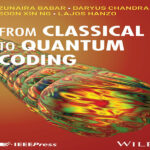





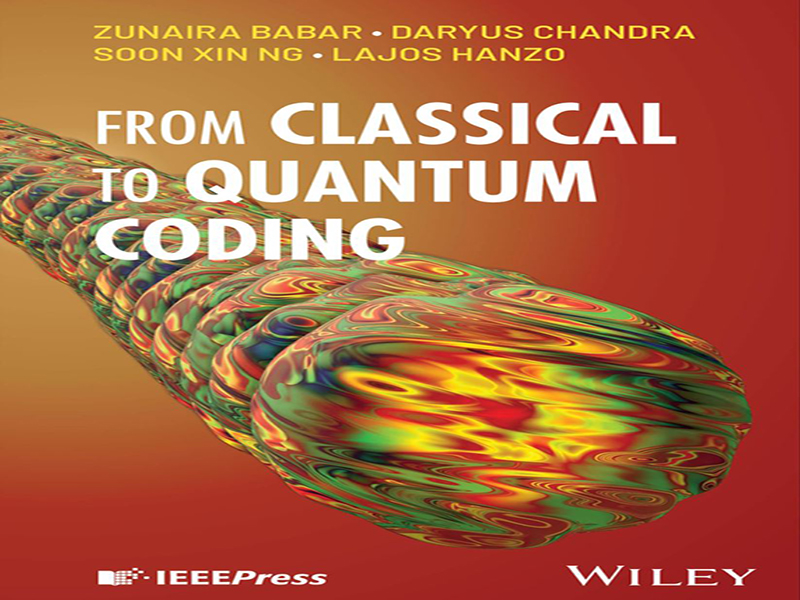
- عنوان کتاب: From Classical to Quantum Coding
- نویسنده: IEEE Press Editorial Board
- حوزه: برنامهنویسی کوانتومی
- سال انتشار: 2026
- تعداد صفحه: 888
- زبان اصلی: انگلیسی
- نوع فایل: pdf
- حجم فایل: 26.7 مگابایت
همکار ارجمند، از علاقه شما به این کتاب بسیار سپاسگزاریم! طبیعتاً هدف ما از این کتاب چندوجهی است، اما در درجه اول هموار کردن راه برای ورود جامعه کدگذاری کلاسیک به حوزه کدگذاری کوانتومی است. انتظار میرود کدهای تصحیح خطای کوانتومی نقش محوری در کاهش اثرات مخرب ناهمدوسی کوانتومی داشته باشند، که عملکرد رایانههای کوانتومی و سیستمهای ارتباطی امن کوانتومی را محدود میکند. در واقع، کدهای تصحیح خطا حتی در سیستمهای ارتباطی و ذخیرهسازی کلاسیک که کمتر آسیبپذیر هستند، فراگیر هستند. به طور واضح، تمام سیستمهای بیسیم دیجیتال که در پنج دهه گذشته طراحی شدهاند، به شدت به قابلیت قوی رفع آلودگی سیگنال کدهای تصحیح خطای کلاسیک متکی بودهاند. آنها همچنین قادرند با نظارت بر نرخ خطای رایج، وضعیت عملیاتی سیستم را تخمین بزنند و از این امر برای پیکربندی تقریباً آنی سیستم بهرهبرداری کنند. مزایای مشابهی نیز ممکن است برای سیستمهای کوانتومی با مهار کدهای کوانتومی پیشبینی شود، زیرا سیستمهای کوانتومی به طور قابل توجهی بیشتر در معرض تخریب توسط محیط الکترومغناطیسی اطراف هستند. یک کیوبیت با مقدار مختلط ممکن است در معرض یک لب بیتی، یک لب فاز یا لب بیتی و فاز همزمان قرار گیرد. از این رو، اولین کد کوانتومی با نرخ ۱/۹ توسط پیتر شور با بهرهگیری ساده از این واقعیت که یک کد تکرار با نرخ ۱/۳ میتواند به طور جداگانه برای محافظت در برابر لبهای بیتی و فاز اعمال شود، ابداع شد. کالدربانک، استین و شور بعداً شرایط خاصی را تعریف کردند که تحت آن میتوان این اصل جذاب و ساده را به استفاده از کدهای کلاسیک نزدیک به ظرفیت پیچیدهتر برای درک کدهای کوانتومی قدرتمند تعمیم داد. از این رو، در این مونوگرافی مستقل، ما این فرآیند تکاملی را از اصول اولیه تا طراحی کدهای نزدیک به هشینگ تطبیقی با نرخ تطبیقی به تصویر میکشیم. بخش اول مقدمهای مختصر بر اصول اولیه ارائه میدهد و راه را برای خوانندگانی که با کدگذاری کلاسیک تا کدگذاری کوانتومی، از جمله اصول اولیه کدگذاری کوانتومی و کلاسیک مرتبط، آشنا هستند، هموار میکند. بخش دوم به خانواده کدهای کوانتومی کوتاهمدت اختصاص داده شده است که به تعداد زیادی کیوبیت نیاز ندارند و از این رو، برای مثال، برای رایانههای کوانتومی در مقیاس میانمدت نزدیک (NISC) مناسب هستند. در نهایت، بخش سوم به طراحی مجموعهای از راهحلهای پیچیده کدگذاری کوانتومی بلندمدت میپردازد، زمانی که با بلوغ فناوری کوانتومی، داشتن تعداد نسبتاً بالایی از کیوبیتها واقعبینانه میشود. طیف وسیعی از کدهای کوانتومی با نرخ تطبیقی نیز برای سناریوهای عملی احتمال دپلاریزاسیون متغیر با زمان در نظر گرفته شدهاند.
Many thanks for your interest in this book, valued Colleague! Naturally, our intention with the book is multifold, but primarily to pave the way for the classical coding community to enter the field of quantum coding. Quantum error correction codes are expected to play a pivotal role in terms of mitigating the deleterious effects of quantum decoherence, which limits the performance of both quantum computers and quantum-secured communications systems. Indeed, error correction codes are ubiquitous even in less susceptible classical communications and storage systems. Explicitly, all digital wireless systems conceived over the past five decades heavily relied on the potent signal decontamination capability of classical error correction codes. They are also capable of estimating the system’s operating status by monitoring the prevalent error rate and exploit this for the near-instantaneous reconfiguration of the system. Similar benefits may be anticipated also for quantum systems upon harnessing quantum codes, because quantum systems are significantly more susceptible to corruption by the surrounding electromagnetic environment. A complex-valued qubit may be exposed to a bit-_lip, a phase-_lip or to a simultaneous bit- and phase-_lip. Hence, the first ever 1/9-rate quantum code was conceived by Peter Shor by simply exploiting the fact that a 1/3-rate repetition code can separately be applied for guarding against bit- and phase-_lips. Calderbank, Steane and Shor later defined the specific conditions under which this appealingly simple principle may be extended to the employment of more sophisticated near-capacity classical codes for conceiving powerful quantum codes. Hence, in this self-contained monograph, we portray this evolutionary process from the first principles all the way to the design of adaptive rate near-hashing-bound codes. Part I provides a gentle introduction to the rudimentary principles, paving the way for readers familiar with classical coding to quantum coding, including the associated quantum and classical coding basics. Part II is dedicated to the family of near-term quantum codes, which do not require a high number of qubits and, hence, are suitable for near term intermediate scale (NISC) quantum computers, for example. Finally, Part III elaborates on the design of a suite of sophisticated long term quantum coding solutions, when having a relatively high number of qubits becomes realistic, as quantum technology matures. A range of adaptive-rate quantum codes are also conceived for practical scenarios of time-variant depolarizing probability.
این کتاب را میتوانید از لینک زیر بصورت رایگان دانلود کنید:
Download: From Classical to Quantum Coding















نظرات کاربران