













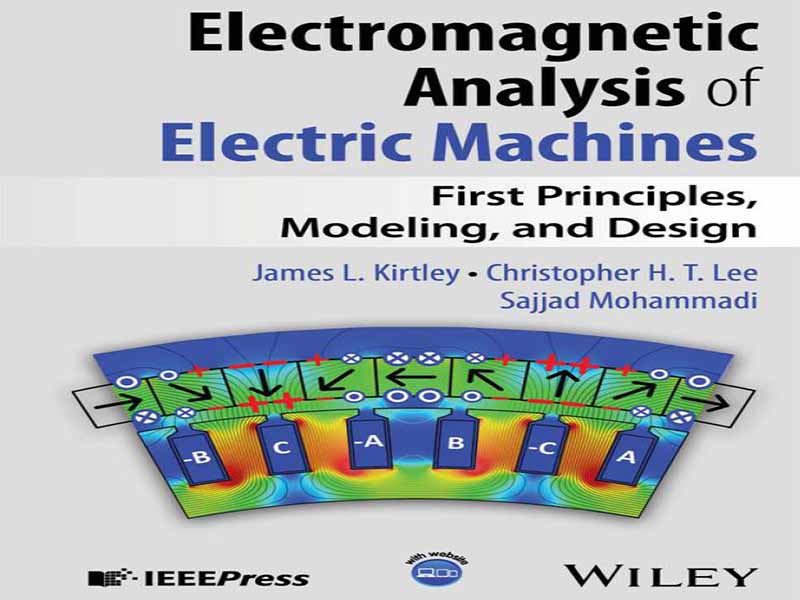
- عنوان کتاب: Electromagnetic Analysis of Electric Machines First Principles, Modeling, and Design
- نویسنده: James L. Kirtley, Christopher H. T. Lee
- حوزه: الکترومغناطیس
- سال انتشار: 2025
- تعداد صفحه: 315
- زبان اصلی: انگلیسی
- نوع فایل: pdf
- حجم فایل: 6.25 مگابایت
موتورها و ژنراتورهای الکتریکی از زمان انقلاب صنعتی در اقتصاد جهانی نقش محوری داشتهاند و تأثیر عمده و مفیدی بر تقریباً تمام جنبههای زندگی مدرن داشتهاند. و با وجود اینکه بیش از یک قرن از عمر آنها میگذرد، دستگاههای الکترومکانیکی هنوز در حال تکامل، بهبود و دستیابی به کاربردهای جدید هستند. هنوز هم نیاز به درک سیستمهای الکترومکانیکی وجود دارد، نه تنها برای اینکه بتوانند به خوبی طراحی شوند، بلکه برای اینکه بتوانند به درستی به کار گرفته شوند. هدف ما از نوشتن این کتاب، ارائه مبنایی برای درک سیستمهای الکترومکانیکی، هم برای طراحی و هم برای کاربرد است. تکامل سیستمهای الکترومکانیکی شامل درک بهتر تعاملات مربوطه و همچنین بهبود مواد، کاربردهای مواد جدید، پیشرفت در انتقال حرارت و توسعه کاربردهای جدید و متفاوت بوده است. دور از ذهن نیست که فکر کنیم همه این نیروهای محرک ادامه خواهند یافت، به طوری که نیاز به درک سیستمهای الکترومکانیکی و الکترومکانیکی برای فعال کردن نسلهای بیشتری از کاربردها همچنان وجود خواهد داشت. در نگارش این کتاب، ما در تفکر خود تحت تأثیر آثار چارلز کینگزلی و آرتور فیتزجرالد، به همراه استیون اومانز، که کتاب درسی آنها با عنوان «ماشینهای الکتریکی» هنوز به طور گسترده مورد استفاده قرار میگیرد، قرار گرفتهایم. هدف ما در این کتاب ارائه چارچوبی تحلیلیتر و دقیقتر برای درک و ارائه راهی برای گسترش دانش خود به دستگاههایی است که هنوز تصور نمیشوند. اعتقاد راسخ ما این است که برای درک ماشینهای الکتریکی و سیستمهای الکترومکانیکی مشابه، باید درک کاملی از اصول فیزیکی اساسی داشت. از این نظر، این کتاب به شدت تحت تأثیر تدریس هربرت وودسون و جیمز ملچر در موسسه فناوری ماساچوست قرار گرفته است که موضوعی را در مقطع کارشناسی با عنوان «دینامیک الکترومکانیکی» تدوین و تدریس کردند، همانطور که کتاب درسی سه جلدی آنها نیز همین عنوان را داشت. بنابراین، این کتاب ماهیتی کاملاً تحلیلی دارد. ما فقط زمانی به تحلیل عددی متوسل میشویم که سیستمها را نتوان با ساختارهای تحلیلی مانند معادلات دیفرانسیل جزئی به طور دقیق نمایش داد. این کتاب از نسل یادداشتهای غیررسمی است که در یک موضوع تحصیلات تکمیلی در ماشینهای الکتریکی که توسط یکی از ما (کرتلی) در MIT تدریس میشد، استفاده شده است. این یادداشتها در طول تدریسهای متعدد آن موضوع، شامل چندین نسل مختلف از دانشجویان و با پیشرفت در فناوری ماشینهای الکتریکی و الکترونیک قدرت، تکامل یافتهاند. این کتاب با یک مقدمه مختصر و سپس شرح مدارهای الکتریکی و مغناطیسی و میدانهای الکترومغناطیسی، نیروها و جریانهای انرژی آغاز میشود. فصلی در مورد سنتز طراحی و بهینهسازی در نظر گرفته شده است تا زمینه را برای تجزیه و تحلیل بیشتر فراهم کند. سپس طبقات اساسی ماشینهای الکتریکی با چارچوب ریاضی دقیقتری نسبت به معمول در کتابهای درسی دانشگاهی ارائه میشوند. در توصیف طبقات مختلف ماشین، پیشرفتهایی در روشهای تحلیلی برای درک و مدلسازی دستگاههای الکترومکانیکی وجود دارد. اصول اولیه درایوهای الکترونیک قدرت و کنترل ماشین، ارائه را به پایان میرساند. در بیشتر فصلها، مثالها و مسائل نمونه، خواننده را به چالش میکشند. در پایان، امید است دانشجویی که از این کتاب استفاده میکند، نه تنها درک شهودی از ماشینهای الکتریکی، بلکه از اصول اساسی که ماشینهای الکتریکی بر اساس آن کار میکنند، ایجاد کرده باشد و مطالعه این مطالب منجر به توانایی استفاده از اصول الکترومکانیک برای توسعه انواع جدید سیستمها و کاربردهایی شود که هنوز تصور نمیکنیم.
Electric motors and generators have been central to the world economy since the industrial revolution and have had a major and beneficial impact on just about all aspects of modern lives. And, even though they have been around for well over a century, electromechanical devices are still evolving, improving, and attaining new applications. There is still a need for understanding electromechanical systems, not only so they can be well designed but also so they can be properly applied. Our objective in writing this book is to provide a basis for understanding electromechanical systems, both for design and application. Evolution of electromechanical systems has involved better understanding of the interactions involved as well as improvements in materials, applications of new materials, advances in heat transfer, and developments of new and different applications. It is not out of bounds to think that all of these driving forces will continue, so that there will continue to be a need for understanding of electromechanics and electromechanical systems, to enable more generations of applications. In writing this book, we have been in uenced in our thinking by the work of Charles Kingsley and Arthur Fitzgerald, joined by Stephen Umans, whose textbook “Electric Machinery” is still widely used. Our objective in this book is to provide a more analytical and rigorous framework for understanding and to provide a way of extending our knowledge to devices not yet envisioned. It is our strong conviction that, to understand electricmachines and similar electromechanical systems, one must have a firm grasp of the underlying physical principles. In this respect, this book has been heavily in uenced by the teaching, at The Massachusetts Institute of Technology, ofHerbertWoodson and JamesMelcher, who developed and taught an undergraduate subject entitled, as was their three volume textbook, “Electromechanical Dynamics.” Thus this book is quite heavily analytical in nature.We resort to numerical analysis only when systems cannot be accurately represented by analytical constructs such as partial differential equations. This book is the descendant of informal notes used in a graduate subject in electric machinery taught by one of us (Kirtley) at MIT. Those notes have evolved over many teachings of that subject, involving several different generations of students and with developments in the technology of electric machinery and power electronics. The book begins with a concise introduction and then a description of electric and magnetic circuits and electromagnetic fields, forces, and energy ows. A chapter on design synthesis and optimization is intended to set the stage for further analysis. Then the fundamental classes of electric machines are presented with a more rigorous mathematical framework than usual in college textbooks. Within the descriptions of the various classes ofmachine are developments of analytical methods for understanding and modeling of electromechanical devices. The basics of power electronics drives and machine control finish the presentation. In most of the chapters, representative examples and problems appear to challenge the reader. At the end, it is hoped that a student who uses this book will have developed an intuitive understanding not only of electricmachinery, but also of the basic principles on which electricmachines work, and that study of this material will lead to the ability to use the fundamentals of electromechanics to develop new types of systems and for applications that we do not yet envision.
این کتاب را میتوانید از لینک زیر بصورت رایگان دانلود کنید:
Download: Electromagnetic Analysis of Electric Machines First Principles, Modeling, and Design























نظرات کاربران