














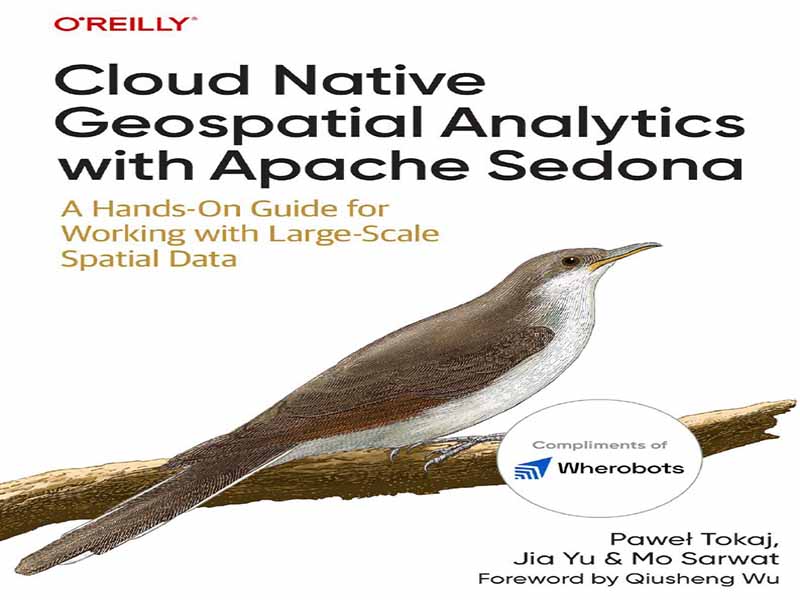
- عنوان کتاب: Cloud Native Geospatial Analytics with Apache Sedona
- نویسنده: Pawel Tokaj, Jia Yu, and Mo Sarwat
- حوزه: تحلیل دادههای مکانی
- سال انتشار: 2026
- تعداد صفحه: 509
- زبان اصلی: انگلیسی
- نوع فایل: pdf
- حجم فایل: 10.8 مگابایت
دادههای مکانی به بخش مرکزی درک و پاسخ ما به جهان اطرافمان تبدیل شدهاند. از نظارت بر اکوسیستمها گرفته تا تطبیق دقیق نقشه، مکان اغلب کلید گشودن بینش است. با این حال، با افزایش حجم و سرعت دادههای مکانی، ابزارهای تحلیلی ما برای همگام شدن با این پیشرفت با مشکل مواجه شدهاند. ابزارهای سنتی GIS در تجزیه و تحلیل برتری دارند اما اغلب به محیطهای تک ماشینی محدود میشوند. در همین حال، انبارهای داده ابری مقیاسپذیری چشمگیری ارائه میدهند اما اغلب با دادههای مکانی به عنوان یک موضوع فرعی برخورد میکنند. آپاچی سدونا این شکاف را پر میکند. سدونا یک چارچوب متنباز است که تجزیه و تحلیل مکانی را مستقیماً در پلتفرمهای محاسبات توزیعشده مانند آپاچی اسپارک، فلینک و اسنوفلیک جاسازی میکند. این چارچوب با مکان به عنوان یک دغدغه درجه یک برخورد میکند و امکان اتصالهای مکانی پیچیده، پرسوجوها و پردازش رستری را در میلیاردها رکورد فراهم میکند. با سدونا، ما هم عمق علم مکانی را همراه با انعطافپذیری ابر به دست میآوریم. من سدونا را به طور خلاصه در کتاب قبلیام، مقدمهای بر برنامهنویسی GIS: یک راهنمای عملی پایتون برای ابزارهای مکانی متنباز، معرفی کردم که در آن فصلی در مورد محاسبات توزیعشده با آپاچی سدونا گنجاندهام. آن فصل توجه زیادی را در بین خوانندگان برانگیخت، اما فقط میتوانست سطح [موضوع] را خراش دهد. سدونا بسیار قدرتمند و جامع است که نمیتوان آن را در یک بخش خلاصه کرد. این کتاب شایستهی یک بررسی کامل است و این دقیقاً همان چیزی است که تحلیلهای مکانی-مکانی بومی ابری با آپاچی سدونا ارائه میدهد. این کتاب توسط سازندگان و توسعهدهندگان اصلی سدونا نوشته شده است، کسانی که نه تنها معماری فنی آن را درک میکنند، بلکه میدانند چگونه آن را قابل فهم کنند. این کتاب با اصول اولیهای مانند قاب داده مکانی و SQL مکانی آغاز میشود، سپس به مباحثی از جمله اتصالات توزیعشده، تحلیل رستری و خانههای داده مکانی میپردازد. همچنین خوانندگان را با اجرای سدونا در محیطهای واقعی، از کانتینرهای داکر گرفته تا پلتفرمهای مدیریتشده مانند ابر وروبوتز، آشنا میکند. با ابر وروبوتز، متخصصان میتوانند به سرعت خوشههای سدونا را راهاندازی کنند، با تحلیلهای مقیاسپذیر آزمایش کنند و به جای مدیریت زیرساخت، بر حل مشکلات تمرکز کنند. این دسترسی، موانع را برای هر کسی که مشتاق است تحلیلهای مکانی توزیعشده را در کار خود وارد کند، کاهش میدهد. به همان اندازه مهم است که کتاب چگونه سدونا را در اکوسیستم وسیعتر قرار میدهد. متخصصان علوم جغرافیایی اغلب برای تجزیه و تحلیل به کتابخانههای پایتون مانند GeoPandas، Shapely و Rasterio و همچنین برای کاوش و ارتباط به چارچوبهای مصورسازی مانند Kepler.gl متکی هستند. Sedona به طور یکپارچه با این ابزارها ادغام میشود و گردشهای کاری آشنا را در خوشههای توزیعشده مقیاسبندی میکند و در عین حال به استانداردهای باز مانند GeoParquet و spatial SQL پایبند است. نویسندگان این ارتباطات را برجسته میکنند و Sedona را نه تنها برای متخصصان GIS، بلکه برای مهندسان داده و دانشمندانی که خطوط لوله داده مدرن را میسازند، ارزشمند میسازد. زمان انتشار این کتاب نمیتوانست بهتر از این باشد. ما با چالشهای جهانی در واکنش به بلایا، بهداشت عمومی و تحرک شهری روبرو هستیم که هر یک از آنها به دادههای آگاه از مکان در مقیاسهای عظیم متکی هستند. Sedona قبلاً به طور گسترده توسط جامعه علوم جغرافیایی پذیرفته شده است و توسط سازمانهایی از جمله آمازون و بنیاد نقشههای Overture استفاده میشود. این کتاب با بررسی مثالهای عملی مانند تجزیه و تحلیل سفرهای تاکسی در شهر نیویورک، مصورسازی دادههای ساختمانی Overture Maps یا پردازش نقشههای خطر سیل جهانی، تطبیقپذیری Sedona و توانایی آن در مقابله با مشکلات دنیای واقعی را نشان میدهد. برای من، این کتاب نمایانگر امتداد طبیعی سفر در تجزیه و تحلیل مکانی است. در کتاب «مقدمهای بر برنامهنویسی GIS»، فقط میتوانستم نگاهی اجمالی به آنچه سدونا فراهم میکند، ارائه دهم. این کتاب عمیقتر کاوش میکند و نه تنها نحوه عملکرد سدونا، بلکه نحوه استقرار مؤثر آن در محیطهای تولیدی مقیاسپذیر را نیز آموزش میدهد. چه شما یک دانشمند داده باشید که یادگیری ماشین را با ویژگیهای مکانی ارتقا میدهد، چه یک مهندس که خطوط لوله ETL در مقیاس بزرگ را طراحی میکند، یا یک تحلیلگر که به دنبال الگوهای پنهان در میلیاردها رکورد است، این کتاب متناسب با نیازهای شما تنظیم شده است. حتی اگر صرفاً در مورد آینده تجزیه و تحلیل مکانی کنجکاو باشید، متوجه خواهید شد که چرا رویکردهای بومی ابری ضروری هستند و چرا آپاچی سدونا سنگ بنای این تکامل است. من خوشحالم که تجزیه و تحلیل مکانی بومی ابری را با آپاچی سدونا توصیه میکنم. این یک راهنمای فنی، یک کتابچه راهنمای عملی و دعوتی برای پیوستن به یک جامعه متنباز پر جنب و جوش است. با سدونا و پلتفرمهایی مانند وروبوتز کلود، آینده تجزیه و تحلیل مکانی از قبل اینجاست: مقیاسپذیر، در دسترس و باز.
Geospatial data has become central to our understanding and response to the world around us. From monitoring ecosystems to precise map matching, location is often the key to unlocking insight. However, as the volume and velocity of geospatial data have surged, our analytical tools have struggled to keep pace. Traditional GIS tools excel at analysis but are often limited to single machine environments. Meanwhile, cloud data warehouses offer impressive scalability but often treat geospatial data as an afterthought. Apache Sedona bridges this divide. Sedona is an open source framework that embeds geospatial analysis directly into distributed computing platforms such as Apache Spark, Flink, and Snowflake. It treats spatial as a first-class concern, enabling complex spatial joins, queries, and raster processing across billions of records. With Sedona, we gain both the depth of geospatial science coupled with the elasticity of the cloud. I introduced Sedona briefly in my previous book, Introduction to GIS Programming: A Practical Python Guide to Open Source Geospatial Tools, where I included a chapter on distributed computing with Apache Sedona. That chapter sparked strong interest among readers, but it could only scratch the surface. Sedona is far too powerful and comprehensive to be condensed into a single section. It deserves a full-length treatment, and that is precisely what Cloud Native Geospatial Analytics with Apache Sedona provides. This book is authored by Sedona’s creators and core developers, who not only understand its technical architecture but also know how to make it approachable. It begins with the fundamentals such as the spatial DataFrame and spatial SQL, then advances into topics including distributed joins, raster analysis, and geospatial data lakehouses. It also introduces readers to running Sedona in real environments, from Docker containers to managed platforms like Wherobots Cloud. With Wherobots Cloud, practitioners can quickly launch Sedona clusters, experiment with scalable analytics, and focus on solving problems rather than managing infrastructure. That accessibility lowers the barrier for anyone eager to bring distributed spatial analytics into their work. Equally important is how the book situates Sedona within the broader ecosystem. Geospatial practitioners often rely on Python libraries like GeoPandas, Shapely, and Rasterio for analysis, as well as visualization frameworks like Kepler.gl for exploration and communication. Sedona integrates seamlessly with these tools, scaling familiar workflows across distributed clusters while adhering to open standards such as GeoParquet and spatial SQL. The authors highlight these connections, making Sedona valuable not only for GIS professionals but also for data engineers and scientists building modern data pipelines. The timing of this book could not be better. We face global challenges in disaster response, public health, and urban mobility, each of which relies on location-aware data at massive scales. Sedona has already been widely adopted by the geospatial community, and it is being used by organizations including Amazon and the Overture Maps Foundation. By walking through practical examples such as analyzing New York City taxi trips, visualizing Overture Maps building data, or processing global flood hazard maps, the book demonstrates Sedona’s versatility and its ability to tackle real-world problems. For me, this book represents a natural extension of the journey in geospatial analytics. In my Introduction to GIS Programming book, I could only provide a glimpse of what Sedona enables. This book delves deeper, teaching not only how Sedona functions but also how to effectively deploy it in scalable production environments. Whether you are a data scientist enhancing machine learning with spatial features, an engineer designing large-scale ETL pipelines, or an analyst seeking patterns hidden within billions of records, this book is tailored to meet your needs. Even if you are simply curious about the future of geospatial analytics, you will discover why cloud native approaches are essential and why Apache Sedona is a cornerstone of this evolution. I am delighted to recommend Cloud Native Geospatial Analytics with Apache Sedona. It is a technical guide, a practical manual, and an invitation to join a vibrant open source community. With Sedona and platforms like Wherobots Cloud, the future of geospatial analytics is already here: scalable, accessible, and open.
این کتاب را میتوانید از لینک زیر بصورت رایگان دانلود کنید:
Download: Cloud Native Geospatial Analytics with Apache Sedona






















نظرات کاربران