












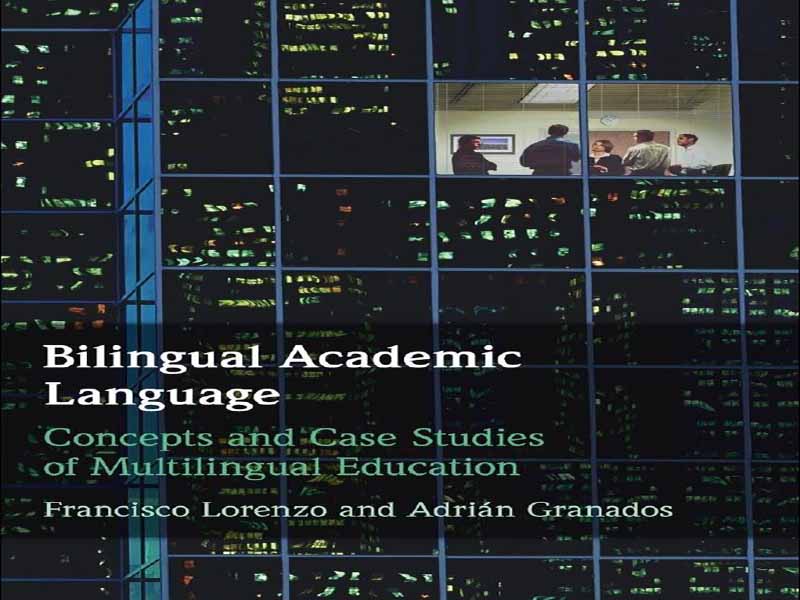
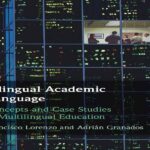
- عنوان کتاب: Bilingual Academic Language -Concepts and Case Studies of Multilingual Education
- نویسنده: Francisco Lorenzo, Adrián Granados
- حوزه: موسسه آموزشی
- سال انتشار: 2025
- تعداد صفحه: 228
- زبان اصلی: انگلیسی
- نوع فایل: pdf
- حجم فایل: 2.08 مگابایت
چندزبانگی در نتیجهی سفرهای مداوم و شبکههای جهانی، در حال گسترش گسترده و همهگیر شدن است. اکنون نیز مانند گذشته، وقتی ارتباطات شامل گفتگوی رو در رو و کوتاه است، میتوان با تعامل محدود اما مؤثر، منظور خود را به دیگران فهماند. در قرون وسطی، دریانوردان مدیترانهای از ملیتهای مختلف، هنگام انجام وظایف روزانه خود در کشتی، با زبانهای متناوب یا ترکیبی مفید از زبانهای رومی با یکدیگر ارتباط برقرار میکردند (Operstein 2017). در قرن نوزدهم، تجارت بین چین و اروپا موفقیت خود را مدیون ایجاد یک زبان پیجین مناسب بود، ترکیبی مناسب از ساختارهای اساسی زبان انگلیسی و واژگان قرض گرفته شده از زبانهای رایج در بندرها (Holm 2000). با این حال، چندزبانگی شامل اشکال فنی، دانشگاهی و سایر اشکال ارتباطات پیچیده نیز میشود. نقاشی رنسانسی برج بابل، ویرانی ناشی از صحبت کارگران با یکدیگر به زبان خودشان را نشان میدهد: طاقهایی که عمود بر زمین شیبدار ساخته شده بودند، فرو ریختند، مراحل ساخت معکوس شدند و طبقات پایین برج هنوز ناقص بودند، زمانی که کار بر روی طبقات بالایی به پایان رسیده بود. زبان در ارتباطات دانشگاهی باید مختصر باشد. زبانی که در تولید و انتقال دانش استفاده میشود، نیازمند کلمات دقیق، سبکی واضح و ساختاری قابل پیشبینی است، به طور خلاصه، دلالت: زبانی که از کاستیهای تفسیرهای شخصی و چندمعنایی فراتر رود، نوعی زبان کامل که تلاش برای دستیابی به آن همیشه یکی از تلاشهای فکری فلسفه غرب بوده است (اکو ۱۹۹۷). زبان دانشگاهی، اگر نگوییم دلیل وجودی آنها، یک مهارت اصلی در همه سیستمهای آموزشی است. زبان انتخابی اغلب رایجترین زبان ملی است: انگلیسی در جهان انگلیسیزبان یا فرانسوی در جهان فرانسویزبان. با این حال، تحرک کاری فرامرزی، پناهجویان و مهاجران در مدرسه و جهانی شدن ارتباطات حاکی از آن است که سواد پیشرفته در زبان دوم (L2) یا دوسوادشناسی اکنون ضروری است. به هر حال، دوسوادشناسی چیز جدیدی نیست. برای رومیها، زبان فرهنگ فنی یونانی بود که به اعتقاد آنها منطقیتر و به واقعیت نزدیکتر بود (یونکر و همکاران ۲۰۲۱). این کتاب درباره تثبیت توسعه دوسوادی در محیط مدرسه است. بسیاری از طرحهای آموزشی، توسعه این مهارت را دنبال کردهاند، البته با برچسبهای مختلف: «مبتنی بر محتوا» در سیستم مدارس چارتر آمریکایی که این مهارت در تعدادی از دروس خاص که به یک زبان اجتماعی مهم تدریس میشوند، توسعه مییابد؛ «CLIL» در سیستم اروپایی که چندزبانگی در مدارس با شعار «زبانها برای همه هستند» معرفی شد؛ یا «EMI» که آشکارا زبان میانجی فعلی در آموزش عالی را در بر میگیرد. علاوه بر این، برنامههای دوزبانه بالفعل و طرحهای آموزشی جبرانی با هدف ارتقای مهارتهای زبان دوم آکادمیک RASM (تیلور و مارچی ۲۰۱۸) وجود دارد، که گاهی اوقات از طریق سیستمهای بیملاحظه «سینک یا شنا» انجام میشود که در آنها زبان مادری دانشآموزان به سادگی نادیده گرفته میشود. در تمام این طرحها، دانشآموزان باید زبان را در تمام سطوح، از جمله دستور زبان، اصطلاحات، قوانین عملی و ژانرها، توسعه دهند. این کتاب با پرداختن به همه این موقعیتها، قاطعانه ادعا میکند که کسب مهارتهای پیشرفته زبان آکادمیک در بین زبانها و محیطهای چندزبانه اجتماعی مشابه است. این کتاب با یک فصل پایه آغاز میشود که سواد رشتهای را بررسی میکند. زبانی که برای کسب دانش استفاده میشود، با سطح بالاتری از انتزاع، پیچیدگی رسمی و تراکم دستوری و همچنین با وجود اصطلاحات و مفاهیم تخصصی که بسته به حوزه محتوا متفاوت هستند، مشخص میشود (آچوگار و کارپنتر ۲۰۱۴؛ شلپگرل ۲۰۰۴). با توجه به ویژگیهای خاص خود، همه رشتهها یک زبان آموزشی را تشکیل میدهند، مانند زبان ریاضی یا زبان تاریخ که معلمان اغلب فاقد دانش و آگاهی رسمی از آن هستند. برنامههای درسی رسمی که به طور مداوم محتوای زبان را در رشتهها بگنجانند، بسیار کم و نادر هستند. آموزش دوزبانه با کیفیت باید مبتنی بر مفهومسازی کافی از زبان دانشگاهی باشد که بر زبانهای میانجی، مهاجر و ملی تأثیر میگذارد. با توجه به این موضوع، فصل ۱ شرح کاملی از زبان دانشگاهی در زمینههای یادگیری رسمی دوزبانه ارائه میدهد: دامنه، ویژگیها و تأثیرگذارترین نظریههای سواد رشتهای در مورد دانشآموزان چندزبانه. با توجه به این واقعیت که سواد انضباطی دوزبانه به تدریج با بلوغ شناخت شخصی توسعه مییابد، رویکردی توسعهای به تثبیت زبان آکادمیک مورد نیاز است. فصل 2 دوزبانگی را نه به عنوان امری ساکن، بلکه در حال حرکت توصیف میکند. پیشینههایی وجود دارد، از اثر برجسته «زندگی با دو زبان» (گروسجین 2001) گرفته تا کاوش روایتهای مدرسه در پایههای مختلف (کریستی 2012)، از مطالعه رشد بین زبانی (دورانت و همکاران 2021) تا توصیف عملکردی جنبههای گفتمانی (مک کیب 2021). این موضوع در اینجا در طول نقد بیشتر بررسی میشود.
Multilingualism is spreading far and wide as a result of constant travel and global networks. Now as in the past, when communication involves face-to-face small talk, it is possible to make oneself understood with limited but effective interaction. In the Middle Ages, Mediterranean seafarers of different nationalities communicated with each other in alternating tongues or in a handy combination of Romance languages while carrying out their daily duties aboard ship (Operstein 2017). In the nineteenth century, trade between China and Europe owed its success to the creation of a convenient pidgin language, an expedient mixture of basic English language structures and vocabulary borrowed from the languages spoken in harbours (Holm 2000). However, multilingualism also encompasses technical, academic, and other forms of sophisticated communication. The Renaissance painting The Tower of Babel shows the havoc caused by labourers speaking to each other in their own tongue: arches built perpendicular to the sloping ground collapsed, building stages were reversed, and the tower’s lower levels were still incomplete when work had concluded on the upper ones. Language needs to be concise in academic communication. The language used in knowledge production and transfer requires exact words, a clear style, and a predictable structure, in a nutshell, denotation: language that transcends the failings of personal interpretations and polysemy, a sort of perfect language whose quest has always been one of the intellectual endeavours of Western philosophy (Eco 1997). Academic language is a core skill in all education systems, if not their raison d’être. The language of choice is often the most prevalent national tongue: English in the Anglophone world or French in the Francophonie. However, cross-border work mobility, asylum seekers and migrants at school, and the globalization of communication imply that advanced literacy in a second language (L2), or biliteracy, is now necessary. Be that as it may, biliteracy is nothing new. For the Romans, the language of technical culture was Greek, which they believed to be more rational and truer to reality (Jonker et al. 2021). This book is about the consolidation of biliteracy development in the school setting. Many educational initiatives have pursued the development of this skill, albeit under different labels: ‘content-based’ in the American charter school system where this skill is developed in a number of specific courses taught in a socially significant language; ‘CLIL’ in the European system where multilingualism was introduced in schools under the slogan ‘Languages are for all’; or ‘EMI’, which openly embraces the current lingua franca in tertiary education. In addition, there are de facto bilingual programmes and remedial educational initiatives aimed at promoting the academic L2 skills of RASM (Taylor and Marchi 2018), sometimes through reckless sink or swim systems in which the home language of students is simply ignored. In all these initiatives, students need to develop language at all levels, including grammar, terminology, pragmatic rules, and genres. Addressing all these situations, this book resolutely contends that the acquisition of advanced academic language skills is similar across languages and social multilingual settings. The book starts with a foundational chapter that explores disciplinary literacy. The language used for knowledge acquisition is characterized by a higher level of abstraction, formal complexity, and grammatical density, as well as by the occurrence of specialized terms and concepts which differ depending on the content area (Achugar and Carpenter 2014; Schleppegrell 2004). With their specificities, all disciplines constitute a language of schooling, like, for instance, the language of maths or that of history, of which teachers often lack formal knowledge and awareness. Official curricula that consistently embed language content in the disciplines are very few and far between. Quality bilingual teaching should be based on an adequate conceptualization of academic language that affects lingua franca, migrant, and national languages. In light of this, Chapter 1 provides a thorough description of academic language in formal bilingual learning contexts: its scope, properties, and the most influential theories of disciplinary literacy in the case of multilingual students. Owing to the fact that bilingual disciplinary literacy develops gradually as personal cognition matures, a developmental approach to academic language consolidation is required. Chapter 2 describes bilingualism not as immobile but in motion. Precedents do exist, ranging from the seminal work Life with Two Languages (Grosjean 2001) to the exploration of school narratives in different grades (Christie 2012), from the study of crosslinguistic development (Durrant et al. 2021) to the functional description of discursive aspects (McCabe 2021). This is further explored here during the critical stage of adolescence, marking the rite of passage from ‘learning to read’ to ‘reading to learn’ and providing a stepwise characterization of the academic interlanguage of bilingual students, with its thresholds, stages, and components. Schools are the natural setting of academic language, an issue that is addressed in this chapter at a moment when international student assessment tests have detected a drop in advanced language competence, a form of language attrition (Mullis et al. 2023). Moreover, artificial intelligence (AI) is now generating texts with an exceptional tone and structure whatever the genre, which can then be reproduced in an L2 at the touch of a button. Even though it would be an exaggeration to contend, as some have, that AI is hacking the operating system of human civilization, the ability of bots to create texts is indeed supreme (Harari 2024). The overview of biliteracy development across the lifespan performed in Chapter 2 is supplemented by the next three chapters, which follow a more quantitative approach, dividing language development into three linguistic levels: lexis in Chapter 3; syntax in Chapter 4; and discourse in Chapter 5. Complex dynamic systems theory in language learning views language as a set of interconnected subsystems (e.g. the syntactic, phonological, and lexical kind) that interact with and influence each other. Furthermore, the nature, orientation, and strength of these influences mutate during an individual’s life, being affected by variables such as age, proficiency, and the number of languages spoken. Also, these variations are not only intra-individual, for language is also viewed as a complex adaptive system shaped by the social interactions of the members of a language community. Given this complexity, these chapters offer a comprehensive overview of each one of the linguistic levels under study and clarify some methodological aspects, such as the conceptualization and measurement of each construct. Likewise, the chapters describe the differences and similarities between the monolingual and bilingual mind in the acquisition and organization of lexis, syntax, and discourse, respectively. Lastly, the evolution of bilingual academic language is reviewed for each of these dimensions, with special attention to lexical richness (Chapter 3), syntactic complexity (Chapter 4), and text genres, discourse functions, and cohesion (Chapter 5). These language descriptions are always based on real classroom samples as examples of that evolution. Biliteracy in the classroom implies the personal construction of language for each discipline. History, often chosen as one of the courses taught in an L2 in official curricula, is a subject in which content is only expressed in the written word, unlike maths, for instance, in which numbers form a language per se, and physical education, in which body language helps to make sense of the context. That is why Chapter 6 investigates the peculiarities of historical bilingual discourse, fraught with political implications, whose interpretation is based on the ideological stereotypes of the reader (Lledó 2011). The Radetsky March, a monumental novel recounting the transition from the modern to the contemporary age, describes the main character’s concern that the history textbooks of the period have not done justice to his heroism on the battlefield. Bias in history textbooks is partially achieved through grammatical choices which affect voice, tense, or causality, among other discourse functions. Linguistics has described the effects that this deviant language can have on monolingual and multilingual learners, for whom the consolidation of advanced language skills takes time. Some of the features of historical literacy are reviewed in this chapter, which also presents the insights of critical linguists who assert that students who need to develop the language of schooling in an L2 are being prevented from constructing their own account of events (Coffin 2006a; Schleppegrell and Oliveira 2006; Zwiers 2008). To conclude, Chapter 7 establishes bilingual education in the wider context of critical applied linguistics, for bilingualism can be described in relation to cultural diversity, social change, and social conflict (Pennycook 2004; Piller 2016). Its alleged elitism ranks high on the list of burning issues in the ongoing debate. In this respect, a name oozing a reassuring sense of British authenticity immediately springs to mind, but which could not be more misleading. Far from the lush meadows of Scotland, The Highlands School is to be found nestling among the sun-scorched olive groves of Southern Spain. Of course, it is just one of the many centres for the upper classes in cities worldwide (Madrid, Bogota, Casablanca, etc.), a testament to elite bilingualism as ancient as the advent of the written word. A current understanding of capital assumes that knowledge and skills are central to production growth and the reduction of social inequalities at both national and international levels. But knowledge is socially determined and deeply affected by educational policies and priority access to training and qualifications (Piketty 2014:40–42). This applies to languages as much as to any other aspect. On the other hand, languages are not only a resource but also a token of social distinction and, therefore, a factor of discrimination which, based on basic human traits such as gender or race, is unacceptable. But as language is constructed as a changeable attribute that defines personal belongingness and allegiance, language discrimination is allowed for the simple reason that the language of choice is in theory a personal decision (Leeman 2014). All in all, Chapter 7 considers academic language from the perspective of sociological principles relating to human rights: linguistic deficit theory, the unequal distribution of bilingual resources, and cultural reproduction through bilingual schooling. These concepts are fleshed out with case studies of multilinguals from all over the world, which are now famous or notorious in the field of language studies and whose purpose is to illustrate the aforementioned principles. Language construes the ideology of society through the legitimation of different forms of communication (Christie 2012). It is the privileged who decide on what counts as literacy, and full literacy now implies the command of languages at academic levels: a system of opportunities, means of production, and modes of representation (Whittaker, O’Donnell and McCabe 2006). Within this theoretical framework and with this conceptual stance, the book provides a thorough description of languages and bilingual acquisition. We would like to express our gratitude to Tom Morton and Thomas MacFarlane for their insightful thoughts and comments on the first draft of this book. Our gratitude also goes to Julia Hüttner for her ongoing support through the COST Action CA21114 (CLIL Network for Languages in Education: Towards bi- and multilingual disciplinary literacies). We are equally grateful to Rebecca Taylor for her expert editorial guidance and to the anonymous reviewers for their valuable feedback. This research has been funded by the Spanish Ministry of Science and Innovation (research grant ref. PID2022-139685OB-I00).
این کتاب را میتوانید از لینک زیر بصورت رایگان دانلود کنید:
Download: Bilingual Academic Language


















نظرات کاربران