














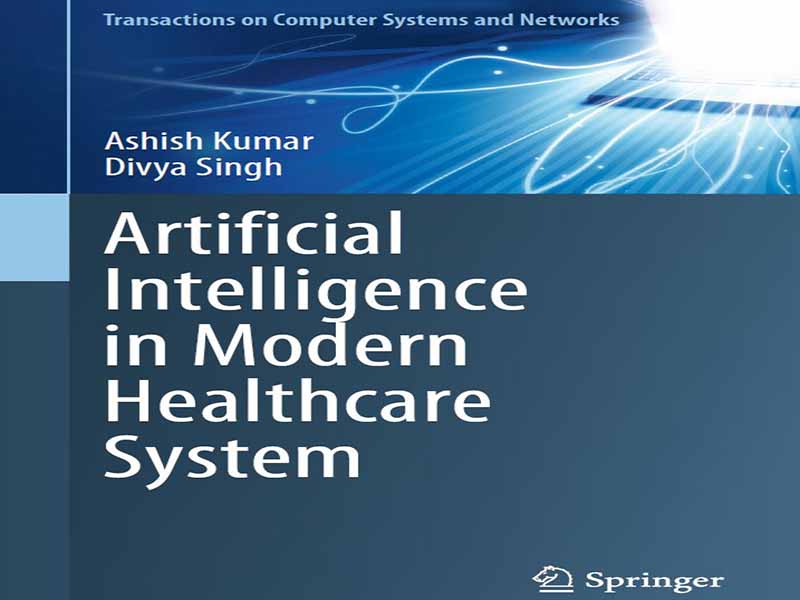
- عنوان کتاب: Artificial Intelligence in Modern Healthcare System
- نویسنده: Ashish Kumar, Divya Singh
- حوزه: کاربرد هوش مصنوعی در پزشکی
- سال انتشار: 2025
- تعداد صفحه: 388
- زبان اصلی: انگلیسی
- نوع فایل: pdf
- حجم فایل: 3.54 مگابایت
هوش مصنوعی (AI) با خودکارسازی و بهبود تشخیص و درمان، حوزه مراقبتهای بهداشتی را متحول میکند. هوش مصنوعی یک حوزه رو به رشد است که از زیرمجموعههای متعددی از جمله یادگیری ماشین، یادگیری عمیق، پردازش زبان طبیعی و سیستمهای خبره استفاده میکند. هنگامی که در حوزه مراقبتهای بهداشتی به کار گرفته شود، پتانسیل تأثیر زیادی بر تشخیص، درمان، مراقبت، کارایی عملیاتی، کشف و توسعه دارو دارد. هوش مصنوعی به طور فزایندهای در تشخیص استفاده شده است و به شناسایی گرهها یا سرطانها، پیشبینی خطر بیماریهای قلبی عروقی و ارائه مراقبتهای شخصیسازی شده برای بیماران مزمن کمک میکند. مدلها و الگوریتمهای مختلف هوش مصنوعی، مانند شبکههای عصبی کانولوشن، درختهای تصمیمگیری و ماشینهای بردار پشتیبان، در میان سایر موارد، برای تجزیه و تحلیل دادههای تصویربرداری پزشکی برای پیشبینی نتایج بیوپسی تومور مغزی، اختلال قلبی عروقی، سرطان پستان و بسیاری از بیماریهای مهم دیگر استفاده شدهاند. روشهای هوش مصنوعی همچنین میتوانند برای تجزیه و تحلیل دادههای ایمونولوژیکی با توان عملیاتی بالا برای مراقبتهای شخصیسازی شده استفاده شوند. این تکنیکها شامل یادگیری ماشین، یادگیری عمیق و یادگیری تقویتی، مبتنی بر مفاهیم ریاضی، محاسباتی و آماری هستند و تحقیقات ایمونولوژیکی را تکمیل میکنند. مجموعه دادههای معیار مراقبتهای بهداشتی باید حداقل یک میلیون نمونه کلی و گروههای بزرگتر را در بر بگیرند تا تعمیم و قابلیت همکاری در مراقبتهای بهداشتی را فراهم کنند. مجموعه دادههای پزشکی با کیفیت بالا باید شامل دادههای تصویربرداری، دادههای بالینی و دادههای طولی ژنومی باشد، اما محدود به آنها نیست تا تأثیر سوگیری هوش مصنوعی در نتایج پیشبینی کاهش یابد. جدا از مجموعه دادههای بالینی، چالشهای خاصی در توسعه دستگاههای پزشکی قوی وجود دارد که شامل بهرهبرداری از هوش مصنوعی در پردازش، تجزیه و تحلیل و تفسیر سیگنال پزشکی برای ایجاد سیستم مراقبتهای بهداشتی هوشمند است که میتواند از دانش مبتنی بر تخصص استفاده کرده و راهحلهایی را تولید کند. این راهحلها میتوانند شناسایی، تشخیص و همچنین درمان بیماریهایی را که باید ایمن، مطمئن، سازگار و کارآمد باشند، به طور دقیق اصلاح کنند. مزایای اولیه و متعدد فناوریهای مدرن مراقبتهای بهداشتی شامل نظارت از راه دور بیمار، کمک به تشخیص زودهنگام، تسهیل توصیههای درمانی پیشرفته برای جمعیت عمومی گستردهتر و امکان ایجاد پتانسیل بیسابقه برای به اشتراک گذاری دادهها، همکاری و ایجاد دانش با ادغام هوش مصنوعی در مدلهای مراقبتهای بهداشتی است. برای مدیریت کارآمد نیازهای بالینی مدرن، بسیاری از الگوریتمهای هوش مصنوعی در سیستمهای اختصاصی از جمله ابزارهای منابع داده، سیستمهای پشتیبانی فردی و گروهی و روشهایی برای طبقهبندی مبتنی بر هوش مصنوعی و مدلسازی پیشبینی ارائه شدهاند. این کتاب مروری انتقادی بر فناوریهای هوش مصنوعی در پیشبینی اولیه بیماریهای مزمن و جلوگیری از تلفات ارائه میدهد. این کتاب شامل چهار بخش است که به شرح مراقبتهای بهداشتی مدرن، کاربردها، مراقبتهای شخصیسازیشده و مزایای مراقبتهای بهداشتی هوشمند با استفاده از هوش مصنوعی میپردازد. بخش اول شامل دو فصل است. فصل اول با عنوان «مقدمهای بر هوش مصنوعی در مراقبتهای بهداشتی مدرن» به جزئیات تکنیکهای مختلف هوش مصنوعی میپردازد که راهحلهای سریع و دقیقی را برای تغییر درمان با استفاده از روشهای مرسوم مراقبتهای بهداشتی ارائه میدهند. فصل دوم با عنوان «جهتگیری تحقیقاتی برای تکنیکهای هوش مصنوعی در سیستم مراقبتهای بهداشتی مدرن» جنبهها و روشهای تحقیقاتی مختلفی را که در حال حاضر در بهکارگیری تکنیکهای هوش مصنوعی برای تحقق یک سناریوی هوشمند مراقبتهای بهداشتی محور استفاده میشود، مورد بحث قرار میدهد. پتانسیل بالای هوش مصنوعی، نیاز به تغییر جهت و گسترش علایق تحقیقاتی و تمرکز بر سیستمهای مراقبتهای بهداشتی مدرن را نشان میدهد. بخش دوم با عنوان «کاربردهای هوش مصنوعی برای پیشبینی بیماری» دارای شش فصل است که کاربردها و مزایای مختلف تکنیکهای هوش مصنوعی را که میتوانند برای تشخیص و پیشبینی بیماریهای مزمن استفاده شوند، شرح میدهد. در این بخش، فصل سوم با عنوان «تشخیص و پیشبینی تومور مغزی با استفاده از هوش مصنوعی» به شرح مزایای ابزارها و الگوریتمهای هوش مصنوعی در تشخیص و پیشبینی تومورهای مغزی، بهویژه در زمینه سرطانشناسی، میپردازد. این ابزارها توانایی تجزیه و تحلیل حجم زیادی از دادههای تصویربرداری مغز، مانند تصویربرداری تشدید مغناطیسی (MRI) و اسکن توموگرافی کامپیوتری (CT) را دارند و ویژگیها و الگوهایی را که معمولاً توسط رادیولوژیستهای انسانی قابل تشخیص نیستند، شناسایی میکنند و در نتیجه دقت تشخیص و ارزیابی پیشآگهی را افزایش میدهند. فصل ۴ با عنوان «تشخیص و پیشبینی اختلالات عصبی با استفاده از هوش مصنوعی» ایده اصلی تشخیص و پیشبینی یک اختلال عصبی را با استفاده از جدیدترین تکنیکهای تصویربرداری، متن و دادههای سیگنالینگ شرح میدهد. فصل ۵ با عنوان «تشخیص و پیشبینی اختلال قلبی عروقی با استفاده از هوش مصنوعی» به تکنیکهای مختلف هوش مصنوعی میپردازد که میتوانند اختلالات قلبی عروقی را در مراحل اولیه پیشبینی کنند. الگوریتمهای دادهمحور مبتنی بر هوش مصنوعی به رایانهها اجازه میدهند تا به تدریج یاد بگیرند و با بررسی دقیق طیف متنوعی از دادههای سلامت، از جمله الکتروکاردیوگرام، سونوگرافی بین عروقی، دادههای ژنتیکی، سبک زندگی، دادههای ریسک محیطی، به فرآیند تصمیمگیری برای پیشبینی اختلالات قلبی عروقی کمک کنند.
Artificial intelligence (AI) is transforming healthcare domain by automating and improving diagnosis and treatment. AI is an ever-growing field using multiple subsets, including machine learning, deep learning, natural language processing, and expert systems. When applied in the field of healthcare, AI has the potential to greatly impact diagnostics, treatment, care, operational efficiency, drug discovery and development. Increasingly, artificial intelligence has been used in diagnostics, helping to identify nodules or cancers, predict cardiovascular risk, and provide personalized care for chronic patients. Various AI models and algorithms, such as convolutional neural networks, decision trees, and support vector machines, among others, have been used to analyze medical imaging data to predict brain tumor biopsy results, cardiovascular disorder, breast cancer and many other critical diseases. AI methods can also be used to analyze high-throughput immunological data for personalized care. These techniques include machine learning, deep learning, and reinforcement learning, based on mathematical, computational, and statistical concepts, and complement immunological research. Benchmark healthcare datasets should encompass at least one million total samples and larger cohorts to yield generalization and interoperability in healthcare. High quality medical datasets should consist of, but are not limited to, imaging data, clinical data, and genomic longitudinal data to mitigate the impact of AI-bias in the predictive outcomes. Apart from clinical datasets, there are certain challenges found in developing robust medical devices, which include the exploitation of AI in medical signal processing, analysis, and interpretation to create smart healthcare system that can utilize expertise-based knowledge and generate solutions. These solutions can accurately refine the identification, diagnosis, as well as therapy of diseases that must be safe, secure, interoperable, and efficient. The early and several benefits of modern healthcare technologies include remote patient monitoring, aiding in early diagnosis, facilitating advanced treatment recommendations for a wider general population, and allowing the unprecedented potential for data sharing, collaboration, and knowledge build-up is possible with the incorporation of AI in healthcare models. To efficiently manage modern clinical needs, many AI algorithms are proposed in dedicated systems including data resource utilities, individual and group support systems, and methods for AI-based classification and predictive modeling. This book provides a critical overview of AI technologies in the early prediction of chronic diseases and preventing casualties. The book comprises of four parts elaborating on modern healthcare, applications, personalized care and benefits of smart healthcare using AI. Part I contains two chapters. Chapter 1 titled “Introduction to Artificial Intelligence in Modern Healthcare” details the various AI techniques that provide quick, and accurate solutions for transforming treatment using conventional methods of healthcare. Chapter 2 titled “Research Orientation for AI Techniques in Modern Healthcare System” discusses the various aspects and research methodologies currently used in applying AI techniques to realize a smart healthcare-oriented scenario. The great potential of AI depicts the need to reorient and broaden the research interests and focus on modern healthcare systems. Part II titled “Applications of Artificial Intelligence for Disease Prediction” has six chapters describing various applications and benefits of AI techniques that can be used for diagnosis and prediction of chronic diseases. In this, Chap. 3 titled “Diagnosis and Prediction of Brain Tumor Using Artificial Intelligence” elaborates on the benefits of AI tools and algorithms in diagnosing and predicting brain tumors, particularly in the context of oncology. These tools have the ability to analyze large amounts of brain imaging data, such as magnetic resonance imaging (MRI) and computer tomography (CT) scans, and identify features and patterns typically not detectable by human radiologists, thereby increasing the accuracy of diagnosis and prognosis assessment. Chapter 4 titled “Diagnosis and Prediction of Neurological Disorders Using Artificial Intelligence” details the main idea of diagnosing and predicting a neurological disorder using the latest techniques from imaging, text and signaling data. Chapter 5 titled “Diagnosis and Prediction of Cardiovascular Disorder Using Artificial Intelligence” elaborates on various AI techniques that can predict cardiovascular disorders at an early stage. AI-based data-driven algorithms permit computers to learn gradually and help in the decision-making process for predicting cardiovascular disorders by scrutinizing the diverse range of health data, including electrocardiograms, intervascular ultrasound, genetic, lifestyle, environmental risk factors, and cardiac imaging studies. Chapter 6 titled “Diagnosis and Prediction of Cardiovascular Risk in Retinal Imaging Using Artificial Intelligence” discusses the importance of identifying bioindicators and diabetic retinopathy imaging for the prediction of cardiovascular disease at an early stage. AI systems based on deep neural networks are able to predict the occurrence of some adverse events after the diagnosis of diabetes or hypertension in retinopathy imaging. This has opened up new therapeutic possibilities for ophthalmologists as retinal photography has been found to be a great indicator to predict risk for heart disease, a study that has brought about endless possibilities of collaboration between ophthalmologists and cardiovascular specialists. Chapter 7 titled “Diagnosis and Prediction of Diabetic Foot Ulcer in Modern Healthcare Using Artificial Intelligence” elaborates on the identification of diabetic foot disease (DFU) using AI. DFU data are integrated from foot images and clinical assessments such as ABI, pulses, and vibration perception threshold to carry out diagnosis and determine if the patients are at high risk of developing another foot ulcer or requiring an amputation. A large amount of data is collected from patients in each study to indicate the significant improvement in the stratification of high risk along with increased predictive power. Chapter 8 titled “Diagnosis and Prediction of Breast Cancer Using Artificial Intelligence” elaborates on the severity of breast cancer in high-income countries. These abnormalities can occur in a woman’s body gradually and lead to the development of cancer, usually in a few years. Treatment is easier when breast cancer is diagnosed early; early-stage patients have improved outcomes following appropriate treatment. Several AI techniques are reviewed which analyze mammograms and other types of medical imaging in an attempt to detect breast cancer early. Part III contains four chapters presenting the improvement and benefits offered by AI for personalized care. For this, Chap. 9 titled “Role of Artificial Intelligence in Immunology” details the potential impact of AI in genetic and protein analyses. There has been a shift from single markers to analyzing millions of markers in a comprehensive genome-wide or proteome-wide approach. AI methods are analyzed for processing such complex data sets. Chapter 10 titled “Managing High-Risk Surgery Using Artificial Intelligence” presents the precision and high-ranking decisionmaking algorithms that are needed for high-risk surgery and make it a natural area for the development and introduction of AI. AI tools for precision surgery are used to predict complications that may arise for a particular patient when decisions are made by the surgery based on information collected by MRI, CT, medical history and examination. There are three main areas where AI can play a beneficial role in precision medicine: (1) preoperative assessment, (2) surgical planning, and (3) postoperative monitoring, which is highlighted in this chapter. AI systems are designed to predict complications that can support experienced surgeons, perioperative physicians, and nursing staff in the assessment of risk and further management of patients. Chapter 11 titled “Benchmark Datasets for Analysis in Medical Systems” compiles the various datasets crucial for the performance review of AI models within medical systems. It emphasizes that benchmark datasets are essential to achieve reproducible and reliable results in modern healthcare. Benchmark datasets consist of training datasets, which are used to develop and train the AI model, and testing datasets, which are used to validate the model before real-time deployment. Chapter 12 titled “Role of AI and Modern Medical Equipment in Smart Healthcare” summarizes AI and medical equipment as evolving complementary tools for delivering smart healthcare services. Advanced medical equipments are analyzed to gather physiological signals for clinical indexes and integrate them to suggest a tentative diagnosis. Based on the accumulated data input, the medical equipment generates a personalized treatment for every patient. Part IV titled “Artificial Intelligence for Healthcare Digitization” contains three chapters. Chapter 13 titled “Evolution of Traditional Healthcare to Modern Healthcare— Benefits, Opportunities and Challenges” discusses the significant reforms in modern healthcare treatments. It complies the various methodologies the way diseases are diagnosed within the human body, the mode of treatments, medications prescribed, and the research protocols. The conventional labor-intensive treatment procedures are slowly moving to a modern era of personalized precision medicine for the betterment of a human approach, and it would not have been possible without the utility of advanced technologies as a key integrator. Chapter 14 titled “Analysis of AI-Bias in Modern Healthcare Systems” details the development of AI-based models in healthcare and the introduced bias in the outcomes. AI models promise to leverage this data for better diagnoses, more precise treatment decisions, and improved patient outcomes. Despite serving diverse patient populations, existing healthcare data may not be representative of everyone in a given community and can be subject to socioeconomic and cultural biases in healthcare AI models that reflect and propagate existing disparities in care and outcomes. Various bias analyses and suggestions for its mitigation are also highlighted in this chapter. The last Chap. 15 titled “Examining QoS for Modern Healthcare Systems” advances the successful deployment of modern healthcare systems and benefits from advancements in the field of AI, such as using big data technologies or deep learning, which requires awareness of quality of service (QoS) concepts. It discusses the QoS and how effectively AI-based clinical systems perform over a variety of parameters to provide accurate diagnosis and treatment. In many application domains, imperious data requirements and high costs to maintain these standards require additional performance metrics to account for the reliability of digital service at the manipulation layer of these applications. This book summarizes several changes that are currently taking place or are expected to take place with the potential of AI in the healthcare and medical fields. It will interest the various stakeholders to deeply understand the changes, difficulties, empathy, and insights, and to eventually establish new processes and rules. This book has carefully explained the scientifically proven important facts about the impact of AI in establishing the modern healthcare system and the potential to be the most crucial factor in determining the type of delivery system that healthcare pursues in future.
این کتاب را میتوانید از لینک زیر بصورت رایگان دانلود کنید:
Download: Artificial Intelligence in Modern Healthcare System





















نظرات کاربران