













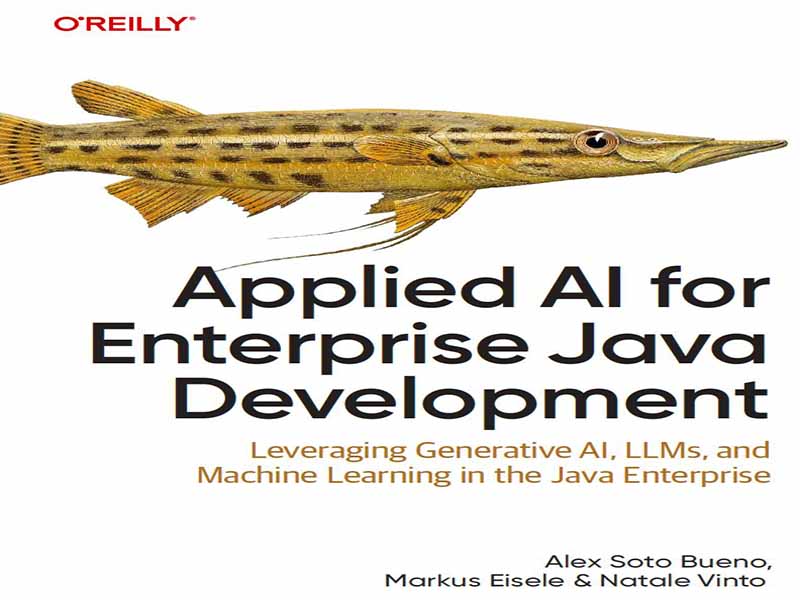
- عنوان کتاب: Applied AI for Enterprise Java Development Leveraging Generative AI, LLMs, and Machine Learning in the Java Enterprise
- نویسنده: Alex Soto Bueno, Markus Eisele, Natale Vinto
- حوزه: برنامهنویسی جاوا
- سال انتشار: 2026
- تعداد صفحه: 431
- زبان اصلی: انگلیسی
- نوع فایل: pdf
- حجم فایل: 5.94 مگابایت
تقاضا برای مهارتهای هوش مصنوعی (AI) در دنیای جاوای سازمانی رو به افزایش است، اما بیایید با آن روبرو شویم: یادگیری هوش مصنوعی میتواند برای توسعهدهندگان جاوا دلهرهآور باشد. بسیاری از منابع بیش از حد نظری هستند، به شدت بر علم داده تمرکز دارند یا به زبانهای برنامهنویسی متکی هستند که برای محیطهای سازمانی ناآشنا هستند. ما به عنوان برنامهنویسان باتجربه با سالها تجربه در پروژههای جاوای سازمانی بزرگ، با چالشهای مشابهی روبرو بودهایم. وقتی شروع به کاوش در هوش مصنوعی و مدلهای زبان بزرگ (LLM) کردیم، از کمبود منابع عملی متناسب با توسعهدهندگان جاوا ناامید شدیم. اکثر مطالب دور از دسترس به نظر میرسیدند و زیر لایههایی از کد پایتون و مفاهیم انتزاعی دفن شده بودند. به همین دلیل این کتاب را نوشتیم. این راهنمای عملی است که آرزو داشتیم داشته باشیم، برای توسعهدهندگان جاوا که میخواهند برنامههای هوش مصنوعی دنیای واقعی را با استفاده از ابزارها و چارچوبهایی که از قبل میشناسند و دوست دارند، بسازند. در داخل، توضیحات روشنی از تکنیکهای ضروری هوش مصنوعی، مثالهای عملی و پروژههای دنیای واقعی خواهید یافت که به شما کمک میکند هوش مصنوعی را در پروژههای جاوای موجود خود ادغام کنید. وقتی شروع به انتشار نسخه اولیه پیشنویس این کتاب کردیم، به سرعت هیجان زیادی دریافت کردیم. اما یک نظر در ذهنم ماند که به این شکل بود: «این روزها همه متخصص هوش مصنوعی هستند، و مگر اینکه 10 سال سابقه کار به عنوان دانشمند داده داشته باشید، نباید چنین کتابی بنویسید.» این جملهی محکم، خود به خود سندرم ایمپاستر را در همه ما برانگیخت. اما همچنین فرصتی به ما داد تا دوباره تأکید کنیم که چرا میخواستیم این کتاب را بنویسیم و دیدگاه خود را در مورد توسعهی برنامههای سازمانی در این دوران هوش مصنوعی با شما به اشتراک بگذاریم. ما شاهد بودهایم که بسیاری از شرکتها شروع به تزریق هوش مصنوعی به برنامههای موجود کردهاند. کسبوکارها مشتاقند به سرعت از ویژگیهای هوش مصنوعی برای بهبود تجربهی کاربری، بهینهسازی و خودکارسازی گردشهای کاری و سرعت بخشیدن به عملیات استفاده کنند. با این حال، سرعت این فشار اغلب منجر به پیادهسازیهای شکننده میشود. بسیاری از سازمانها خود را در حال استقرار سیستمهایی میبینند که از نمونههای اولیه سرهم شدهاند، معمولاً با استفاده از زبانهای اسکریپتنویسی و نوتبوکها. این راهحلها اغلب فاقد مقیاسپذیری، مدیریت و انعطافپذیری مورد نیاز محیطهای تولید هستند. ما معتقدیم که یک پایهی استراتژیک و قوی برای هوش مصنوعی سازمانی لزوماً یک پشتهی فناوری کاملاً جدید نیست. در واقع، اکثر شرکتها در حال حاضر دارای زمانهای اجرای جاوا با پیچیدهترین و مدیریتشدهترین فرآیندهایی هستند که میتوانید تصور کنید. ما همچنین معتقدیم که سرعت آزمایش ارائه شده توسط برخی ابزارها با سرعت و قابلیت اطمینان مورد نیاز برای محیطهای تولیدی برابر نیست. جاوای مدرن و بومی ابری، با چارچوبهایی مانند Quarkus و LangChain4j، پایه و اساس لازم را برای ساخت برنامههای مبتنی بر هوش مصنوعی قابل مشاهده، ایمن و مقاوم فراهم میکند که به طور مؤثر در محیطهای Kubernetes و مبتنی بر اصول مهندسی صحیح عمل میکنند. اما این نیز درست است که ساخت یک برنامه مبتنی بر هوش مصنوعی فراتر از توسعه برنامه معمولی است. یک ویژگی هوش مصنوعی آماده برای تولید، یک سیستم کامل را در بر میگیرد. زبانهای اسکریپتنویسی مانند پایتون در مراحل کشف و آموزش مدل برتری دارند. با این حال، آنها اغلب هنگام استفاده به عنوان زمان اجرای اصلی برای کل برنامه مبتنی بر هوش مصنوعی در تولید، شکنندگی ایجاد میکنند. هوش مصنوعی تولیدی مدلی نیست که به صورت جداگانه اجرا شود. این یک شبکه یکپارچه از اجزا در گردشهای کاری حیاتی است که احتمالاً بر روی پلتفرمهایی مانند Kubernetes مستقر شدهاند و مانند هر سرویس سازمانی دیگری، مشمول همان الزامات غیرعملکردی سختگیرانه هستند. سرعت بالای پیشرفتهای هوش مصنوعی، سازمانها را مجبور میکند تا سریعترین مسیر را از نمونه اولیه تا استقرار عملیاتی کنند. این اغلب شامل بستهبندی اسکریپتها یا نوتبوکهای پایتون در کانتینرها و ادغام آنها در خطوط لوله یکپارچهسازی مداوم/تحویل مداوم (CI/CD) موجود است. این رویکرد خطرات قابل توجهی را ایجاد میکند و به طور بالقوه از میانبرهایی استفاده میکند که ناگزیر بدهی فنی ایجاد میکنند. و این زمانی است که یک سوال مهم بیشتر و بیشتر مطرح میشود: آیا استانداردهای رسمی هنوز اهمیت دارند؟ پاسخ عملی مثبت است. استانداردها یادگار گذشتهای کندتر نیستند؛ آنها زیرساختهای اغلب نادیدهای هستند که سرعت، کیفیت و نوآوری پایدار را ممکن میسازند.
The demand for artificial intelligence (AI) skills in the enterprise Java world is exploding, but let’s face it: learning AI can be intimidating for Java developers. Many resources are too theoretical, focus heavily on data science, or rely on programming languages that are unfamiliar to enterprise environments. As seasoned programmers with years of experience in large-scale enterprise Java projects, we’ve faced the same challenges. When we started exploring AI and large language models (LLMs), we were frustrated by the lack of practical resources tailored to Java developers. Most materials seemed out of reach, buried under layers of Python code and abstract concepts. That’s why we wrote this book. It’s the practical guide we wish we had, designed for Java developers who want to build real-world AI applications using the tools and frameworks they already know and love. Inside, you’ll find clear explanations of essential AI techniques, hands-on examples, and real-world projects that will help you integrate AI into your existing Java projects. When we started circulating the early draft release of this book, we quickly received a ton of excitement. But one comment stuck with me that went along the lines of: “Everybody is an AI expert these days, and unless you have 10 years of experience as a data scientist, you should not write a book like this.” That strong sentence automatically raised the imposter syndrome in all of us. But it also gave us an opportunity to reiterate why we wanted to write this book and share our view on enterprise application development in these times of AI with you. We have seen a lot of enterprises starting to infuse AI into existing applications. Businesses are eager to quickly use AI features to enhance user experience, optimize and automate workflows, and speed up operations. However, the velocity of this push often leads to fragile implementations. Many organizations find themselves deploying systems cobbled together from prototypes, typically using scripting languages and notebooks. These solutions often lack the scalability, governance, and resilience demanded by production environments. We believe that a strategic, robust foundation for enterprise AI isn’t necessarily a completely new technology stack. As a matter of fact, most enterprises already possess and trust their Java runtimes with the most complex and governed processes you can imagine. We also believe that the speed of experimentation offered by some tools doesn’t equate to the speed and reliability needed for production environments. Modern, cloud native Java, with frameworks like Quarkus and LangChain4j, provides the necessary foundation to build observable, secure, and resilient AI-infused applications that operate effectively on Kubernetes environments, grounded in sound engineering principles. But it is also true that building an AI-infused application extends far beyond typical application development. A production-ready AI feature encompasses a complete system. Scripting languages like Python excel during the discovery and model-training phases. However, they often introduce fragility when used as the core runtime for the entire AI-infused application in production. Production AI is not a model running in isolation. It’s an integrated network of components within mission-critical workflows, likely deployed on platforms like Kubernetes, and subject to the same stringent nonfunctional requirements as any other enterprise service. The rapid pace of AI advancements forces organizations to operationalize the quickest path from prototype to deployment. This often involves packaging Python scripts or notebooks into containers and integrating them into existing continuous integration / continuous delivery (CI/CD) pipelines. This approach introduces significant risks and potentially uses shortcuts that inevitably accrue technical debt. And this is when one important question comes up more and more often: do formal standards still matter? The pragmatic answer is yes. Standards aren’t relics of a slower past; they are the often unseen infrastructure, enabling sustainable speed, quality, and innovation.
این کتاب را میتوانید از لینک زیر بصورت رایگان دانلود کنید:





















نظرات کاربران