













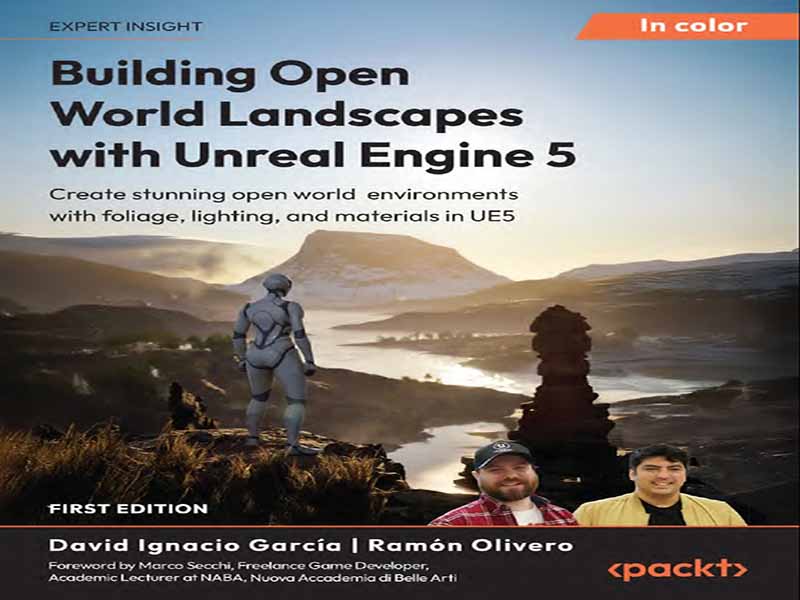
- عنوان کتاب: Building Open World Landscapes with Unreal Engine 5
- نویسنده: DAVID IGNACIO. OLIVERO GARCIA
- حوزه: گرافیک
- سال انتشار: 2025
- تعداد صفحه: 446
- زبان اصلی: انگلیسی
- نوع فایل: pdf
- حجم فایل: 8.85 مگابایت
خلق جهانهای باز طبیعی و باورپذیر، همواره یکی از بزرگترین چالشها در توسعه بازی بوده است. مقیاس وسیع، جزئیات دقیق و پیچیدگی فنی مورد نیاز آنها، اغلب این فرآیند را برای هنرمندان و طراحان به طور یکسان طاقتفرسا میکند. هدف از کتاب «ساخت مناظر جهان باز با موتور Unreal 5» این است که این سفر را قابل دسترس کند. این کتاب یک چارچوب ساختاریافته و عملی ارائه میدهد تا به شما کمک کند درک کنید که چگونه موتور Unreal 5 (UE5) شما را با ابزارهای مورد نیاز برای طراحی، ساخت و بهینهسازی محیطهای بزرگ با اعتماد به نفس و نیت هنری مجهز میکند. در طول فصلهای کتاب، ما هر مرحله کلیدی از خلق جهان را از راهاندازی اولیه پروژه و مدیریت کارآمد دارایی، از طریق سازماندهی سطح و تقسیمبندی جهان، تا مجسمهسازی زمین، ایجاد مواد، گردشهای کاری شاخ و برگ، طراحی نورپردازی و بهینهسازی عملکرد بررسی خواهیم کرد. هر موضوع به طور یکپارچه به موضوع بعدی متصل میشود و شما را از اصول اصلی تا تکنیکهای پیشرفته برای ساخت محیطهای با کیفیت تولید راهنمایی میکند. این کتاب از یک روش یادگیری عملی پیروی میکند: هر مفهوم از طریق مثالهای دنیای واقعی و تمرینهای گام به گام که منعکسکننده شیوههای حرفهای استودیو هستند، معرفی میشود. تمرکز نه تنها بر کسب تخصص در استفاده از ابزارها، بلکه بر درک استدلال پشت هر تصمیم نیز هست که به شما کمک میکند هم مهارت فنی و هم قضاوت خلاقانه را توسعه دهید. در پایان این سفر، شما محیط جهان باز بهینه شده خود را در UE5 ساختهاید. مهمتر از آن، شما گردش کار کامل مورد نیاز برای تبدیل یک ایده از جمعآوری اولیه منابع و برنامهریزی جهان به یک محیط بصری غنی، کارآمد و مقیاسپذیر را درک خواهید کرد. چه هدف شما توسعه بازی، تولید سینمایی یا تولید مجازی باشد، این کتاب بینش و مهارتهایی را برای تبدیل دیدگاه خلاقانه شما به یک دنیای جذاب در اختیار شما قرار میدهد. آنچه این کتاب پوشش میدهد: فصل 1، شروع یک پروژه در موتور Unreal، محیط توسعه و اصطلاحات اصلی را مشخص میکند. شما را در نصب UE5، ایجاد یک پروژه جدید از قالبها و پیمایش رابط، نماها و پنلهای ضروری راهنمایی میکند. در پایان فصل، شما قادر خواهید بود تنظیمات اولیه پروژه را پیکربندی کنید و ابزارهای کلیدی مورد نیاز برای شروع ساخت محیطها را درک کنید. فصل 2، Quixel Bridge، Megascans و Fab، اکوسیستم داراییهای UE5 را ترسیم میکند و نحوهی تهیه و مدیریت محتوای آماده برای تولید را نشان میدهد. این فصل Fab را به عنوان یک بازار یکپارچه معرفی میکند، سپس استفاده از Quixel Bridge را در داخل ویرایشگر برای مرور، وارد کردن و سازماندهی داراییهای Megascans، از جمله سطوح، مدلهای سهبعدی و انسانهای دیجیتال، نشان میدهد. فصل 3، Ingestion و Static Meshes، بر وارد کردن و اعتبارسنجی مشهای استاتیک برای استفاده در زمان واقعی در UE5 تمرکز دارد. این فصل گردشهای کاری تمیز ingestion، بررسی مقیاس و جهتگیری، مسائل رایج واردات و تکنیکهای بهینهسازی، از جمله سطح جزئیات (LOD)، سادهسازی مش و UVهای کارآمد را پوشش میدهد. این فصل همچنین مواد را برای مشها اعمال میکند و تمرینهای عملی را نشان میدهد که وفاداری بصری را با عملکرد متعادل میکند. فصل 4، ساختار پروژه و قراردادهای نامگذاری، یک سلسله مراتب پوشه واضح و نامگذاری سازگار ایجاد میکند تا پروژههای UE5 را مقیاسپذیر و تیمی نگه دارد. این فصل به راهنمای سبک Allar به عنوان یک مبنای عملی اشاره میکند، سپس نحوهی اعمال قراردادها را برای داراییها، بازیگران و کد نشان میدهد. این فصل همچنین گزینههای کنترل نسخه (Git، Perforce، Plastic و SVN) و بهترین شیوهها برای مخازن را معرفی میکند که امکان همکاری قابل اعتماد و تکرار ایمنتر را فراهم میکند. فصل 5، مدیریت سطوح و لایهها، توضیح میدهد که چگونه UE5 دنیای بازی را سازماندهی میکند و چرا این ساختار برای مقیاس، همکاری و عملکرد مهم است. سطوح، سناریوهای نورپردازی و لایهها را معرفی میکند، سپس سلسله مراتب سنتی سطح/زیرسطح را با تقسیمبندی جهان مقایسه میکند و جزئیات جریان، ویرایش مبتنی بر منطقه و گردشهای کاری چند کاربره را شرح میدهد. فصل 6، ساخت چشمانداز شما، از برنامهریزی به سمت ایجاد عملی محیط در UE5 حرکت میکند. این فصل روشهای عملی برای تبدیل ایدهها به یک صحنه قابل بازی را معرفی میکند، انتخاب پروژه/قالب، مسدود کردن اولیه صحنه و تکنیکهای اعتبارسنجی را پوشش میدهد، سپس شما را از طریق ابزارهای چشمانداز و مجسمهسازی برای شکلدهی به زمین طبیعی راهنمایی میکند. فصل 7، پر کردن دنیای شما با شاخ و برگ، ابزارهای UE5 را برای اضافه کردن، مدیریت و بهینهسازی زندگی گیاهان برای شکل دادن به حال و هوا، روایت و فضا معرفی میکند. این فصل اصطلاحات شاخ و برگ را توضیح میدهد، حالت شاخ و برگ را برای نقاشی سریع و ویرایش مناطق بزرگ نشان میدهد و گزینههای رویهای را برای پوشش گسترده تشریح میکند. این فصل با نکات عملکردی برای چگالی، LODها، حذف و نمونهسازی برای حفظ کارایی صحنههای غنی در مقیاس، به پایان میرسد. فصل 8، مقدمهای بر مواد، نحوه واکنش سطوح به نور و نحوه ساخت مواد مبتنی بر فیزیک در UE5 را توضیح میدهد. شما را با رابط ویرایشگر مواد، گرههای رایج و ورودیهای بافت آشنا میکند، سپس گردشهای کاری رندرینگ مبتنی بر فیزیک (PBR) را برای ایجاد مواد و تصاویر ثابت و قابل استفاده مجدد بررسی میکند.
Creating natural and believable open worlds has always been one of the greatest challenges in game development. The vast scale, fine detail, and technical complexity they demand often make the process overwhelming for artists and designers alike. The goal of Building Open World Landscapes with Unreal Engine 5 is to make that journey approachable. It provides a structured and practical framework to help you understand how Unreal Engine 5 (UE5) equips you with the tools needed to design, build, and optimize large-scale environments with confidence and artistic intent. Throughout the book’s chapters, we will explore every key stage of world creation from initial project setup and efficient asset management, through level organization and World Partition, to terrain sculpting, material creation, foliage workflows, lighting design, and performance optimization. Each topic connects seamlessly to the next, guiding you from core principles to advanced techniques for building production-quality environments. This book follows a hands-on learning methodology: each concept is introduced through real-world examples and step-by-step exercises that reflect professional studio practices. The focus is not only on gaining expertise at using the tools, but also on understanding the reasoning behind each decision, helping you develop both technical proficiency and creative judgment. By the end of this journey, you will have built your own optimized open world environment in UE5. More importantly, you will understand the complete workflow required to take an idea from early reference gathering and world planning to a visually rich, efficient, and scalable environment. Whether your goal is game development, cinematic production, or virtual production, this book will provide you with the insight and skills to transform your creative vision into a compelling world. What this book covers: Chapter 1, Starting a Project in Unreal Engine, establishes the development environment and core terminology. It walks you through installing UE5, creating a new project from templates, and navigating the interface, viewports, and essential panels. By the end of the chapter, you will be able to configure basic project settings and understand the key tools needed to begin building environments. Chapter 2, Quixel Bridge, Megascans, and Fab, maps the UE5 asset ecosystem and shows how to source and manage production-ready content. It introduces Fab as a unified marketplace, then demonstrates using Quixel Bridge inside the editor to browse, import, and organize Megascans assets, including surfaces, 3D models, and digital humans. Chapter 3, Ingestion and Static Meshes, focuses on importing and validating static meshes for real-time use in UE5. It covers clean ingestion workflows, scale and orientation checks, common import issues, and optimization techniques, including Level of Detail (LODs), mesh simplification, and efficient UVs. The chapter also applies materials to meshes and demonstrates practical exercises that balance visual fidelity with performance. Chapter 4, Project Structure and Naming Conventions, establishes a clear folder hierarchy and consistent naming to keep UE5 projects scalable and team-friendly. It references the Allar style guide as a practical baseline, then shows how to apply conventions to assets, actors, and code. The chapter also introduces version control options (Git, Perforce, Plastic, and SVN) and best practices for repositories, enabling reliable collaboration and safer iteration. Chapter 5, Managing Levels and Layers, explains how UE5 organizes game worlds and why that structure matters for scale, collaboration, and performance. It introduces levels, lighting scenarios, and layers, then contrasts traditional level/sublevel hierarchies with World Partition, detailing streaming, region-based editing, and multi-user workflows. Chapter 6, Building Your Landscape, moves from planning to hands-on environment creation in UE5. It introduces practical methods to translate ideas into a playable scene, covering project/template selection, early scene blocking, and validation techniques, then guides you through Landscape and Sculpt tools for shaping natural terrain. Chapter 7, Populating Your World with Foliage, introduces UE5 tools for adding, managing, and optimizing plant life to shape mood, narrative, and atmosphere. It explains foliage terminology, demonstrates Foliage Mode for rapid painting and editing of large areas, and outlines procedural options for broad coverage. The chapter concludes with performance tips for density, LODs, culling, and instancing to keep rich scenes efficient at scale. Chapter 8, Introduction to Materials, explains how surfaces respond to light and how to build physically based materials in UE5. It orients you to the Material Editor interface, common nodes, and texture inputs, then walks through Physically Based Rendering (PBR) workflows for creating consistent, reusable materials and material instances. The chapter also highlights practical tips for organization and performance when authoring shaders at scale. Chapter 9, Create Your World’s Atmospheric Lighting, focuses on building believable, performant open world lighting in UE5. It introduces the Environment Light Mixer and key actors for physically grounded ambience, then explains Lumen, Virtual Shadow Maps, and Nanite considerations for quality and performance, including tuning exposure, shadows, and time-of-day for consistent results. Chapter 10, Setting Up Your Post Process Volume, shows how to control a scene’s final look using global volumes. It covers setup and tuning of core effects: color grading and tonemapping, Bloom, and Depth of Field, plus blending, priorities for consistent art direction. The chapter closes with best practices for dynamic changes and performance in large open world levels. Chapter 11, Understanding Programming Logic and Blueprints, introduces UE5’s visual scripting for building game and tool logic without writing code. It explains the node-based workflow, core concepts (variables, events, functions, and the Construction Script), and common Blueprint types. The chapter then walks through creating a Blueprint Class and shows how to prototype reusable tools that streamline environment creation and iteration. Chapter 12, Optimizing and Testing Your Scene, reframes world-building with performance as a continuous design constraint. It explains the real-time rendering pipeline and shows how to profile scenes to locate bottlenecks, then applies best practices across meshes, materials, lighting, collisions, and LODs for open world scale.
این کتاب را میتوانید از لینک زیر بصورت رایگان دانلود کنید:
Download: Building Open World Landscapes with Unreal Engine 5


























نظرات کاربران