













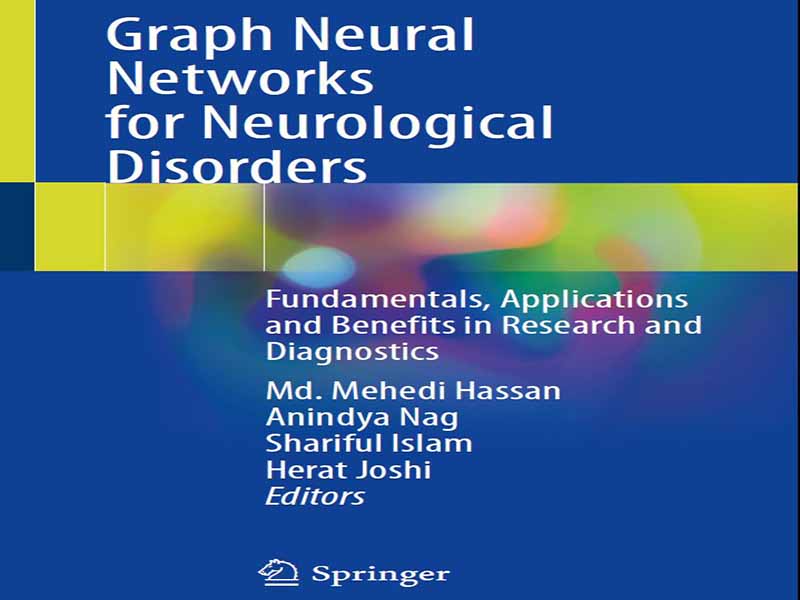
- عنوان کتاب: Graph Neural Networks for Neurological Disorders – Fundamentals, Applications and Benefits in Research and Diagnostics
- نویسنده: Md. Mehedi Hassan, Anindya Nag, Shariful Islam
- حوزه: شبکه عصبی
- سال انتشار: 2025
- تعداد صفحه: 251
- زبان اصلی: انگلیسی
- نوع فایل: pdf
- حجم فایل: 11.0 مگابایت
فصل 1 به بررسی اصول GNNها، یک تکنیک قدرتمند یادگیری ماشین برای مدلسازی روابط پیچیده در دادههای ساختار یافته با گراف، میپردازد. ما معماریهای اصلی مانند GCNها، GATها و GraphSAGE را همراه با مدلهای پیشرفتهای مانند GINها و R-GCNها پوشش میدهیم. علاوه بر این، تکنیکهای بهینهسازی کلیدی برای گرافهای در مقیاس بزرگ را مورد بحث قرار میدهیم و به چالشهایی مانند مقیاسپذیری و تفسیرپذیری میپردازیم. این فصل همچنین کاربردهای دنیای واقعی در شبکههای اجتماعی، بیوانفورماتیک و سیستمهای توصیه را برجسته میکند و بر پتانسیل تحولآفرین GNNها در حوزههای مختلف تأکید میکند. فصل 2 به بررسی پتانسیل تحولآفرین یادگیری ماشین در متحول کردن مراقبتهای مغز و اعصاب، ارائه تشخیص پیشرفته، پیشبینی پیشرفت بیماری و درمانهای شخصیسازی شده میپردازد. ادغام موفقیتآمیز ML در عمل بالینی نیازمند پیمایش چشمانداز پیچیدهای از چالشهای اخلاقی، فناوری و مشارکتی است، زیرا الگوریتمها دادههای عصبی پیچیدهتری را تجزیه و تحلیل میکنند – از تصویربرداری عصبی گرفته تا نشانگرهای ژنتیکی و ویژگیهای رفتاری. این فصل از یک رویکرد میانرشتهای برای رسیدگی به مسائل مداوم مانند سوگیری دادهها، حریم خصوصی بیمار، ابهام سیستمهای جعبه سیاه و نیاز به چارچوبهای نظارتی بهروز شده در عین تأکید بر شفافیت و نظارت انسانی حمایت میکند. هدف، ارتقای کیفیت دادهها، توسعه طرحهای قابل تفسیر و لحاظ کردن ملاحظات اخلاقی برای تحقق کامل پتانسیل یادگیری ماشین در مغز و اعصاب است. فصل 3 به بررسی تعامل بین کانکتومیک مغز و نظریه گراف در نقشهبرداری و تحلیل شبکههای عصبی میپردازد. این فصل بر اهمیت آنها در درک عملکرد شناختی و بیماریهای عصبی تأکید میکند و بینشهایی را برای کاربردهای بالینی و درمانهای فردی ارائه میدهد. فصل 4 به بررسی نقش GNNها در پیشرفت حوزه کانکتومیک مغز میپردازد و بر این موضوع تمرکز دارد که چگونه این شبکهها میتوانند درک ما از اتصال مغز و اختلالات آن در اختلالات عصبی را بهبود بخشند. کانکتومیک مغز شامل اتصال ساختاری، عملکردی و مؤثر است که میتوان با استفاده از GNNها آن را تجزیه و تحلیل کرد. این شبکهها چارچوبی پیچیده برای تجزیه و تحلیل دادههای پیچیده و غیراقلیدسی ارائه میدهند و امکان بررسی روابط بین نواحی مغز و عملکردهای آنها را فراهم میکنند. این تحقیق نشان میدهد که GNNها عملکرد برتر در تشخیص بیماری و پیشبینی عملکرد شناختی ارائه میدهند. به عنوان مثال، GNNها بیماری آلزایمر را با دقت 87٪ در مقابل 79٪ برای SVM پیشبینی کردند. پیشرفتهای مشابهی برای پارکینسون و اسکیزوفرنی مشاهده شد. چالشهایی مانند کیفیت دادهها، قابلیت تفسیر مدل و مقیاسپذیری محاسباتی همچنان باقی است. فصل ۵ به بررسی کاربرد شبکههای عصبی مصنوعی (GNN) در طبقهبندی و تشخیص بیماریهای عصبی با بهرهگیری از توانایی آنها در مدلسازی روابط پیچیده ناحیه مغز در دادههای تصویربرداری عصبی میپردازد. برخلاف روشهای سنتی، شبکههای عصبی مصنوعی الگوهای غیراقلیدسی را ثبت میکنند و تشخیص زودهنگام بیماری، پیشبینی پیشرفت و درمان شخصیسازیشده را بهبود میبخشند. این فصل همچنین چالشهایی مانند کمبود دادهها، نیازهای محاسباتی و قابلیت تفسیر مدل را مورد بحث قرار میدهد و در عین حال مسیرهای تحقیقاتی آینده را برجسته میکند. فصل ۶ بررسی میکند که چگونه شبکههای عصبی مصنوعی چندوجهی میتوانند انواع مختلفی از دادهها را برای پرداختن به چالشهای عملی ترکیب کنند. بسیاری از مشکلات در مراقبتهای بهداشتی، سیستمهای خودمختار و تجارت الکترونیک نیاز به ادغام چندین منبع داده – متن، تصاویر و اندازهگیریهای حسگر – دارند. شبکههای عصبی مصنوعی با استفاده از نمایش آنها به صورت نمودار، ابزاری برای پردازش دادهها فراهم میکنند. ایدههای کلیدی شبکههای عصبی مصنوعی و چندین روش ادغام چندوجهی – از جمله ادغام زودهنگام، دیرهنگام، ترکیبی، توجه و تانسور – معرفی میشوند. کاربردها در شبکههای اجتماعی، خودروهای خودران، تجارت الکترونیک و مراقبتهای بهداشتی پوشش داده میشوند. این فصل بر چالشهایی مانند همگنی دادهها، مقیاسپذیری، دادههای از دست رفته و قابلیت تفسیر تأکید میکند و مسیرهای تحقیقاتی آینده، از جمله بهبود مقیاسپذیری، پیشرفتهای قابلیت تفسیر و کاربردهای بلادرنگ را پیشنهاد میدهد. در فصل 7، GNNها در یادگیری روابط پیچیده بین موجودیتهای بیولوژیکی مانند ژنها، پروتئینها و متابولیتها برای کشف دقیق نشانگرهای زیستی گامهای بلندی برداشتهاند. GNNها برای دادههای بیان ژن و تعامل پروتئین به منظور شناسایی نشانگرهای زیستی کلیدی سرطان و سایر بیماریها به کار میروند. یافتهها نشان میدهد که GNNها از مدلهای سنتی بهتر عمل میکنند: دقت 92٪ در مقابل 75٪ (SVM) و 78٪ (جنگل تصادفی)، با دقت و یادآوری بالاتر. این نشان میدهد که GNNها میتوانند کشف نشانگرهای زیستی و پزشکی دقیق را افزایش دهند. فصل 8 به بررسی کاربردها در علوم اعصاب شناختی میپردازد و بر رویکردهای محاسباتی و تصویربرداری عصبی به حافظه و یادگیری تمرکز میکند. این فصل فرآیندهای شناختی را تعریف میکند و بررسی میکند که چگونه تکنیکهای علوم اعصاب به حل شناخت انسان کمک میکنند. مدلهای محاسباتی پیشرفته و روشهای تصویربرداری عصبی برای مطالعه حافظه و یادگیری مورد بحث قرار گرفتهاند و کاربردهایی را برجسته میکنند که درک عملکرد مغز را افزایش میدهند و علوم اعصاب نظری را با کاربردهای عملی پیوند میدهند. فصل 9 بررسی میکند که چگونه GNNها با چندین روش mu ادغام میشوند.
Chapter 1 explores the fundamentals of GNNs, a powerful machine learning technique for modeling complex relationships in graph-structured data. We cover core architectures such as GCNs, GATs, and GraphSAGE, along with advanced models like GINs and R-GCNs. Additionally, we discuss key optimization techniques for large-scale graphs and address challenges like scalability and interpretability. The chapter also highlights real-world applications in social networks, bioinformatics, and recommendation systems, emphasizing the transformative potential of GNNs in various domains. Chapter 2 explores the transformative potential of machine learning in revolutionizing neurology care, offering enhanced diagnosis, disease progression prediction, and personalized treatments. Successful integration of ML into clinical practice requires navigating a complex landscape of ethical, technological, and collaborative challenges as algorithms analyze increasingly sophisticated neurological data—ranging from neuroimaging to genetic markers and behavioral features. This chapter advocates for an interdisciplinary approach to address persistent issues such as data bias, patient privacy, the opacity of black-box systems, and the need for updated regulatory frameworks while emphasizing transparency and human oversight. The aim is to advance data quality, develop interpretable designs, and embed ethical considerations to fully realize ML’s potential in neurology. Chapter 3 examines the interplay between brain connectomics and graph theory in the mapping and analysis of neural networks. It emphasizes their significance in comprehending cognitive functioning and neurological illnesses, providing insights for clinical applications and individualized therapies. Chapter 4 examines the role of GNNs in advancing the field of brain connectomics, focusing on how these networks can improve our understanding of brain connectivity and its disruptions in neurological disorders. Brain connectomics consists of structural, functional, and effective connectivity, which can be analyzed using GNNs. These networks provide a sophisticated framework to analyze complex, non-Euclidean data, enabling exploration of relationships between brain regions and their functions. The research demonstrates that GNNs offer superior performance in disease diagnosis and cognitive performance prediction. For instance, GNNs predicted Alzheimer’s disease with 87% accuracy versus 79% for SVM. Similar improvements were seen for Parkinson’s and schizophrenia. Challenges such as data quality, model interpretability, and computational scalability remain. Chapter 5 explores the application of GNNs in classifying and diagnosing neurological diseases by leveraging their ability to model complex brain region relationships in neuroimaging data. Unlike traditional methods, GNNs capture non-Euclidean patterns, enhancing early disease detection, progression prediction, and personalized treatment. The chapter also discusses challenges such as data scarcity, computational demands, and model interpretability while highlighting future research directions. Chapter 6 investigates how multimodal data GNNs could combine several kinds of data to address practical challenges. Many problems in healthcare, autonomous systems, and e-commerce require merging multiple data sources—text, images, and sensor measurements. Using their representation as a graph, GNNs provide a means of data processing. Key ideas of GNNs and several multimodal integration methods—including early, late, hybrid, attention, and tensor fusion—are introduced. Applications in social networking, self-driving cars, e-commerce, and healthcare are covered. The chapter emphasizes challenges such as data homogeneity, scalability, missing data, and interpretability, and suggests future research paths, including scalability improvements, interpretability advancements, and real-time applications. In Chap. 7, GNNs have made strides in learning complex relationships between biological entities like genes, proteins, and metabolites for accurate biomarker discovery. GNNs are applied to gene expression and protein interaction data to identify key biomarkers of cancer and other diseases. Findings show that GNNs outperform traditional models: accuracy 92% vs. 75% (SVM) and 78% (Random Forest), with higher precision and recall. This suggests GNNs can enhance biomarker discovery and precision medicine. Chapter 8 explores applications in cognitive neuroscience, focusing on computational and neuroimaging approaches to memory and learning. The chapter defines cognitive processes and examines how neuroscience techniques help unravel human cognition. Cutting-edge computational models and neuroimaging methods for studying memory and learning are discussed, highlighting applications that enhance understanding of brain function and bridge theoretical neuroscience with practical applications. Chapter 9 explores how GNNs integrate with several modalities of multimodal neuroimaging data, including structural MRI (sMRI), functional MRI (fMRI), diffusion tensor imaging (DTI), genetic biomarkers, and clinical assessments. The framework improves disease classification accuracy and discovers individualized biomarkers through architectures like GCNs and GATs. It delivers robustness and flexibility across neurological conditions (Alzheimer’s, Parkinson’s, and epilepsy) and outperforms previous models (CNNs and RNNs) with an accuracy of 89%, precision of 87%, recall of 90%, and F1-score of 88%. GNN demonstrates the highest precision (90%) and recall (88%) for AD. This chapter contributes to computational neuroscience and AI-driven neurological diagnostics, benefiting researchers, clinicians, and data scientists. Chapter 10 explores the use of GNNs in identifying potential calpain-10 inhibitors for neurological disorder therapy. Computational methods such as AlphaFold, DeepBindPoc, and DeepBindGCN provide insights into protein structure and ligand interactions, and AI is transforming drug development. The study aims to discover active binding sites, predict receptor structure, and screen therapeutic options using molecular dynamics and AI modeling, improving virtual screening accuracy. This chapter advances AI-assisted medication development and opens the door to novel treatments. Chapter 11 delves into the foundational concepts of GNNs, highlighting their superiority over traditional non-graph-based approaches in handling multimodal and longitudinal clinical data. We explore potential applications in structuring patient networks, modeling disease progression, and uncovering biochemical interactions. Real-world applications illustrate how GNNs contribute to disease classification, patient subgroup identification, and drug discovery—accelerating drug repurposing and improving treatment strategies. Despite challenges in clinical adoption, the chapter provides insights to overcome them, ensuring GNNs can be effectively integrated into medical practice and contribute to precision medicine.
این کتاب را میتوانید از لینک زیر بصورت رایگان دانلود کنید:
























نظرات کاربران